If you’ve ever browsed the specs for hydraulic components for a tight machine build or a retrofit project, you’ve definitely run into the terms “mini hydraulics” and “compact hydraulics.” At first glance, they seem interchangeable—both are small, right? But after 12 years as a compact hydraulics supplier, I can tell you mixing them up is a quick way to run into headaches mid-project. I’ve seen guys order a “mini” valve for a telehandler’s auxiliary circuit only to realize it’s too wimpy for the load, or jam a “compact” pump into a mobile lift where the precision demands something even tighter. Let’s break this down like I would over a coffee at a trade show booth, no jargon overload, just the real differences that matter for your work. Compact Hydraulics
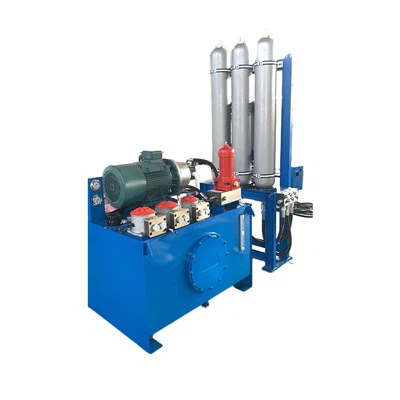
First, let’s kill the biggest myth: size is not the only thing that defines either. Yeah, both are smaller than standard industrial hydraulics (think 50+ gallon reservoirs and 100+ hp pumps), but their whole design philosophy is flipped. Mini hydraulics are built to scale full-sized hydraulic systems down to a pinhead, basically. They’re for when you have a tiny load to move—think a dental chair’s adjustment arm, a robotic surgical tool, or a small actuator on a lab testing rig. These components are engineered for ultra-low flow rates, usually under 2 liters per minute, and super low power requirements, like less than a 1 hp motor. Their whole thing is minimalism: cut every unnecessary part to save space, and they’re almost always single-action, or simple double-action, with not a lot of extra features.
Compact hydraulics? That’s my lane, and we’re built for “small but tough.” We shrink standard hydraulic tech to fit tight spaces, but we don’t strip out the power or robustness. A compact hydraulic pump or valve doesn’t just fit in the gap between a tractor’s tire and frame—it still delivers enough flow (usually 2–20 LPM for most mobile uses) to run a hay fork or a snow blower attachment. We don’t cut corners on durability either; our components are made to vibrate, get covered in mud, and run 12-hour days, which mini hydraulics are not. If you tried to use a mini hydraulic cylinder on a skid-steer’s grapple, it’d blow a seal the first time you lifted a full pallet of bricks.
Wait, let’s get specific on flow and pressure, because that’s where the work happens. Mini hydraulics top out at like 1000 PSI max, usually way lower—many are rated under 500 PSI. Their efficiency is key too; since they run on tiny power sources (like a 12V car battery, not a standalone diesel engine), they can’t waste energy on friction or heat. A mini control valve might only have a 1/8” port, so there’s barely any pressure drop, which is great for precision, but you can’t push a heavy load through it.
Compact hydraulics? We run anywhere from 1000 to 3000 PSI, standard for mobile hydraulics, and some of our high-flow lines hit 4000 PSI for heavy-duty stuff. Our ports are a bit bigger—1/4” to 3/8” usually—so we move more fluid faster, which means more power. The tradeoff is that compact systems run a touch hotter than mini ones, so we build in integrated heat sinks or smaller reservoir adapters to keep them running, which is something mini systems don’t need because their low power doesn’t generate much heat in the first place.
Another big difference: application versatility. Mini hydraulics are almost exclusively for stationary, precision small tasks. I’ve seen them go into small robot grippers for electronics assembly, portable air compressors, and even some wheelchair adjustments. They’re almost never used in mobile equipment because mobile stuff needs that power-to-size ratio, not just tiny size. Compact hydraulics? We’re everywhere in mobile work where space is tight: skid-steers, small tractors, construction equipment, even agricultural sprayers. We also work in some stationary setups, like packaging lines where you need to fit a hydraulic actuator into a crowded machine frame.
Wait, let’s talk about build quality and longevity, because that’s where suppliers like us separate compact hydraulics from mini. Mini components are usually made with lighter materials—like aluminum with thin wall thicknesses, or even some plastic parts for non-load-bearing components. They’re designed for low cycle counts, too—maybe 10,000 uses before they wear out. That’s fine for a lab machine that only runs a few times a day, but garbage for a telehandler that cycles its lift 100 times a day. Compact hydraulics? We use ductile iron for pump housings, reinforced seals that can handle mud and temperature swings from -20F to 120F, and parts rated for 50,000+ cycles. I can tell you stories about a customer who used our compact valves on a 10-year-old snow plow fleet—they still haven’t had to replace a valve, while the same fleet tried mini valves a few years back and blew half of them in one winter.
Control options are another thing you’ll notice. Mini hydraulics are almost always manual or simple solenoid-operated, with limited modulation—you turn a knob and it moves. They don’t do fine precision very well, actually, which is why they’re good for simple stuff but not for robotic arms that need to move a needle with 0.1mm accuracy. Compact hydraulics, though, we make electro-hydraulic proportional valves that let you adjust flow smoothly, so you can control the speed of a lift exactly, or adjust the angle of a farm implement without jerking. That’s the power of compact—we keep the precision but keep the muscle.
Let’s clear up a common confusion point: portability vs. mobility. Mini hydraulic power units (HPUs) are handheld sometimes—like a small pump you can carry in one hand to power a portable jack for changing a tire. Compact HPUs? They’re still portable but heavy—50 to 200 lbs, meant to be mounted on a piece of equipment, not carried. They don’t have to run on a tiny battery either; many connect to the machine’s existing engine power, which is why they’re more efficient for mobile work.
Now, why does this matter for you? Let’s say you’re a small equipment repair shop: you need a replacement cylinder for a 2018 John Deere compact tractor. If you grab a mini cylinder because it’s smaller, it’ll work for a week, then blow because it can’t handle the load. If you grab a compact cylinder, it fits in the same space, has enough pressure to lift a full hay bale, and will last years. Another example: a robotics manufacturer building a small assembly arm. Mini hydraulics will give you the precision you need, and you don’t waste money on extra power you don’t need—compact would be overkill here, heavier and more expensive than you need.
As a compact hydraulics supplier, I’ll be honest: we don’t make mini stuff, and I don’t try to pass ours off as mini. I’ve had customers come in asking for a “small pump” and try to haggle us on mini prices, and I tell them straight up—if you need a pump that fits in your pocket, this isn’t it. But if you need a pump that fits in the gap on your skid-steer and can lift 3000 lbs, ours is the way to go. That transparency is why we’ve been in business for 12 years—no upselling, no mislabeling parts.
Wait, let’s talk about price too, because that’s a big factor for most people. Mini hydraulics are cheaper upfront, usually. A mini valve might be $20, while a comparable compact valve is $50–$100. But the catch is maintenance and replacement. If your mini valve blows every 6 months, that’s $40 a year in parts, whereas a compact valve will last 5 years, so $10 a year over the same time. For low-load, short-cycle stuff, mini is the budget pick. For anything that sees regular use, compact is the better long-term investment.
I’ve also noticed a trend lately where people mix these up because manufacturers sometimes use loose terminology. Some brands will call a small mobile valve “mini” when it’s actually compact, which is a bait and switch because they can market it as smaller than the competition, but it’s underrated for heavy use. That’s why you can’t just go by the label—you have to check the specs: flow rate, pressure rating, cycle count, and build materials. If it’s under 1000 PSI, under 2 LPM, and has thin aluminum walls, it’s mini. If it’s over 1000 PSI, has ports big enough to fit your finger (not just a pin), and is made for mobile use, it’s compact.
Another use case that comes up a lot: RV lifts. A lot of RV owners want hydraulic leveling systems that fit in the tight frame under their coach. A mini HPU won’t have enough power to lift a 30-foot RV, but a compact HPU designed for mobile lifts fits perfectly in the frame, has enough pressure to level the whole RV, and is built to handle the vibrations from driving down the road. I’ve had so many RV mechanics tell me they used to install mini systems and get call backs every few months, now they install our compact ones and almost never hear from customers again.
Let’s wrap this up with a quick cheat sheet so you don’t mix them up:
Mini Hydraulics:
- Flow: <2 LPM
- Pressure: <1000 PSI
- Build: Light materials, low cycle count
- Best for: Tiny, low-load, stationary precision tasks (surgical tools, small robots, portable jacks)
- Pros: Cheap, ultra-small, simple
Compact Hydraulics:
- Flow: 2–20 LPM (high-flow up to 50 LPM)
- Pressure: 1000–4000 PSI
- Build: Robust, durable, vibration-resistant
- Best for: Tight spaces on mobile equipment (tractors, skid-steers, snow plows), tight stationary setups needing power
- Pros: Power-to-size ratio, long life, versatile control options
- Cons: Slightly bigger than mini, higher upfront cost
At the end of the day, the difference boils down to priority: mini is about minimal size for minimal power, compact is about maximum power in minimal size. If you’re ordering parts for a project, don’t just filter for “small” – check the load, the cycle count, and the environment it’ll be in.

If you’re currently dealing with a project where you’re not sure which one you need, or you’re tired of replacing cheap mini parts that don’t hold up, hit us up to chat through your needs. We can help you spec the right compact hydraulic component that fits your space and keeps your gear running without breaking the bank.
Welded Hydraulic Cylinder Reference:
Hydraulic Institute. (2022). Mobile and Compact Hydraulics Design Guidelines. Hydraulic Standards Association.
Society of Automotive Engineers. (2021). Small Hydraulic Systems for Off-Highway Equipment. SAE International Journal of Commercial Vehicles.
International Organization for Standardization. (2020). ISO 10100: Hydraulic Fluid Power – Miniature and Compact Components. ISO Press.
Wuhu Zhongye Fluid Equipment Co., Ltd.
We are one of the most experienced compact hydraulics manufacturers and suppliers in China, specialized in providing high quality customized products. Please feel free to wholesale bulk durable compact hydraulics in stock here from our factory. Contact us for quotation.
Address: No.2, Hexing Road, Sanshan District, Wuhu City, Anhui Province
E-mail: zhongyehydro20@163.com
WebSite: https://www.zhongyehydro.com/
