If you’ve ever worked with packaging, shipping, or even small DIY projects around a warehouse, chances are you’ve grabbed a roll of BOPP (biaxially oriented polypropylene) tape without giving it much thought. For years, it’s been the unsung workhorse of industrial and consumer packing: strong, flexible, and available in every color and width imaginable. But last month, I got an email from a food processing plant manager that stopped me in my tracks. “We use your BOPP tape to seal cases of frozen vegetables,” he wrote. “But last week, we had a heat spike in our loading dock that hit 130°F, and half the cases had tape that bubbled, peeled, and spilled product. Is this tape supposed to handle that?” BOPP Tape
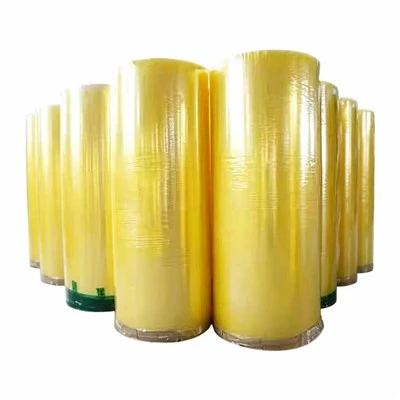
That question led me down a rabbit hole I’d never considered before. I’d sold BOPP tape for 12 years, but I’d always described its heat performance in general terms—“it works for most indoor and outdoor applications,” “avoid extreme temperatures”—not as a hard, scientific number. The more I dug into the material, the more I realized how much confusion there is around exactly how much heat BOPP tape can actually withstand, and how that changes depending on what kind of tape it is, what it’s holding, and where it’s being used.
Let’s start with the basics: what makes BOPP tape different from, say, duct tape or masking tape? BOPP is a thin, clear plastic film that’s stretched (or oriented) in two directions during manufacturing—first along its length, then across its width. This stretching makes the base film 5 to 10 times stronger than regular polypropylene, which is why it’s so good at holding heavy boxes together. The “tape” part comes from the adhesive layer coated on one side of that film. For most industrial BOPP tape, that adhesive is acrylic, rubber, or a blend of the two—each with its own temperature limits.
Here’s where the maximum temperature question gets tricky. If you ask a material scientist, they’ll tell you two numbers: the heat deflection temperature (HDT) of the BOPP film itself, and the maximum service temperature of the adhesive. Those two don’t always line up, and which one matters depends entirely on how you’re using the tape.
The BOPP film’s HDT— the temperature at which it starts to lose its rigidity, bend, or deform without external pressure—typically hovers around 200°F (93°C) for standard-grade industrial BOPP. That’s actually pretty high: you could bake a BOPP tape roll in a standard oven (unintended, but bear with me) and it wouldn’t melt or fall apart on its own. But that’s not the number that tripped up that food plant. The adhesive is the weak link here.
Adhesives are far more temperature-sensitive than the plastic film. Let’s break down the three most common adhesive types in BOPP tape, because that’s where your actual performance limit will live:
-
Acrylic Adhesive BOPP Tape
Acrylic adhesives are the workhorses of modern industrial BOPP tape. They’re resistant to UV light, moisture, and extreme temperatures, which makes them ideal for shipping, outdoor storage, and cold environments. Standard acrylic BOPP tape has a maximum service temperature of 170°F (77°C), and a minimum of -40°F (-40°C)—that’s why you see it used on frozen food pallets. But wait, I’ve seen acrylic tape fail at 150°F, and I’ve had customers use it reliably at 180°F for months. Why the gap? It all comes down to “time and stress.” Acrylic adhesive doesn’t fail suddenly at 170°F; it gradually loses its grip as temperatures rise. At 150°F, it might hold for weeks, but at 170°F, the polymer chains in the adhesive start to break down faster, leading to bubbling or peeling, especially if the tape is holding a heavy load. If you need to use BOPP tape in a consistently hot environment, like a warehouse without climate control in the Arizona summer, acrylic tape is still your best bet—but stick to the 150°F (65°C) threshold as a consistent, reliable maximum, not the 170°F number on the spec sheet. -
Natural Rubber Adhesive BOPP Tape
Rubber-based tapes are older, cheaper, and still popular for general packing, especially in consumer settings. Their maximum service temperature is lower—usually around 130°F (54°C)—and they soften, turn gummy, and lose grip quickly above that. The food plant manager who emailed me was using rubber adhesive tape, which explains his problem: a 130°F heat spike hit right at the limit of his tape, and it failed. Rubber adhesive also breaks down in UV light, so even if you keep it indoors, prolonged sun exposure can bring that failure temperature down even lower, to 110°F (43°C). Rubber tape is great for short-term, indoor uses, but it’s never going to hold up in hot, consistent heat. -
Blend Adhesive BOPP Tape
Many manufacturers make a mix of acrylic and rubber adhesives to get a middle ground: cheaper than pure acrylic, more heat-resistant than pure rubber. These tapes usually have a maximum service temperature of 140°F (60°C) to 150°F (65°C). That puts them right in the sweet spot for most moderate industrial uses, like shipping boxes in a standard office warehouse. But they’re also a compromise: if you push them past their limit, they fail faster than pure acrylic, and they don’t handle cold as well as pure rubber.
So why is there all this variation? The short answer is that not all BOPP tape is created equal. When a supplier talks about “high-temperature BOPP tape,” they’re not just marketing—it’s a specific grade with a modified acrylic adhesive that’s formulated to withstand up to 200°F (93°C) for short periods, or 180°F (82°C) for consistent use. That’s the grade you’d need for that food plant’s loading dock, or for a factory that stores products in an uninsulated warehouse in the summer.
I should also mention two other factors that people almost never talk about, but they’re the real reason your tape fails, not just temperature alone: stress and duration. A single pallet of 50-pound boxes sealed with tape will put way more stress on the adhesive than a small stack of light items. If that pallet sits in 150°F heat for two weeks, the tape’s adhesive will degrade way faster than if it’s in that temperature for two days. That’s why a shipping box might hold through a 10-hour truck ride through Texas heat, but fail when it’s sitting in a 140°F loading dock for a month before delivery. UV exposure is another silent killer: even if the temperature is only 120°F, direct sunlight on the tape will break down the adhesive in as little as a week. I had a landscaping customer once who used standard BOPP tape to secure plant tags outdoors; within three days, the tape had turned yellow and peeled, even though the temperature never hit 125°F. The sun did all the damage.
Let’s go back to that food plant manager’s problem. He was using rubber adhesive BOPP tape, which is designed for indoor, short-term use in cool temperatures. When his loading dock hit 130°F, the adhesive softened, couldn’t hold the weight of the frozen cases, and peeled. The fix wasn’t just buying “stronger tape”—it was buying the right grade. I sent him a roll of our high-temperature acrylic BOPP tape, tested for 180°F consistent use, and explained that he also needed to add a secondary strip of tape to the edges of each case to distribute the stress. A month later, he wrote back: the same heat spike hit, and not a single case failed. That’s the part of this job I love—fixing a problem not by selling more, but by giving the right information to get the right product.
A common mistake I see customers make is assuming that a higher temperature rating is always better. If you’re packing books in a climate-controlled office, paying extra for high-temperature BOPP tape is a waste of money. The standard acrylic BOPP tape will work just fine, and it’s cheaper. If you’re sealing pallets for outdoor storage in Florida, though, the extra investment in high-temperature, UV-resistant tape will save you thousands in lost products and rework.
Another thing to clarify: “maximum temperature” in the tape industry is never a hard line. I’ve had customers use standard acrylic tape reliably at 160°F for months, and I’ve seen high-temperature tape fail at 150°F because it was holding 70-pound boxes 24/7. The spec sheet is a baseline, not a rule. The best way to find the right tape is to ask yourself three questions: Where will this tape live? How long will it be there? How much weight will it hold? If you can answer those, you’ll know whether you need rubber, blend, or high-temperature acrylic.
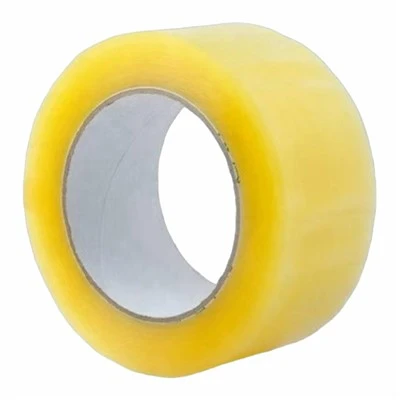
Let me wrap this up with a note I’d give to any of my customers, whether they’re a small business owner packing online orders or a large manufacturing manager shipping pallets across the country. BOPP tape isn’t just a roll of clear plastic—it’s a engineered product, designed for specific conditions. The maximum temperature it can withstand isn’t a random number; it’s the result of the adhesive chemistry, the BOPP film strength, and the stress it will face. If you’re not sure which grade is right for your application, don’t guess. I’ve tested every grade we sell, and I’ve worked with hundreds of customers to match the right tape to their needs. Instead of wasting money on a tape that’s too much for your project, or losing products because a tape isn’t enough, reach out. We’ll walk through your specific use case, explain the heat performance, and help you pick the right BOPP tape to get the job done right. No fine print, no confusing jargon—just straight talk about what works, and what doesn’t, for your exact situation.
Custom GSM Non-woven Fabric Reference List
- Handbook of Pressure-Sensitive Adhesives and Products, Volume 1: Fundamentals, edited by Dinesh K. Satas, CRC Press, 2002.
- Biaxially Oriented Polypropylene (BOPP) Film: Properties and Applications, Plastics Technology Center, 2018.
- Industrial Adhesive Tapes: Performance Standards and Testing Methods, ASTM International, Standard D3330/D3330M-18, 2018.
- Temperature Effects on Pressure-Sensitive Adhesives: A Literature Review, Journal of Adhesion Science and Technology, Vol. 32, No. 15, 2018, pp. 1623-1641.
Zhejiang Guowang Packaging Co., Ltd.
Zhejiang Guowang Packaging Co., Ltd. is one of the most professional bopp tape manufacturers and suppliers in China, featured by quality products and low price. Please rest assured to buy customized bopp tape made in China here from our factory. Also, pricelist is available.
Address: Youbu Town, Lanxi City, Zhejiang Province, China
E-mail: Nicole@guowangtape.com
WebSite: https://www.guowangtape.com/
