If you’ve ever stood in a warehouse watching a conveyor belt hum along smoothly, or marveled at how a robotic arm can place a tiny component with pinpoint precision, odds are a DC motor is powering that movement. As a DC motor supplier, I’ve spent years walking customers through how these workhorses turn electrical energy into reliable mechanical motion—and the best way to understand their performance starts with knowing their core parts. Let’s break this down, in plain, practical terms. DC Motor
First, let’s ground this in why DC motors matter for so many applications. Unlike AC motors, which run on alternating current and are great for high-speed, constant-duty tasks, DC motors offer variable speed control right out of the box, making them ideal for everything from power tools and electric bikes to medical pumps and automated guided vehicles (AGVs). That versatility comes down to a set of interconnected, purpose-built parts, each playing a non-negotiable role. Let’s start with the stationary part, the stator—this is the backbone of the DC motor.
The stator is the fixed outer housing of the motor, and its main job is to create a static magnetic field that interacts with the rotating part to produce torque. For small-to-medium DC motors (the kind most of our customers order for commercial and industrial use), the stator is usually made of permanent magnets. These aren’t the fridge-magnet kind, either—they’re high-grade ferrite or neodymium magnets engineered to deliver consistent, strong magnetic force without needing a separate power source. For larger DC motors, or those used in heavy industrial equipment, the stator might use electromagnets instead. These are copper wire coils wrapped around iron cores that, when fed DC current, generate a magnetic field; this design lets operators adjust the magnetic strength by changing the current, which fine-tunes the motor’s torque for heavy loads. What I always tell new customers is: if the stator fails, the whole motor stops working. It’s the foundation that makes all the other parts function.
Next up is the rotor—also called the armature, this is the rotating inner core that does the actual work by spinning inside the stator’s magnetic field. The armature is a carefully constructed stack of thin iron laminations; those layers aren’t just a manufacturing trick—they reduce energy loss from eddy currents, which are small, unwanted electrical currents that waste power and generate heat. Wrapped around those laminations are copper wire coils, called armature windings. When current flows through these windings, the magnetic field from the stator pushes against the field from the armature, creating rotational force (torque) that turns the motor’s shaft. Here’s where one of the most critical parts of the DC motor comes in: the commutator. If you’ve watched a vintage car’s window motor or an old cassette player, you might have seen a small, segmented metal ring attached to the armature’s shaft—that’s the commutator. Its job is to reverse the direction of current flowing through the armature windings every half-turn. Why? Because the armature’s magnetic field would flip direction as it spins, and if the current didn’t reverse, the armature would just stop at a dead spot instead of rotating smoothly. The commutator’s segments are made of hard copper, and they’re insulated from each other to prevent short circuits. For our custom motor builds, we match the commutator’s size and segment count to the armature’s winding design to ensure consistent performance, especially in high-vibration applications like AGVs.
Now, to connect the commutator to the power source, we need brushes. Brushes are small, conductive components, usually made of a mixture of carbon and graphite, that press against the commutator’s rotating segments to deliver DC current to the armature. This might sound simple, but getting the right brush material is key to motor life. Too soft, and the brush wears out quickly, leaving debris that can damage the commutator; too hard, and it creates excessive friction that wastes power and overheats the motor. For most of our standard DC motor lines, we use medium-grade carbon brushes that balance wear and conductivity, but we can swap in high-temperature graphite brushes for extreme applications, like industrial ovens or heavy-lifting cranes. I always advise customers to check their motor’s brush wear during routine maintenance—if brushes wear down too fast, it’s usually a sign of misalignment or incorrect voltage, not a faulty motor.
The final key part is the shaft, which is the central metal rod that extends from the rotor and transfers the rotating torque to whatever the motor is powering. Shafts are made of high-strength steel, sometimes with a polished surface where the bearings ride, and they’re designed to handle the rotational forces and loads specific to the application. For example, a DC motor powering an electric bike needs a shaft that can handle torsional stress from pedaling forces, while a motor powering a tiny medical pump needs a smooth, precision-machined shaft to avoid damaging delicate components.
Beyond these core parts, there are smaller but essential components that keep the motor running smoothly. Bearings support the shaft, reducing friction between the rotating shaft and the stator housing, so the armature can spin freely without wobbling. Most DC motors use either ball bearings (for high-load, high-speed applications) or sleeve bearings (for low-cost, low-speed applications, like small household appliances). We always specify bearing type based on the customer’s duty cycle—for a conveyor that runs 24/7, ball bearings are a must to avoid unexpected downtime, while a motor for a hobby robot can use sleeve bearings to keep costs low. Then there’s the end cap, which seals the motor housing, holds the bearings in place, and provides a mounting point for the motor. End caps also have a small opening for the power leads, so you can connect the motor to a DC power source without exposing internal parts to dust or moisture.
Wait, let’s address a common misconception I hear from new customers: not all DC motors have the same parts, or even use a commutator and brushes. Brushless DC motors (BLDC), which have grown in popularity over the last decade, eliminate the commutator and brushes entirely. Instead, they use electronic controllers to switch the current to the stator windings, which are now the rotating part. BLDC motors are more efficient, have longer lifespans, and require less maintenance than brushed DC motors, but they’re also more complex to control. As a supplier, we carry both types, and I always help customers choose based on their specific needs: brushed DC motors are simpler, cheaper for low-power applications, and easy to control with basic voltage adjustments, while BLDC motors are better for high-performance, long-life applications like drones or electric vehicles.
I also want to touch on why this parts breakdown matters for you, the customer. When you’re sourcing a DC motor, knowing which parts are non-negotiable for your application helps you avoid overpaying for features you don’t need, or underbuying for loads that will shorten your motor’s life. For example, if you’re building an automated window system that only runs a few times a day, a brushed DC motor with ferrite magnets and sleeve bearings will work perfectly and save you money. But if you’re building an AGV that runs 12 hours a day, 6 days a week, you’ll want a BLDC motor with neodymium magnets and ball bearings to keep maintenance costs low.
At the end of the day, a DC motor is only as good as the synergy between its parts. A high-quality stator won’t help if the armature’s laminations are poorly made; a well-designed rotor won’t perform if the brushes are the wrong material. That’s why, as a DC motor supplier, we don’t just sell parts—we build motors where every component is engineered to work together. We test every motor for torque output, speed consistency, and temperature resistance before it leaves our facility, so you can trust it will work when you need it.
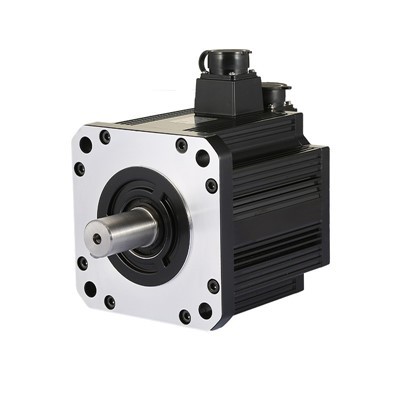
If you’re looking for a DC motor for your next project, whether it’s a small custom build or a high-volume order for industrial equipment, reach out to our team to discuss your needs. We’ll walk you through the right parts for your application, answer any questions you have about performance and maintenance, and help you find a solution that fits your budget and timeline.
Gear Motor References
- Bolt, G. (2005). DC Motors: Components, Design, and Applications. Industrial Press.
- Fitzgerald, A. E., Kingsley, C., & Umans, S. D. (2003). Electric Machinery (6th ed.). McGraw-Hill.
- Toliyat, H. A., & Kazmierkowski, M. P. (2002). Handbook of Electric Motors. CRC Press.
- DC Motor Fundamentals. (2021). Motion Control Tips. Retrieved from industry technical resources.
Zibo Auric Mechanical and Electrical Technology Co., Ltd.
As one of the leading dc motor manufacturers and suppliers in China, we warmly welcome you to buy advanced dc motor for sale here from our factory. All customized motors are with high quality and competitive price.
Address: B419, High-tech Entrepreneurship Park, High-tech Zone, Zibo City
E-mail: cui@auricmotor.com
WebSite: https://www.auricmotor.com/
