Hey there, if you’re reading this, you’re probably deep in the weeds of figuring out how a fuel management system (FMS) fits into your operation’s budget—whether you’re running a small delivery fleet, a farm with a dozen work trucks, or a mid-sized construction company that’s blowing through thousands of gallons of diesel a month. Let me start by saying this: I get it. When I was helping my cousin (who runs a 22-truck regional courier business) pick his first FMS, he spent three weeks scrolling forums, DMing other fleet owners, and even calling me at 9 PM panicking because every “price guide” he found online was either super vague or way off. That’s why I’m here—no sales fluff, no generic jargon, just real numbers based on what I’ve seen as a supplier (that’s us, by the way) and what actually makes sense for different businesses. Fuel Management System

First off, let’s kill the big myth: there’s no one-size-fits-all price tag for an FMS. A system that works for a 5-truck landscaping crew is never going to cut it for a 200-truck logistics company. It all boils down to three main things: how many assets you’re tracking, what features you actually need (not the ones a sales rep is trying to upsell you), and whether you’re rolling it out for a one-time purchase or a monthly subscription. Let’s break this down by size, because that’s the easiest way to wrap your head around it.
Let’s start with the tiny fleets—like 1 to 10 vehicles. If you’re just getting started, you probably don’t need a $10k+ enterprise system. For most small operations, the sweet spot here is a basic FMS that tracks fuel purchases, monitors for over-the-drink fraud (yep, that’s a real thing—drivers siphoning or “buying gas for their personal truck on company dime”), and gives you a quick monthly report. What does that cost? If you go the subscription route, it’s usually $15 to $30 per vehicle, per month. So for 10 trucks, that’s $150 to $300 a month. If you’d rather buy it outright (no recurring fees after setup), you’re looking at $500 to $2,500 total, including the hardware you need. Wait, what hardware? Oh right—every truck needs a small fuel sensor that fits in the tank, right? Those are $50 to $150 each, so add that to the upfront cost (10 trucks = $500 to $1,500). I’ve had a lot of small clients go the subscription route here because it gets them up and running fast, no big upfront hit, and most plans include free technical support if something breaks. That makes sense—when you’re a one-person show or have a small team, you don’t want to be troubleshooting a fancy piece of hardware at 7 AM on a Monday.
Next up, mid-sized fleets: 11 to 50 vehicles. This is where things get interesting, because this is the sweet spot for most growing businesses—think delivery companies, small construction outfits, municipal work crews, maybe even a local gas station with a fleet of service vans. Your needs start to get a little more complex here. You’re not just worried about theft from individual tanks; you might have bulk fuel storage on-site, so you need to track fuel going from your bulk tank to individual trucks, maybe integrate with your fleet’s GPS so you can see exactly where a driver was when they fueled up. You might also want more detailed reports—like which trucks are the guzzlers, how much idle time is costing you, or even tie the FMS to your payroll software so you don’t have to manually match fuel receipts to driver hours. For this size, subscription pricing is usually $30 to $60 per vehicle, per month. For 50 trucks, that’s $1,500 to $3,000 a month. Upfront purchase? You’re looking at $2,500 to $10,000 total, again depending on hardware. If you have on-site bulk storage, we have a separate sensor for that (the bulk tank sensor is usually $100 to $300) so you can track fuel levels before and after a delivery, which is a big one for catching someone who siphons from your big tank. I had a client last year who was losing about 200 gallons a month from his bulk tank—we added the bulk sensor and cut that down to less than 10 gallons, and he paid off the system in 3 months from the savings. That’s the kind of math you actually care about, right?
Now, the big boys: fleets of 50+ vehicles, up to enterprise-level with 200, 500, or even 1,000+ assets. If you’re here, you’re not just tracking fuel—you’re probably integrating your FMS with all your other software: ERP systems, maintenance tracking, compliance tools for DOT hours of service, maybe even cross-border fuel tracking if you run a national or international operation. You might have multiple bulk storage sites across different locations, so you need a dashboard that lets you see all your fuel data in one place, not just per site. You might also need custom features, like reports that break down fuel costs by job site or customer, since your business is billing based on those costs. For this size, pricing is less per vehicle and more based on your total fuel volume and the number of sites you have. A lot of enterprise clients go with a custom subscription plan, usually starting at $60 per vehicle per month, and going up from there depending on the integrations. For a 200-truck fleet, that’s $12,000+ a month, but most of our enterprise clients see a return on investment (ROI) in 6 to 12 months because the fraud they cut and the efficiency gains add up way more than that. Upfront costs here are usually minimal, because most big fleets prefer monthly billing with support included, rather than a big chunk of cash upfront. That makes sense—cash flow is king when you’re operating a big business, and you want to spread out your tech costs along with your other operating expenses.
Wait, hold on—before we get ahead of ourselves, let’s talk about the hidden costs that a lot of people forget, because that’s where the “how much does an FMS really cost?” question gets messy. First, hardware maintenance. If you buy a system outright, you’re on the hook for replacing sensors if they break, and most of those have a 1-2 year warranty, but after that, replacement sensors are $50-$150 each. Subscription plans usually include hardware and maintenance, which is a big plus. Second, data storage and updates. Some cheaper FMS plans only let you store data for 30 days, which is useless if you get audited (DOT audits go back 3 years, for example). You want a system that stores data long-term, and gets regular software updates to fix bugs or add new features—make sure that’s included in your plan, no hidden fees. Third, training. If you’re not tech-savvy, a fancy FMS is useless. If you’re buying a system, do you have to pay for training for your team? Most reputable suppliers include basic training, but more advanced training might be an extra cost. We include unlimited training for all our plans, so that’s something I always brag about—no one wants to buy a tool no one knows how to use.
Another big question: is it worth it? Let’s do some quick math. The average fleet loses 5-10% of its annual fuel to fraud or waste, according to the National Truck Equipment Association. If you have a 10-truck fleet that uses 1,000 gallons a month at $3.50 a gallon, that’s $3,500 a month on fuel. 5% waste is $175 a month—so your basic FMS at $30 a month is paying for itself 6 times over. For a 50-truck fleet using 5,000 gallons a month, that’s $17,500 a month in fuel, 5% waste is $875 a month—so a mid-tier FMS at $2,500 a month still saves you way more than it costs. The ROI is almost always positive, especially if you have more than a few trucks. I’ve had clients come to me and say “we don’t have fraud issues” only to find out they were losing $1,000+ a month to drivers buying personal gas on company cards. It’s not that your drivers are bad—they’re busy, they forget to separate personal and business purchases, or there are gaps in your process that make it easy to slip through. An FMS closes those gaps automatically.
Wait, what about the cheap FMS you see online for $5 a month per truck? I get the urge to go for the lowest price, but let’s be real—those are usually bare-bones systems with bad hardware that breaks all the time, no support, and data that’s delayed or inaccurate. I had a client a couple years back who went with one of those $5 plans, and within 6 months, his sensors were giving wrong fuel level readings, so he thought he had 100 gallons in his tank and actually had 20, so he had to pull his trucks off the road mid-job, costing him $2,000 in lost revenue. He switched to us a week later, and that mistake never happened again. You get what you pay for, and when it comes to something that saves you thousands in fuel costs, don’t cut corners.
Let’s also clear up the difference between plug-and-play and hardwired systems. A lot of small fleets go for plug-and-play sensors that you just clip into your truck’s OBD port—those are cheaper, usually $20-$50 per truck, easy to install yourself, and great for short-term use. But if you have heavy-duty trucks or work trucks that go off-road, those plug-and-play sensors are less durable. Hardwired sensors get installed directly into the fuel line or tank, they’re more accurate (within 0.5% of actual fuel level, vs plug-and-play which is around 2-3%), and they last longer—like 5+ years, vs plug-and-play which might last 2 years. So if you’re a small fleet that only needs a system for a year or two, plug-and-play is fine, but if you’re planning to grow, hardwired is worth the extra upfront cost.
Now, let’s talk about what’s not included in the price, just so you don’t get sticker shock. First, cellular service—most FMS systems use cellular to send data from the truck to the cloud, so you need a data plan for each sensor. That’s usually $5-$15 per month per sensor, and it’s either included in your subscription or an extra fee. We include cellular data in all our plans, so that’s one less thing to worry about. Second, installation. If you buy a system outright, or have hardwired sensors, installing them costs about $20-$50 per truck if you hire a mechanic. Again, subscription plans usually include free basic installation as part of the service. Third, custom features. If you need a super specific report or integration that off-the-shelf plans don’t have, that might add a one-time setup fee or a monthly charge. We work with clients to build custom features that fit their needs, so we’ll never nickel-and-dime you for something that’s actually going to save you money.
I know this is a lot of numbers, so let’s sum it up real quick, no confusing tables:
- 1-10 trucks: $15-$30/truck/month subscription, or $500-$2,500 upfront. ROI in 1-3 months.
- 11-50 trucks: $30-$60/truck/month, or $2,500-$10,000 upfront. ROI in 3-6 months.
- 50+ trucks: Custom pricing, starting at ~$60/truck/month, ROI in 6-12 months.
The biggest takeaway here is that you shouldn’t pay for features you don’t need. If you’re a small landscaping crew, you don’t need the DOT compliance integration that’s built for big logistics companies. If you only have one bulk tank, you don’t need a system that tracks 10 different sites. We’ve had clients who came in asking for a “full enterprise system” and ended up going with our basic small-fleet plan because that’s all they needed, and they saved $1,000 a month over what they thought they’d pay.
Another thing I wish I told my cousin when he was picking his system: don’t just look at the upfront cost. Look at the total cost over 2 years, and what you’ll save. His courier business was spending $12,000 a month on fuel, and after adding our mid-tier FMS, he cut that by $1,800 a month in fraud and waste. He paid $1,200 upfront for the system, so in the first month he made that back, and the rest is pure profit. That’s the kind of return that makes the price irrelevant.
Wait, let’s address one more common question: do I really need an FMS if I use fuel cards? Fuel cards are great, but they only track where you bought fuel, not how much you actually put in the tank. A driver can buy $100 worth of gas for their personal car on the company fuel card, and you’ll never know. Or they can siphon 50 gallons from a truck, and the fuel card will still show that the truck “bought” that fuel. FMS works with fuel cards to cross-reference purchases with actual fuel levels, so you catch that kind of fraud that fuel cards alone miss. It’s not an either/or—they work together.
So, if you’re reading this and realizing that your fuel costs are higher than they should be, or that you’re losing money to unaccounted fuel, the next step is to stop guessing and get a real quote. We don’t do generic “$X per truck” quotes without talking to you first—we ask how many trucks you have, what kind of business you run, what you’re currently struggling with when it comes to fuel, and then give you a custom price that fits your needs, no hidden fees. Whether you’re a 3-truck startup or a 100-truck operation, we’ll walk you through exactly what you need, no sales pitches, no jargon, just real numbers.
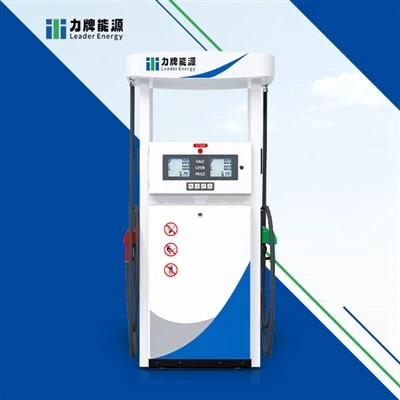
Don’t let another month go by losing money to fraud or waste. An FMS isn’t just a cost—it’s an investment that pays for itself quickly, and then keeps saving you money for years. If you’re ready to chat, just reach out—we can walk through your specific situation, answer any questions, and give you a clear picture of what it will cost and how much you’ll save.
Fuel Management System REFERENCES
National Truck Equipment Association. (2022). Fleet Fuel Loss & Fraud Report. NTEA Publications.
US Department of Transportation. (2023). Commercial Vehicle Fuel Management Best Practices. Federal Motor Carrier Safety Administration.
American Trucking Associations. (2021). Small Fleet Efficiency Guide. ATA Research Foundation.
Leader Energy Technology (Zhengzhou) Co., Ltd.
As one of the most professional fuel management system manufacturers and suppliers in China, we’re featured by quality products and good price. We warmly welcome you to buy durable fuel management system for sale here from our factory. If you have any enquiry about customized service and OEM service, please feel free to email us.
Address: No.65, Dongqing Street, Zhengzhou Hi-tech Zone, Henan, China
E-mail: info@leaderdispenser.com
WebSite: https://www.leader-petrol.com/
