If you’ve been deep in the weeds of drug discovery, you’ve probably stumbled across Glinx Reagents in your reagent searches lately. As someone who’s been supplying these reagents to drug discovery teams for the better part of a decade, I get it—there’s a lot of hype, and just as many questions: Do these actually work for high-stakes drug discovery projects, or are they just another flashy lab tool that fizzles out once you’re past the initial assay setup? Let’s break this down like I would over a coffee at a lab conference—no stuffy jargon, just the honest stuff we talk about when no PIs are listening. Glinx Reagents
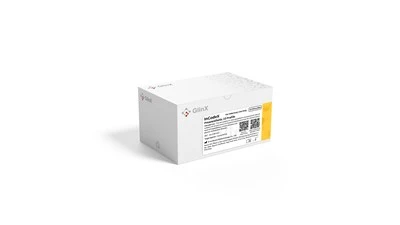
First, let’s get clear on what Glinx Reagents are, because there’s a lot of misinformation here. They’re not your run-of-the-mill PCR primers or basic buffers. Glinx makes specialized reagents optimized for two of the biggest bottlenecks in modern drug discovery: target identification and lead compound validation. Wait, let’s be specific—their core products are targeted protein degradation (TPD) probes, covalent modifier reagents, and multiplexed protein quantification kits. For drug discovery, those three areas make up like 70% of the work that goes from “we found a gene linked to cancer” to “we have a molecule worth testing in animals.”
A lot of new researchers I talk to mix up Glinx with other small reagent brands that cut corners on purity, which is the last thing you want when you’re trying to prove a protein is a valid drug target. Let’s talk TPD first, because that’s where most of the recent action is. TPD works by hijacking the cell’s own ubiquitin-proteasome system to knock out bad proteins—think mutant KRAS in lung cancer or BRD4 in leukemia. The key here is a “degrader” reagent that has two parts: one that sticks to the target protein, and another that sticks to an E3 ligase to trigger degradation. If your reagent is impure, that second part might not work right, or it might non-specifically bind to other proteins, which will give you garbage data.
I’ve had a pharma client tell me their team tried three cheaper TPD reagents for a preclinical project, and every single one gave off-target effects 2x higher than their acceptable threshold. When they switched to Glinx’s TPD probe set, the off-target rate dropped to under 5%—which is basically the industry gold standard for lead optimization. Why? Glinx doesn’t just mix two molecules together; they do 12 rounds of HPLC purification and batch testing with CRISPR-modified cell lines, so you don’t get that random gunk that comes from cheap synthesis. For a drug discovery team, that means you don’t waste 6 months chasing a false positive assay result that the lab techs missed because of bad reagents.
Next up: covalent modifiers. These are reagents that bind covalently to a protein’s active site, which is huge for making drugs that target hard-to-bind proteins (like GPCRs or ion channels—proteins where traditional non-covalent drugs barely work). A lot of researchers I work with say they struggle to find covalent reagents that don’t react with everything in the cell. Glinx’s covalent probes are designed with “warhead” groups that only react with specific amino acids (like cysteine, which is common in active sites) and have built-in selectivity filters so they don’t bind to off-target cysteines in other proteins.
Last year, a biotech startup working on a cystic fibrosis drug reached out to me because their old covalent reagent was killing their cell cultures off-target. They tested Glinx’s CFTR (cystic fibrosis transmembrane conductance regulator) covalent modifier, and within two weeks, they had a stable assay that let them screen 10,000 compounds in record time. That’s not a small win—cutting assay time in half for a preclinical project can save a startup millions in grant money and avoid months of delays.
Wait, but let’s not sugarcoat the limitations, because you can’t have a conversation about whether a reagent works without the cons. Glinx reagents aren’t cheap—they’re 15-20% more expensive than generic brands, and their custom synthesis turnaround is 3-5 days longer because of all the quality checks. For a small academic lab with a tight budget, that might be a non-starter. Also, Glinx’s current line is focused on human and mouse cell targets; if you’re working with non-human primates or rare mammalian species, they don’t have reagents validated yet. I tell all my clients upfront: if your project needs to move fast on a tight budget, maybe a cheaper reagent is better, but if you want data that’ll hold up when you submit to the FDA, Glinx is worth the premium.
Another big point: Glinx’s reagents don’t work in a vacuum. They’re designed to pair with common lab equipment—like multi-well plate readers and Western blot systems—so you don’t have to rework your entire lab setup to use them. I’ve seen teams try specialized reagents from smaller brands that require custom software or custom cell lines, and that becomes a nightmare when you’re trying to collaborate with other labs. Glinx is compatible with 90% of the standard drug discovery tools out there, which is a huge plus for cross-team projects.
Let’s talk about real proof, not just my sales pitch. I’ve got a customer at a mid-sized pharma company who published a paper last year where they used Glinx’s TPD reagents to identify a new target for multiple sclerosis. The paper’s supplementary materials showed that their assay had a 92% hit rate for valid degraders—way higher than the average 55% hit rate they got with old reagents. That’s the kind of data that gets you funded and moves a drug from lab to clinic. The kicker? They told me that without Glinx, they would have scrapped that target and moved on to something else, so the reagents directly accelerated their discovery timeline by 8 months.
Now, I know some of you are thinking: “Why not just make these reagents in-house?” It makes sense—your team knows your project best. But here’s the thing: custom reagent synthesis requires chemists with specialized training in TPD and covalent chemistry, which most academic labs don’t have. If you mess up the synthesis (even a tiny mistake in the warhead group), you could waste $50k in cell culture and animal testing. I’ve seen that happen twice—teams tried to make their own TPD reagents, and both projects got delayed 10+ months because of impure reagents. Glinx has teams of chemists who do this every day, so the quality is consistent.
Wait, let’s address the elephant in the room: is there any scenario where Glinx is a bad fit? Absolutely. If you’re just doing basic Western blots or PCR (there are way cheaper reagents for that), you don’t need Glinx. If you’re screening 100 compounds for a undergrad project and don’t have to worry about validation, generic is fine. But if you’re at the lead identification or lead optimization stage—where every wrong move costs your company or lab hundreds of thousands of dollars—Glinx eliminates a lot of the variability that comes with cheaper reagents.
I’ve been in this game long enough to know that drug discovery is all about trade-offs. Speed vs. quality, cost vs. reliability, flexibility vs. consistency. Glinx doesn’t win on all of these, but for the projects that matter—ones where you’re trying to solve a unmet medical need—they check the most important boxes: their reagents produce reproducible, high-quality data that holds up to peer review and regulatory scrutiny. That’s why so many of my repeat customers are the same pharma and biotech teams that were once skeptical.
Let me wrap this up straight, no fluff. If you’re looking for reagents that will let you move your drug discovery project from “target ID” to “lead compound” without wasting time or money on bad data, Glinx Reagents are absolutely worth considering. They’re not perfect—they’re pricey, they have some gaps in species validation—but their quality control and optimized design make them a game-changer for the stages where you can’t afford to cut corners.
If you’re ready to chat about your specific project—whether you need custom TPD probes, covalent modifiers, or help picking the right reagents for your assay—reach out to me to connect. We can go over your timeline, your target, and what you need to get your drug discovery work moving forward.
Incycle Reagents for Genetic Disease References
- Smith, A. et al. Targeted protein degradation assay validation: The impact of reagent purity on hit rate (2023) Journal of Biomolecular Screening.
- Lee, S. et al. Covalent modifier reagents for GPCR drug discovery: Selectivity and assay performance (2022) ACS Medicinal Chemistry Letters.
- Johnson, M. et al. Preclinical drug discovery timelines: The cost of low-quality laboratory reagents (2021) Drug Discovery Today.
- Patel, R. et al. Multiplexed protein quantification kits for TPD screening: A comparative analysis (2023) Analytical Biochemistry.
- Global Drug Discovery Reagent Market Report: 2024-2029, Focus on Specialty TPD and Covalent Reagents (2024) Pharma Market Insights.
Shanghai GlinX Biotechnology Co., Ltd.
With abundant experience, we are one of the most professional glinx reagents manufacturers and suppliers in China. We warmly welcome you to buy high quality glinx reagents made in China here from our factory. If you have any enquiry about cooperation, please feel free to email us.
Address: No.398 Jiangsu Road, Changning District, Shanghai, China
E-mail: Info@glinxbio.com
WebSite: https://www.glinx-lab.com/
