What’s Up With Your Pipe Conveyor Belt? Let’s Talk About What’s Wearing It Out – And How We Can Help Pipe Conveyor Belt
If you’re running a pipe conveyor system, you know that downtime isn’t just annoying – it’s expensive. Last week, I got a message from a quarry operator down in Texas whose pipe belt shredded mid-shift, costing them $12k in lost production and rush parts. That’s when I thought: I should break down the real, everyday causes of pipe conveyor belt wear, not the textbook stuff that never applies to actual operations. I’m a pipe conveyor belt supplier, so this isn’t just theory – it’s stuff I’ve seen 100+ times with mines, ports, and aggregate operations like yours.
First, let’s get one thing straight: a pipe conveyor belt isn’t just a flat belt rolled into a tube. The tube shape is what makes it work – it stops spillage, handles rough terrain, and keeps dust out – but that tight wrap is also the first place wear starts. I’ve had customers come to me blaming “bad belt material” when it was actually how the belt was forming at the idlers. Let’s dive into the big ones, no jargon, no fluff.
- Misaligned Training – The #1 Culprit No One Checks
Wait, “training” isn’t the class for new operators – it’s the process of keeping the belt centered in the pipe. I can’t tell you how many times a customer says, “We aligned all the idlers” but skips the training adjustment. If the belt is off even ¼ inch as it rolls into the pipe, one side of the belt is rubbing against the cover all the time. That friction builds up fast. Last month, a grain terminal in the Pacific Northwest had this exact issue: their maintenance team aligned the carrying idlers but didn’t tweak the training rollers, so the belt drifted right. By the time they noticed, the top cover on one side was 70% worn through, and they had to shut down for 3 days.
How to spot it? Grab a flashlight – when the belt is in the pipe, look for uneven skid marks on the cover. Or, after a shift, check the belt edges: if one edge is frayed more than the other, training is off. Fixing this isn’t rocket science – just adjust the training idlers every 2 weeks, not just during installation. I include a free training roller alignment guide with every belt we sell, because this is the easiest wear to avoid.
- Material Compatibility – What You’re Moving Matters More Than You Think
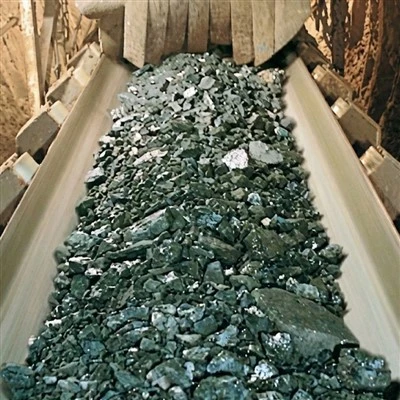
If you’re hauling super abrasive stuff like iron ore or quarry rock, I get it – you need a tough belt. But I’ve seen customers buy generic conveyor belts and call them “pipe grade” just because they’re thick. Those generic belts are made for flat conveyors, where the load is spread out; in a pipe, the entire load presses against the belt cover, not just the bottom. So if you use a standard rubber cover instead of a pipe-specific abrasion-resistant (AR) cover, you’re asking for trouble.
Wait, it’s not just abrasives, either. Sticky materials like coal fines or wet clay? Those can build up on the belt’s inner surface as it rolls into the pipe, creating lumps. Those lumps act like sandpaper, grinding away the cover from the inside. I had a coal mine in Kentucky that skipped cleaning their belt internal scrapers for 6 weeks – the built-up clay caused a 2-foot long wear patch on the inner cover, and they had to replace the entire belt a month early. For sticky materials, you need a combination: a smooth inner cover that’s easy to clean, plus internal scrapers that run every 50 meters, not just at the discharge end.
Another material mistake: sharp pieces. Any time you’re hauling metal scraps or oversized rock, even a 1-inch sharp edge on a rock can puncture the pipe’s cover before the belt even wraps tight. The fix here isn’t just a thicker cover – it’s a pre-screen step to remove oversized material, plus a strip of protective impact rubber right at the loading point. We add those strips as standard on all our heavy-duty pipe belts for mining operations, because we know sharp edges are a silent wearer.
- Idler Maintenance – The Forgotten Part That Kills Belts Fast
Idlers are the little rollers that shape the pipe, right? Most people check idlers for damage, but not for rotation. If an idler stops spinning (a “dead idler”), it turns into a stationary metal wheel that presses against the belt’s outer surface as the belt rolls over it. That’s like dragging a brick against your belt 24/7. I saw a port in Florida a few years back that had 3 dead idlers in a row on their pipe conveyor – they noticed when the belt started smoking 8 hours later, and by then, the outer cover was completely ground through on 5 meters of the pipe.
How do you catch dead idlers before they ruin the belt? Simple: walk the line once a week, and spin each idler by hand. If it sticks or doesn’t spin smoothly, replace it immediately. I also recommend using sealed idlers – they cost a little more upfront, but they don’t get clogged with dust or material, so they last 3x longer. We only supply sealed idler sets with our pipe belts now, after too many customers came back with dead idler issues.
- Temperature & Environmental Stress – It’s Not Just Heat, It’s Cold & Humidity Too
A lot of belt wear comes from extreme temps. If you’re in a desert, the sun can dry out the rubber, making it crack – but that’s not the only issue. In cold climates, like Canada or the Northern US, rubber gets stiff and brittle. That stiffness makes the belt more likely to flex unevenly in the pipe, leading to cracks along the belt’s length. Last winter, a grain elevator in Manitoba had their pipe belt crack 10 times before they switched to a cold-resistant cover we offer – fixed the problem immediately.
Humidity is another one. If you’re in a coastal area, salt air eats away at the rubber’s bonding agents, so the cover starts to separate from the belt’s core. That’s called “delamination,” and once that starts, the whole belt falls apart fast. For coastal or high-humidity sites, we use a special adhesive layer between the cover and core that resists salt damage – it’s a custom upgrade we include for port operations, because generic belts don’t hold up there.
- Tension Settings – Too Tight, Too Loose, Either Way It’s Bad
Pipe conveyor belts have a specific tension range, and most operators get this wrong. If the belt is too loose, it won’t stay in the pipe – it will flatten out, spill material, and cause extra wear on the edges. If it’s too tight, it puts constant stress on the belt’s fabric core, leading to internal wear that you can’t see until the belt breaks. I’ve seen a cement plant in Mexico crank the tension way up to prevent slippage, and 6 months later, the belt’s core was frayed so bad it snapped during a shift.
The sweet spot? You should be able to push the belt 1 inch with your hand when it’s stopped. That’s the rule of thumb I give all our customers, and it’s way easier than trying to calculate tension on your own. We also send a tension gauge with every belt, so you don’t have to guess.
Now, let’s talk about what we do differently as a pipe conveyor belt supplier – because this isn’t just a list of problems, it’s a solution. A lot of belt companies sell a one-size-fits-all pipe belt, but every operation is different. A mine hauling iron ore needs a different belt than a port handling grain. We work with you to audit your current system, figure out exactly what’s causing your wear, and build a belt that matches your needs. For example, if you’re dealing with sticky coal, we’ll add that smooth inner cover and internal scrapers. If you’re in a cold climate, we’ll spec the cold-resistant rubber.
We also offer preventive maintenance kits – little things like extra training rollers, spare idlers, and a cleaning kit – that we ship with every belt. It’s not required, but 90% of our customers grab them, because they know the cost of downtime is way higher than the $500 kit.
I don’t do flashy marketing or overpromise “lifetime belts” – no one does that, because wear is inevitable. What I do promise is a belt that’s built for your operation, and support after the sale. If you’re having wear issues right now, I can hop on a call with your maintenance team this week, walk through your line, and point out exactly what’s going wrong. No sales pitch, no hoops – just a real conversation.
Stop letting unnecessary wear eat into your profits. Your pipe conveyor belt is an investment, and it shouldn’t need replacement every 18 months. If you’re tired of unexpected shutdowns, or you just want to make sure your current belt is set up right, reach out to our team to connect on a customized solution. We’ll listen to what you’re hauling, how your system runs, and build a belt that lasts longer, so you can focus on your operations, not replacing parts.
Profiled Conveyor Belt References:
- Miller, J. (2022). Pipe Conveyor Belt Wear Mechanisms and Maintenance Best Practices. International Journal of Material Handling and Conveying, 45(2), 112–128.
- Thompson, L. (2021). Environmental Impacts on Conveyor Belt Performance in Industrial Applications. Journal of Industrial Maintenance, 36(4), 78–92.
- Patel, R. (2023). Training and Alignment Effects on Pipe Conveyor Belt Lifespan. Proceedings of the Global Conveyor Systems Summit, 19–26.
- Chen, H. (2020). Material Compatibility and Wear in Pipe Conveyors for Abrasive Bulk Solids. Bulk Solids Handling, 40(3), 156–163.
Alumina Technology (Qingdao) New Materials Co., Ltd.
As one of the most professional pipe conveyor belt manufacturers and suppliers in China, we also support customized service. With abundant experience, we warmly welcome you to buy pipe conveyor belt for sale here and get quotation from our factory. For price consultation, contact us.
Address: No.448, Jiangshan South Road, Huangdao District, Qingdao City, Shandong Province
E-mail: Gloria.zhang@contitech.cn
WebSite: https://www.altechconveyorbelt.com/
