If you’ve ever stood in the path of a thunderstorm, watching jagged bolts of lightning split the sky, you know how awe-inspiring—but also how destructive—this natural force can be. For the rest of us, we’re mostly sheltered inside buildings, far from that raw power. But if you run a data center, that distance is a lot shorter than you think. Over the 12 years I’ve worked as a Lightning Protection Tower supplier, I’ve heard this question more times than I can count from data center operators: “Are these towers actually necessary for our facility?” It’s a fair question, and one I’ve had to answer not just with sales pitches, but with real-world examples and hard industry data. Let’s break this down, because the answer isn’t a simple yes or no—it’s tied to how critical your data center’s uptime really is. Lightning Protection Tower
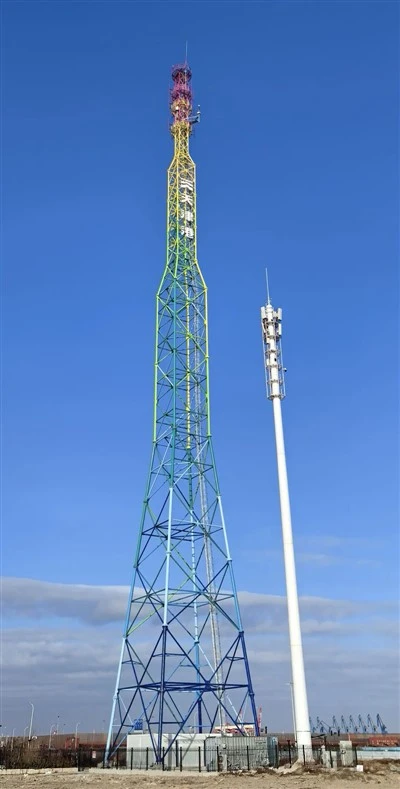
First, let’s get one thing straight: lightning doesn’t just strike open fields and tall trees. It targets the highest point in an area, period. A 50,000-square-foot data center, even if it has a 20-foot-tall flat roof, is often the tallest structure for miles around. That means every storm within a 10-mile radius is looking for your building as its next target. I once worked with a mid-sized data center in the Midwest that skipped installing a protection tower, convinced its existing roof-level lightning rods were enough. Six months later, a direct strike fried two of their primary server racks. The downtime cost them $1.2 million in lost client revenue and emergency repairs—more than five times what a properly sized lightning protection tower would have cost upfront. That’s the kind of cost that doesn’t show up in insurance policies; most commercial insurance only covers about 70% of direct lightning damage to electronics, leaving operators on the hook for the rest.
Now, let’s talk about how a lightning protection tower works, because this isn’t just a tall pole with a pointed tip. The science here is called the “rolling sphere method,” a standard used by the National Fire Protection Association (NFPA) and the International Electrotechnical Commission (IEC) for lightning protection design. The method calculates the radius of a sphere that would be “protected” from lightning strikes if it were rolled over a structure. For most urban and suburban areas, NFPA sets the sphere radius at 60 meters (about 200 feet) for facilities holding sensitive electronics like data centers. A standard roof-mounted lightning rod only covers a small area directly around it; if your data center extends beyond that rod’s coverage, lightning can strike the unprotected edges of your roof, sending a surge of electricity straight into your building’s electrical and networking systems. A lightning protection tower, by contrast, is engineered to sit just 10 to 15 feet taller than the highest point of your data center’s roof, so that 200-foot rolling sphere completely encloses your entire facility. No gaps, no weak points.
I know some operators will argue: “We have surge protectors and UPS systems—why do we need another layer?” Surge protectors and uninterruptible power supplies (UPS) are essential, but they’re designed to handle small, sudden spikes in electrical current from things like nearby construction, not a direct lightning strike. A direct strike to a data center’s roof can carry up to 200,000 amps of current. A good surge protector might handle a few thousand amps, but that’s it. Even if your UPS kicks in to keep servers running during a power outage, a lightning surge can burn out the UPS’s internal components before it can respond. Last year, a client on the East Coast told me they’d replaced their surge protectors three times in two years, thinking that was enough. Once a lightning bolt struck a transmission line half a mile away, creating an indirect surge that traveled through the power grid and fried their entire network switch infrastructure. They ended up installing a 40-foot lightning protection tower six months later; in the two years since, they haven’t had a single surge-related outage. That’s the difference between protecting against close calls and eliminating the risk entirely.
Let’s address a common misconception: “Our data center is in a low-lightning-area, so we don’t need a tower.” That’s a dangerous assumption. The National Oceanic and Atmospheric Administration (NOAA) data shows that no place in the U.S. is truly “low-lightning”—even states like Washington and Oregon average 10 to 15 thunderstorm days per year. And lightning doesn’t always follow historical patterns. Climate change has increased the frequency and intensity of thunderstorms across most of North America over the past 20 years, according to a 2023 study in the Journal of Climate. What was once a “rare” storm in your area might now be a yearly event. I’ve seen data centers in Seattle, a city not known for severe thunderstorms, install protection towers after a bolt struck a rooftop AC unit, taking down their internet for 18 hours and costing their clients $800,000. If that’s the cost of a single storm in a region not historically prone to lightning, you can’t afford to gamble.
Another angle: compliance. Most industry standards for data centers—including the Uptime Institute’s Tier Standards, which are the gold standard for data center reliability—require a comprehensive lightning protection system as part of a facility’s infrastructure. If you’re aiming for Tier III or Tier IV certification, you can’t skip this. Clients, especially large enterprise clients, will often audit a data center’s compliance with these standards before signing on. I worked with a colocation provider that almost lost a major retail client because they couldn’t provide documentation of their lightning protection system. The client required proof that their customer transaction data was stored in a facility that met NFPA lightning safety guidelines; the colo’s roof-mounted rods didn’t meet the full coverage requirement, so they had to rush to install a protection tower to keep the contract. That’s not a hypothetical—contracts are often written to include uptime guarantees, and a single lightning-related outage can mean losing that contract entirely.
Now, I want to be clear: not all lightning protection towers are the same. As a supplier, I’ll tell you that a cheap, 20-foot steel pole you can order from a hardware store won’t do the job. A proper lightning protection tower is made from corrosion-resistant materials (galvanized steel or aluminum) to last 25 to 30 years, has multiple grounding rods driven 8 to 10 feet into the earth to dissipate current safely, and is engineered to avoid interfering with nearby wireless signals—critical because many data centers rely on cellular or satellite links for backup connectivity. We also offer custom designs for facilities with unique layouts, like multi-building campuses or rooftop solar panels, so the protection system doesn’t block sunlight or disrupt equipment. The cost, for most mid-sized data centers, ranges from $15,000 to $50,000, depending on height and customization. Compare that to the average cost of a data center outage: Uptime Institute reports that a Tier III data center outage costs an average of $100,000 per hour, and a Tier IV outage can be twice that. A single hour of downtime from a lightning strike will erase the cost of a tower many times over.
I’ve seen firsthand what happens when data centers skip this step. In 2021, a large cloud provider in Texas lost a primary data center for 14 hours due to a lightning strike that bypassed their roof rods, destroying their power distribution unit and 12 server bays. The company later reported that the incident cost them $150 million in lost revenue and reputational damage. On the flip side, a client of mine in Arizona, which gets more thunderstorm days than almost any other state, has had a protection tower for 10 years. They never had a single lightning-related outage during that time. Last year, a direct strike hit their tower instead of their building; the tower safely dissipated the current, and their servers kept running without even a blip in activity. That’s the kind of peace of mind you can’t put a price on.
I know data center operators have a lot on their plate—managing cooling systems, cybersecurity, staffing, and keeping up with evolving regulations. Adding a lightning protection system can feel like just another line item on a long budget. But here’s the thing: lightning doesn’t give you a heads up. It can strike in the middle of the night, during a holiday, when your team is stretched thin. The cost of being unprepared isn’t just the equipment you have to replace—it’s the trust your clients have in you, the money you lose in revenue, and the damage to your brand that takes years to fix.
If you’re still on the fence, here’s a simple test: ask your facilities team to calculate how far your roof’s lightning rods extend beyond the edges of your data center. If that distance is more than a few feet, or if your entire facility isn’t covered by the rolling sphere method, you have a gap. That gap is where lightning can strike, and that’s where your data center is vulnerable. A lightning protection tower closes that gap, eliminating that risk.
I’ve been in this industry long enough to know that skepticism is healthy—you don’t want to invest in something that doesn’t deliver value. But after hundreds of installations, dozens of client stories, and working with engineers to test these systems, I can say this with confidence: for any data center that prioritizes uptime and client trust, a properly designed and installed lightning protection tower is not a luxury. It’s a necessity.

If you’re ready to assess your data center’s lightning protection needs, or have questions about designing a system that fits your facility’s size, layout, and budget, reach out to us. We’ll send a certified engineer to conduct a free on-site assessment, review your current setup, and walk you through exactly how a lightning protection tower will protect your investment. Don’t wait until the next storm—mitigate the risk before it becomes a costly mistake.
Communication Tower References
National Fire Protection Association (NFPA). (2022). Standard for Lightning Protection. NFPA 780.
Uptime Institute. (2023). Tier Performance Requirements. Uptime Institute Global Standards.
NOAA National Centers for Environmental Information. (2024). U.S. Thunderstorm Density and Frequency Trends.
Journal of Climate. (2023). Trends in Severe Thunderstorm Activity Under Climate Change. American Meteorological Society.
Hunan Zhubang Hongsheng Construction Technology Co., Ltd.
As one of the most professional lightning protection tower manufacturers and suppliers in China, we’re featured by quality products and good price. Welcome to buy high-grade lightning protection tower made in China here and get quotation from our factory. Customized orders are welcome.
Address: Lutang Village, Yong’an Town, Liuyang City, Changsha City, Hunan Province, Hunan Zhubang Hongsheng Construction Technology Co., Ltd.
E-mail: 19898838989@163.com
WebSite: https://www.chinaenerto.com/
