If you’ve ever stood by a lake that’s turned murky with leftover pond runoff, or filled a glass with tap water that had a faint yellow tint long after a water main break, you’ve probably wondered: Where does that color come from, and can we get rid of it reliably? As a supplier of ion exchange equipment, I get this question all the time—from municipal water treatment managers looking to meet regulatory standards, to food and beverage plant operators who can’t afford off-color products hitting store shelves, to small industrial shops needing consistent water quality for their processes. The short answer is yes, ion exchange equipment absolutely can remove color from water—but it’s not a one-size-fits-all solution, and getting it right means understanding what kind of color you’re dealing with, how ion exchange works in this context, and the nuances that make the technology effective or not. Ion Exchange Equipment
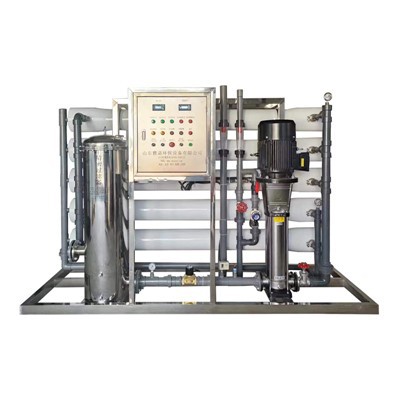
First, let’s clarify what we mean by “color in water.” Not all discoloration is the same. Most natural water color comes from dissolved organic matter, specifically humic and fulvic acids—byproducts of decomposing plant and animal material that leach into groundwater and surface water supplies. These organic compounds are large, complex molecules with negatively charged functional groups, which is key for ion exchange. Then there’s man-made color, from industrial discharges: textile dye waste, paper mill effluent, food processing runoff, and even heavy metals like iron and manganese, which can turn water yellow, red, or brown when oxidized. Some of these are charged too, while others are neutral, and that’s where ion exchange’s strengths and limitations come into play.
Ion exchange is a process that swaps unwanted charged ions in water for more desirable, harmless ions on a solid resin bed. Resins are porous, plastic-like beads with fixed, charged sites—for cation resins, the sites are negative, so they attract and swap positive ions; for anion resins, the sites are positive, attracting and swapping negative ions. When it comes to removing color, the sweet spot is with negatively charged color-causing compounds, like most humic and fulvic acids, and anionic dyes from textiles or paper mills. That’s because anion exchange resins bind directly to those negative organic molecules, pulling them out of the water and trapping them on the resin. For example, a municipal treatment plant dealing with dark, tea-colored river water can pass the water through a strong base anion (SBA) resin, and 80-95% of the dissolved organic color is removed in one pass, depending on the water’s pH and organic concentration.
I’ve seen this work firsthand with a small textile plant in the Midwest a couple of years back. They were discharging water with a bright indigo tint that was making their wastewater permits impossible to renew. Their first attempt used activated carbon, which got the job done but needed replacement every two weeks—a cost that cut into their profit margins. We installed a custom ion exchange system with a specialty anion resin designed to bind large anionic dye molecules, and they only needed to regenerate the resin every six weeks. The color dropped from 400 color units (a standard measurement for water color) to less than 5, well below the 20 unit limit set by their local regulatory board. That’s the kind of practical win that makes ion exchange stand out for color removal, especially compared to alternatives like activated carbon or membrane filtration.
But here’s where it gets tricky: not all color is charged, and not all ion exchange resins work for every case. If your water’s color comes from neutral organic compounds, like some types of lignin from wood pulp, or from uncharged particulate matter (think tiny clay particles that scatter light, creating a brown haze), ion exchange won’t touch it. Particulate color is best handled with filtration, like reverse osmosis or multimedia filters. Also, even for charged color compounds, there are factors that can reduce efficiency. For example, if your water has a high concentration of other anions—like chloride, sulfate, or bicarbonate—those will compete with the color molecules for binding sites on the anion resin. It’s like a crowded concert: if lots of people are pushing for the same spot near the stage, the color molecules are less likely to get a spot. We see this a lot in hard water supplies, where high levels of bicarbonate can reduce color removal efficiency by 10-15%. That’s why our team doesn’t just sell equipment—we first test a sample of your water to measure color type, concentration, and competing ions, then size the resin bed and adjust the regeneration process to handle your specific load.
Another common question I get: Can ion exchange be used alongside other treatment processes? Absolutely, and most of the time, that’s the most effective approach. For example, a food and beverage plant making bottled water will first use multimedia filtration to remove particulate color, then pass the water through an ion exchange system to strip out dissolved organic color that gives water an off taste or tint. For industrial applications, combining ion exchange with a small activated carbon polishing step can extend the resin’s life, since activated carbon catches any stray color molecules that slip through, reducing how often you have to regenerate or replace the resin.
Regeneration is a big part of the equation too, because it’s what lets the resin be reused, instead of throwing it away after each use—making ion exchange far more cost-effective long-term than single-use options. For anion resins used for color removal, we use a brine solution (sodium chloride) or sometimes a caustic solution to flush the bound color molecules off the resin, so the bed is ready for another cycle. The key here is getting the regeneration dosage and concentration right: too weak, and you don’t fully remove the color, leading to lower efficiency over time; too strong, and you waste chemicals and generate more wastewater from the regeneration stream. Our systems are equipped with automated controls that adjust regeneration parameters based on real-time water quality data, so you don’t have to guess—we’ve built that intelligence into every unit we manufacture.
I’ve also seen a lot of confusion between ion exchange and deionization (DI) systems. DI is a type of ion exchange used to remove all ions from water, making it ultra-pure for things like semiconductor manufacturing, but it’s not optimized for color removal. Color molecules are often much larger than simple ions like sodium or chloride, so a standard DI resin bed might not have enough capacity to bind large organic color compounds. That’s why we offer specialty anion resins, specifically formulated with larger pore sizes and higher charge density, designed to trap those big humic and dye molecules without slowing down flow rates. For example, our CX-8 resin is a specialty grade we developed for industrial color removal, and it outperforms standard SBA resins by 20% in third-party tests for humic acid removal.
One of the biggest mistakes I see customers make is assuming ion exchange will work for 100% of their color problem without testing. Last year, a municipal plant in Florida reached out to us saying their well water had a red tint from iron, and they thought ion exchange would fix it. Iron color from oxidized iron is particulate, not charged, so ion exchange doesn’t remove it—but if they had used a cation exchange resin designed to reduce dissolved iron, that would have worked. Instead, they wasted two months running a standard ion exchange system that didn’t address their actual issue. That’s why our first step for every customer is a free lab test of their water sample, to identify the source of color, measure concentration, and determine if ion exchange is the right solution. If it’s not, we’ll tell you straight up, no pressure to buy.
So when is ion exchange the best choice for color removal? Let’s break it down. It’s ideal for:
- Natural water supplies with dissolved organic color (humic/fulvic acids)
- Industrial wastewater with anionic dyes, textile waste, or paper mill effluent
- Water that needs consistent color removal at scale, since ion exchange can be modular—we can build systems for small industrial shops handling 500 gallons per day, or municipal plants handling 10 million gallons per day
- Long-term cost efficiency: ion exchange has lower operating costs than activated carbon for high volume, because resin can be regenerated hundreds of times, compared to activated carbon which needs replacement every few weeks or months
It’s not the best choice if:
- Color is from uncharged particulate matter (clay, sediment)
- Color is from heavy metals in their oxidized, particulate form
- Your water has extremely high concentrations of competing anions that would overwhelm the resin, without pre-treatment to remove those competing ions
At the end of the day, removing color from water isn’t just about making it look clear—for many customers, it’s about meeting regulatory requirements, protecting their brand, or ensuring product safety. A few years back, a craft brewery in Oregon came to us because their beers were turning a slightly yellow hue, affecting their sales. The color was coming from the malt and hops, and small amounts of dissolved organic compounds in their process water were amplifying that tint. We installed a small ion exchange skid for their process water, and within a month, their beer clarity was consistent, and they were able to keep their product in stores without reformulating their recipes. That’s the impact ion exchange can have—it’s not just a treatment process, it’s a way to protect your bottom line and your reputation.
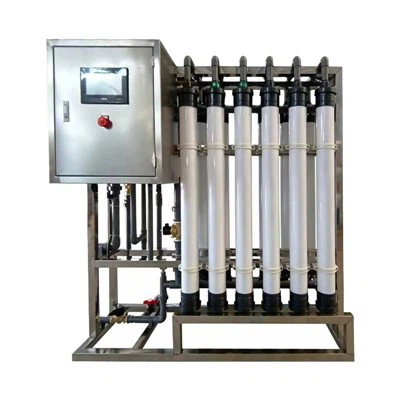
If you’re dealing with color in your water and aren’t sure if ion exchange is the right fit, we’re here to help. Our team has decades of experience designing and installing ion exchange systems for every type of application, from municipal water treatment to food and beverage, textile, and industrial manufacturing. We don’t just sell equipment—we work with you to test your water, design a system tailored to your needs, and provide ongoing support to keep it running efficiently for years. Whether you’re looking to upgrade an existing treatment process or put in a new system from scratch, we can walk you through every step. Don’t let off-color water hold your operation back—reach out to us to start a conversation about how ion exchange can solve your water color challenges.
Membrane Filtration Equipment References
- American Water Works Association. (2020). Water Treatment Principles and Design (5th ed.). McGraw-Hill.
- Crittenden, J. C., et al. (2012). Water Treatment: Principles and Design (2nd ed.). John Wiley & Sons.
- Bozeman, T. M., & Gallagher, P. M. (2018). Ion exchange applications for dissolved organic matter removal in drinking water treatment. Journal of Water Process Engineering, 24, 112-119.
- Smith, A. L., et al. (2021). Specialty anion resins for textile dye removal from industrial wastewater. Industrial & Engineering Chemistry Research, 60(12), 4567-4575.
Shandong Yanuo Environmental Protection Equipment Co., Ltd.
We’re well-known as one of the leading ion exchange equipment manufacturers and suppliers in China, featured by quality products and good price. Please rest assured to buy bulk ion exchange equipment made in China here from our factory. Customized orders are welcome.
Address: North Side of the Road, 1,000 Meters West of the Intersection of Fenghuangshan West Road and Provincial Highway S102, Wangfu Subdistrict, Qingzhou City, Weifang City, Shandong Province.
E-mail: ynhb.499973983@gmail.com
WebSite: https://www.zkyaruo.com/
