As a rare and special gas equipment supplier, I’ve spent years working with lab managers, industrial process engineers, and safety officers who share one constant challenge: keeping high-purity gas systems running without downtime. Rare gases—think helium, neon, krypton, xenon, or specialty mixes like argon-hydrogen for semiconductor etching—are expensive, volatile, and their equipment (from manifold panels and purifiers to leak detectors and pressure regulators) doesn’t tolerate even tiny operational slips. A single unmonitored glitch can waste thousands of dollars in gas, shut down production lines, or even create a safety hazard. Over time, I’ve learned that monitoring these systems isn’t just about checking gauges—it’s about a layered, proactive approach tailored to the unique needs of rare gas equipment. Here’s what we teach our clients, and what we rely on every day in our own service work. Rare/Special Gas Equipment
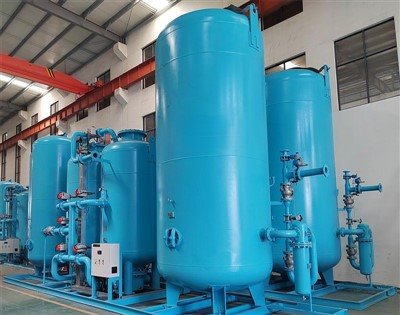
First, you can’t monitor what you don’t measure—and for rare/special gas equipment, the core metrics are non-negotiable. Let’s start with pressure. Unlike general industrial gas systems, rare gas lines operate at very specific, narrow pressure ranges: high-pressure cylinders hold gas at 2000–3000 psi, while distribution manifolds keep line pressures between 10–100 psi, depending on the application. Our clients often skip regular pressure checks, relying on manual gauge readings, but that’s a mistake. Manual checks are prone to human error, and a slow pressure drop in a line can signal a micro-leak that will grow over time, wasting gas or letting contaminants seep in. We recommend installing digital pressure transmitters with alarm triggers set to 10% below the minimum operating pressure—this lets you catch drops before they become crises. For example, a client of ours that supplies liquid xenon for medical imaging once missed a 5 psi pressure drop in their delivery line; by the time they found the leak, they’d wasted 12% of their annual xenon allocation, costing them over $15,000 in replacement gas alone.
Next, purity. Rare gases are only valuable if they’re pure: semiconductor-grade krypton needs 99.999% purity, and medical-grade helium is even more stringent at 99.9999%. Even a tiny amount of air (oxygen, nitrogen, or moisture) can ruin a batch of wafers or make a medical gas unsafe. So you need continuous purity monitoring, not just quarterly lab tests. Inline gas analyzers for rare gases don’t have to be bulky or expensive—we work with compact, modular analyzers that plug directly into distribution lines, measuring trace contaminants as low as 0.1 ppm. These analyzers send real-time data to a central dashboard, and will trigger an alert if purity drops below your threshold. We also advise regular calibration: a mis-calibrated analyzer can give a false sense of security, so we recommend checking readings against certified reference gases every six months.
Then, flow rate. For many specialty applications, like thin-film deposition in manufacturing, the exact flow rate of a rare gas directly impacts the final product’s quality. A 0.5 sccm (standard cubic centimeter per minute) change in argon flow can make a semiconductor chip defective, leading to thousands in lost material. Thermal mass flow meters are the gold standard here for rare gases, because they measure true mass flow (not just volume, which changes with pressure and temperature) and are precise enough for low-flow applications. We always suggest pairing flow meters with pressure and temperature sensors to normalize readings—this way, you can spot if a flow drop is due to a clogged filter, a leak, or a change in supply pressure.
Once you have those core metrics, you need to put them into context with a structured monitoring plan that goes beyond just numbers. Let’s talk about leak detection, which is make-or-break for rare gas systems. Rare gases are often odorless, invisible, and expensive, so even a small leak can go unnoticed for weeks. The old method of soapy water on connections works for general gases, but for high-pressure rare gas lines, we use more sensitive tools: infrared leak detectors for hydrocarbons (if you’re using specialty mixes with organic components), helium mass spectrometers for trace leaks (since helium is a rare gas itself, so it’s an ideal tracer), and ultrasonic detectors for high-pressure line leaks. We also recommend monthly leak surveys of all threaded connections, fittings, and valve seals—especially after equipment maintenance or cylinder changes, which are common times for leaks to develop.
Safety monitoring is another layer that can’t be overlooked, because rare/special gases often have unique hazards. For example, cryogenic rare gases like liquid neon or krypton expand to 700 times their liquid volume when they vaporize, so a leak in a confined space can displace oxygen and cause asphyxiation. Helium is lighter than air, so it can accumulate in ceiling spaces; heavier rare gases like xenon sink to floors, creating a hidden hazard. That means your monitoring system should include gas detectors for oxygen levels and specific rare gas concentrations, depending on your space. For clients working with medical gas cylinders, we also monitor for pressure relief valve integrity—if a valve fails, it can release gas unexpectedly, creating a blast risk. All these safety alarms should tie into your main monitoring system, so you don’t have to check multiple separate devices.
Now, technology plays a huge role in making this monitoring sustainable. I’ve seen small labs rely on paper logs and manual checks, but that leads to missed alerts and inconsistent records. A cloud-based monitoring dashboard lets you track all your equipment metrics from anywhere: a lab manager can check pressure and purity from their phone while on break, and an engineer can review historical data to spot trends (like a gradual pressure drop that’s pointing to a slow leak before it becomes a big problem). We also offer integration with automated control systems—your manifold can switch between cylinders automatically when one is empty, based on flow and pressure data, without manual intervention. For larger facilities, we can set up predictive maintenance alerts: if your purifier’s inlet purity is slowly decreasing, the system will tell you it’s time to service the purifier before it fails, rather than waiting for a purity alert that could ruin your process.
But here’s the thing: technology only works if you pair it with regular, on-site checks. I’ve seen clients invest in expensive monitoring systems but skip annual maintenance, leading to sensor drift, clogged filters, and inaccurate readings. As a supplier, we don’t just sell equipment—we provide on-site calibration and maintenance services for our monitoring tools. We recommend quarterly on-site audits, where our technicians go through every piece of equipment: checking pressure transducers, calibrating purity analyzers, testing leak detectors, and verifying that alarm thresholds are still set correctly for your current gas mix. For critical systems (like those used in semiconductor manufacturing), we do semi-annual audits to catch issues early.
I also want to address a common misconception: you don’t need to monitor every single piece of 100% of the time. That would be overkill and expensive. Instead, prioritize your critical equipment: for example, the main distribution manifold that supplies all your process tools is high-priority, while a secondary line for a backup lab machine can have slightly less frequent checks. Work with a supplier to map your system’s criticality rating, so you can allocate your monitoring budget where it matters most. For example, a client that runs helium lines for MRI machines (a medical application where downtime could be life-threatening) has round-the-clock monitoring, while a smaller lab using krypton for research has scheduled daily checks plus a digital alert system for after hours.
Another key tip: keep detailed records of all monitoring and maintenance. Rare gas equipment’s performance is tied to its history—if you have a pressure drop, a log can tell you if it happened after a cylinder change, or if it’s a gradual trend. This is especially important for compliance: many industries (medical, semiconductor, aerospace) require documented proof of gas purity and equipment safety. Our clients often use this documentation to pass audits from the FDA, FAA, or semiconductor industry standards organizations.
Over the years, I’ve learned that the best monitoring systems are built with the user in mind. A one-size-fits-all approach doesn’t work: a medical gas supplier has different needs than a semiconductor manufacturer, which has different needs than a research lab. That’s why we work with each client to design a custom monitoring plan: we assess their equipment layout, their gas types, their application requirements, and their budget, then build a system that’s easy to use, reliable, and scalable. For example, a small research lab might not need a cloud dashboard, but they do need a portable leak detector and a digital log sheet. A large industrial facility will benefit from full automation and remote alerts.
The biggest mistake I see new clients make is waiting for a problem to start monitoring. By the time a leak is found or a purity drop is noticed, the cost of fixing it is far higher than investing in proactive monitoring. We’ve had clients come to us after a $20,000 gas loss because they skipped monitoring, and we can show them how a $5,000 monitoring system would have prevented that loss multiple times over.
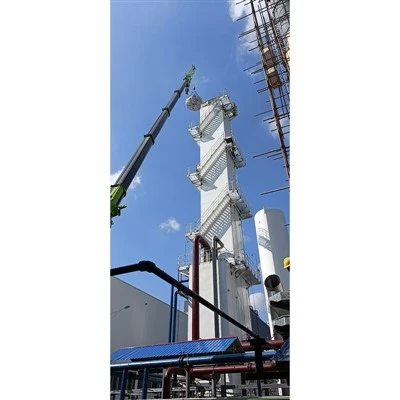
If you’re currently struggling with keeping your rare/special gas equipment running smoothly, or you’re looking to upgrade your monitoring system, we’re here to help. We don’t just supply equipment—we partner with you to design a monitoring plan tailored to your operations, provide on-site support, and ensure your systems run safely and efficiently. Reach out to our team to discuss your specific needs, and we’ll walk you through the best options for your facility.
Air Separation Unit References
- Compressed Gas Association. (2022). Safety Standards for Cryogenic and Specialty Gases. CGA Press.
- Semiconductor Industry Association. (2021). SEMI Standard for Ultra-High Purity Gas Monitoring in Manufacturing. SEMI International.
- International Organization for Standardization. (2020). ISO 10156: Gases and Gas Mixtures – Determination of Fire Potential and Oxidizing Potential. ISO.
- National Fire Protection Association. (2023). NFPA 55: Compressed Gases and Cryogenic Fluids Code. NFPA.
- American Society of Mechanical Engineers. (2022). ASME B31.3: Process Piping for Special Gas Systems. ASME.
Hanturbo Technology (Zhejiang) Co., Ltd.
Hanturbo Technology (Zhejiang) Co., Ltd. is one of the most professional rare/special gas equipment manufacturers and suppliers in China, also supports custom service. We warmly welcome you to buy discount rare/special gas equipment made in China here and get quotation from our factory. For price consultation, contact us.
Address: No.118, Wangluo Road, Deqing County, Huzhou City, Zhejiang Province, China.
E-mail: andyxu@hanturbo.com.cn
WebSite: https://www.hanturbo-gas.com/
