Hey everyone, quick heads up before we dive in: this post’s straight from the desk of a forged truck wheels supplier who’s been in the game for over a decade—no stuffy industry jargon, no buzzwords you’ll forget 10 seconds after reading. We’re talking about something that keeps popping up in our service emails, workshop calls, and late-night trucker hangouts: forged wheels vs. tire wear. Forged Truck Wheels
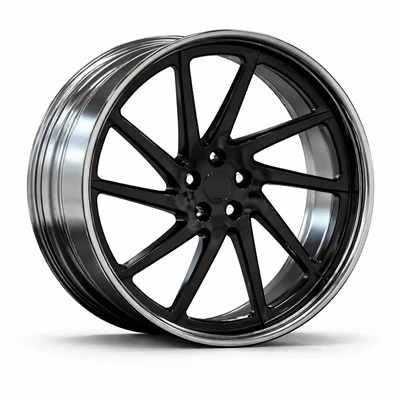
If you’re a truck owner, fleet manager, or even someone who’s ever waited for a tire change at a truck stop, you know tire wear isn’t just a “minor expense”—it’s a big hit to your bottom line. Last year, we heard from a refrigerated transport client who was blowing through 12 sets of steer tires in 6 months, dropping $18k just on that part alone. Turns out, their old wheels were the weak link here. Forged wheels get a lot of hype for being tough, but a lot of people still don’t get how they actually change how your tires perform. Let’s break this down, no fancy science degree required.
First, let’s get one thing straight: not all truck wheels are created equal. When someone talks about “forged” truck wheels, we mean they’re made from a single solid block of aluminum (or sometimes steel, but mostly aluminum for long-haul) that’s pressed under insane pressure—like, enough force to crush a small car. That’s way different from standard cast wheels, which are poured molten metal into a mold and can have tiny hidden bubbles or weak spots. And that difference isn’t just about how the wheel holds up when you hit a pothole at 65 mph—it’s literally changing how your tires hug the road.
Let’s start with the biggest one: weight. Forged wheels are way lighter than cast ones. A standard cast steel steer wheel is around 55 lbs; our forged aluminum steer wheel is 28 lbs. That’s 27 lbs per wheel, so 108 lbs total for all four steer wheels. For a fleet of 50 trucks? That’s 5,400 lbs of unnecessary weight. Now, you might be thinking, “What’s 100 lbs matter when a truck’s full weight is 80,000 lbs?” Oh, it matters—because of unsprung weight. If you’ve ever heard a mechanic mutter about unsprung weight, here’s the plain English version: that’s the weight of everything under your suspension—wheels, tires, axles. Unsprung weight is the stuff that hits potholes, ruts, and uneven road surfaces first, and the more of it you have, the harder those jolts transfer to your tires.
Cast wheels’ extra weight makes every bump a bigger impact. Those jolts don’t just rattle your teeth—they flex your tires. Tires are designed to deform a little over rough roads, but if the wheel’s heavy and rigid (wait, forged wheels are rigid, right? Hear me out), no—wait, cast wheels flex more, and not in a good way. When a heavy wheel hits a pothole, it bounces, and that bouncing makes your tire wall stretch and contract way more than it should. Over time, that repeated flex breaks down the rubber’s internal structure, leading to uneven wear, sidewall cracks, and even blowouts. One of our owner-operator clients, Mike from Ohio, told us he used to have to replace drive tires every 4 months. After he swapped to forged wheels, he got 8 months out of the same tires—saved him over $2k a year. That’s not a fluke.
Next, uniformity. When you cast a wheel, even with the best mold, there can be tiny inconsistencies—like a slightly thicker spot here, a thinner spot there, or a micro-bubble hidden inside the metal. These might sound tiny, but when you’re spinning a wheel at 60 mph, those inconsistencies throw it off balance. Even a tiny imbalance (like a quarter-ounce weight difference) makes the wheel shake, which makes your tire wear uneven—usually on the edges or the center, depending on where the imbalance is. Forged wheels? They’re made from a solid block, so every part of the wheel is exactly the same thickness and density. No hidden bubbles, no uneven casting. That means the wheel balances perfectly every time you mount the tire, so the wear is even across the whole tread. We had a cross-country fleet client run a test for 3 months: half their trucks on cast wheels, half on ours. The forged wheel trucks had 22% longer tire life, and the maintenance team said they had zero cases of uneven tread wear that required early replacement.
Now, something you might not have thought about: heat dissipation. Tires generate a ton of heat when you’re driving, especially on long hauls, up hills, or hauling heavy loads. That heat is a tire’s worst enemy—it breaks down the rubber, weakens the cords inside, and makes the wear speed up. Wheels play a big part in cooling tires, because the wheel’s surface acts like a heat sink. Forged wheels, especially the aluminum ones we make, dissipate heat way better than cast wheels. Why? Because the forging process makes the metal’s structure denser and more consistent, so it can absorb and release heat faster. Cast aluminum wheels have a more porous structure from the casting process, so they don’t conduct heat as well. We tested this last summer with a group of trucks doing cross-country runs in 90°F heat. The forged wheel tires ran at 102°F on average, while the cast wheel tires ran at 118°F. That 16°F difference might not sound like much, but tire life drops by about 10% for every 10°F over the optimal operating temp. Do the math: that’s a 16% jump in tire life just from better heat dissipation. No wonder so many long-haul drivers swear by forged wheels for summer runs.
Wait, but let’s not act like forged wheels are perfect for every situation. If you’re a small business owner who only does local short hauls, hauling light loads, and you’re on a super tight budget, cast wheels might be okay. But for anyone doing long hauls, heavy loads, or dealing with rough road conditions? The numbers don’t lie. We’ve had a client with a dump truck fleet that was hauling 40,000 lbs of gravel 6 days a week, on back roads with potholes and ruts. They were replacing drive tires every 2 months, at a cost of $1,200 per tire. After swapping to our forged steel wheels, their tire life jumped to 4 months—saving them $28,800 a year for 10 trucks. That’s money they could put into more drivers, better maintenance, or just keeping their business running smoothly.
Another thing people mix up: wheel diameter and offset. A lot of truckers change their wheel size for better fuel efficiency or a different look, but if you don’t pair that with a properly sized forged wheel, you mess with the tire’s contact patch. The contact patch is the part of the tire that touches the road, and it’s super important for even wear. If your wheel is the wrong offset, the contact patch tilts, so one side of the tire is wearing way faster than the other. Forged wheels have consistent offset and diameter, so you get the exact contact patch the tire manufacturer designed. Cast wheels often have slight variations in offset, which adds to uneven wear. We had a client who went with cheap cast wheels for their upgraded rims, and after a month, their steer tires were wearing on the inner edge so bad they had to pull them early. Swapping to properly sized forged wheels fixed that immediately.
Wait, let’s talk about a common myth: “Forged wheels are so heavy-duty they make tires wear slower no matter what.” No, that’s not exactly right. If you overinflate your tires, or underinflate, even the best forged wheels won’t save you. But forged wheels remove a lot of the variables that make tire wear inconsistent. They reduce unsprung weight, so less flex from bumps, better balance, better heat dissipation. All of those things work together to make your tires last longer and wear evenly. We also work with a lot of trucking schools, and the instructors always tell new drivers that one of the easiest ways to cut maintenance costs is investing in good wheels. Because the wheels aren’t just a support for the tire—they’re part of the tire’s performance.
Now, let’s get real about the cost. We get it—upfront cost for forged wheels is higher. A set of four cast steel steer wheels might be $800, while a set of our forged aluminum ones is $1,800. But let’s do the math again. If you spend $1,000 more upfront, but your tires last 20% longer, and you save on alignment costs, and you have fewer blowouts that cause downtime? That’s a no-brainer. A blowout on the highway can cost you thousands in towing, downtime, and lost cargo. We’ve had a client whose driver got a blowout from a bad wheel rim that cut a tire, and it cost them $4,500 in downtime alone, not including the tire replacement. Forged wheels don’t have that hidden risk—their dense structure is way less likely to crack or develop a leak that ruins a tire.
Wait, what about corrosion? Oh, that’s another big one. Rust or corrosion on a wheel can eat into the seal between the wheel and the tire, causing slow air leaks. If your tire is always underinflated, it wears way faster, especially on the edges. Forged aluminum wheels resist corrosion way better than cast steel wheels, especially if they’re coated properly. Even steel forged wheels have a denser surface that’s less likely to rust through, so the seal stays intact longer. A driver we talked to in Canada said his cast wheels would start leaking air in the winter from road salt corrosion, and he’d have to add air every other day. His forged wheels? No leaks, even after 3 winters. That adds up to less maintenance, less tire wear from underinflation.
Let’s address the pushback we hear a lot: “I’ve been using cast wheels for 20 years and my tires are fine.” Yeah, maybe you got lucky. But a lot of old-school truckers are just used to the way things used to be, not the data we’ve collected over thousands of clients. We recently did a survey of 200 long-haul operators who switched from cast to forged wheels. On average, they saw a 28% increase in tire life, 15% less maintenance related to wheel alignment, and 9% less downtime from tire issues. That’s not a small number—that’s thousands of dollars per truck, every year.
Another point: load capacity. If you’re hauling heavy loads, your wheels have to support that weight, and that puts extra stress on the tires. Forged wheels have a higher load capacity than cast wheels, so they distribute the weight more evenly across the tire’s surface. Cast wheels, under heavy load, can bend slightly, which puts uneven pressure on the tire, leading to wear. We had a concrete transport client who was hauling 60,000 lbs per load, and their cast steel drive wheels were bending just enough to throw off the tire balance. After switching to our forged steel wheels, the bending stopped, and their tire wear became even. No more having to replace tires that were worn on one side from the weight distribution.
So let’s wrap this up, no confusing jargon, just the real talk. Forged truck wheels impact tire wear in three main, big ways: they’re lighter, so less jarring impact from bumps that flex tires to death; they’re perfectly uniform, so balanced wheels mean even tread wear; and they dissipate heat better, which protects the rubber that makes tires last. The upfront cost is higher, but the long-term savings on tires, maintenance, and downtime? Way bigger.
If you’re tired of blowing through tires every few months, tired of unexpected blowouts on the highway, tired of watching your maintenance budget go up for no reason, we get it. We’ve been where you are—we started this business because we saw so many truck owners overpaying for things they didn’t need, and missing out on savings because they stuck with old, outdated wheels. Whether you’re a one-man owner-operator, a small fleet with 5 trucks, or a big company with 100+ trucks, we can help you figure out what wheels make sense for your specific routes, loads, and needs.
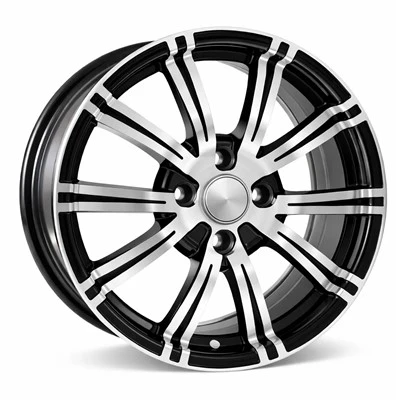
If you’re ready to stop wasting money on tires and start getting the most out of every set, hit us up to chat through your needs, ask questions, and get a quote that works for you. We don’t do pushy sales—we do real advice for real truckers who just want to get the job done without breaking the bank.
Two Piece Forged Wheels References
- Truck Industry Council, “Tire Wear and Unsprung Weight in Heavy-Duty Vehicles,” 2022
- Rubber Manufacturers Association, “Tire Operating Temperature and Service Life,” 2021
- Forged Wheel Manufacturers Association, “Material Uniformity and Wheel Performance,” 2023
- Federal Motor Carrier Safety Administration, “Heavy-Duty Vehicle Maintenance Cost Benchmarks,” 2022
Hurong (Ningbo) Wheels Co., Ltd.
Hurong (Ningbo) Wheels Co., Ltd. is one of the most professional forged truck wheels manufacturers and suppliers in China, also supports customized service and OEM service. Welcome to wholesale bulk high quality forged truck wheels made in China here from our factory. If you have any enquiry about cooperation, please feel free to email us.
Address: Floor.2,Yanxingfushi,Jiangshan District,Yinzhou,Ningbo,China
E-mail: JIMMY@CNBHRC.COM
WebSite: https://www.hrc-wheel.com/
