Hey there, if you’ve ever been deep in a manufacturing shop, staring at an automatic surface grinder humming along while it turns a rough metal block into that perfect flat, smooth part, you’ve probably wondered something: just how fast is that grinding, anyway? I get it—when you’re dealing with tight tolerances, material that can get messed up if you go too slow or too fast, and keeping your workflow moving, the grinding speed of an automatic surface grinder isn’t just a random number. It’s the whole difference between a part that works for your customer and one that ends up in the scrap bin. And since I’m the guy who supplies these grinders to shops like yours, I’ve answered this question way more times than I can count, so let’s break it down like we’re chatting over a coffee in the break room—no boring textbook jargon, promise. Automatic Surface Grinder
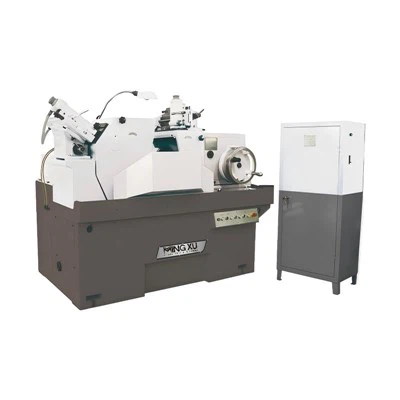
First off, let’s get one thing straight: when we talk about grinding speed on a surface grinder, we’re not just talking about how fast the machine moves across the part. That’s a common mix-up, honestly. There’s two key speeds here, and they work together like peanut butter and jelly. The first is the cutting speed (sometimes called peripheral speed) of the grinding wheel itself—that’s the speed at which the outer edge of the wheel spins as it touches the workpiece. The second is the feed speed, which is how fast the table holding the part moves back and forth under the wheel. Most people asking about “grinding speed” really mean the cutting speed, but I’ll cover both because they’re equally important for getting good results.
Let’s start with the cutting speed, because that’s the one that makes the chips fly (literally). For most automatic surface grinders I supply, the sweet spot for cutting speed falls between 1,200 and 1,800 surface feet per minute (SFPM) — wait, do some of you work in meters? No problem, that’s roughly 365 to 550 meters per minute. But hold on, that’s not a hard rule. I’ve seen shops run a little lower for super hard materials like carbide, and a bit higher for softer stuff like aluminum or mild steel. Let me explain why that range matters. If you go too slow, like below 1,000 SFPM, the grinding wheel starts rubbing instead of cutting. That friction generates way more heat, and you risk burning the part’s surface or even warping it—especially on thin parts that don’t hold their shape well. Too fast, over 2,000 SFPM, and you’re pushing the wheel way too hard. The abrasive grains on the wheel wear out super fast, they start glazing over, and you might get more chatter marks—those tiny, unwanted lines on the part you have to buff out later, which kills productivity.
Now, why does the range matter so much for different materials? Let’s say you’re grinding a mold insert made of P20 tool steel—super common in injection molding. I usually tell my customers to stick around 1,500 SFPM here. That speed is enough to keep the wheel cutting clean, not clog up with steel chips, and avoid burning the surface. If you’re grinding aluminum, which is softer and tends to gum up wheels, bumping it up to 1,700 or 1,800 SFPM helps because the softer chips don’t have time to stick to the wheel’s abrasive grains. And for carbide, which is like rock compared to steel, you drop it to 1,100 or 1,200 SFPM. The hard, brittle grains on a carbide wheel can’t handle faster speeds without chipping too much, so you go slower to make them last. It’s all about matching the wheel’s grit and bond to the material, but the cutting speed is the main knob you turn to get it right.
Then there’s the feed speed, which is the other half of the puzzle. That’s how fast the table moves the part under the grinding wheel. For automatic surface grinders, this is adjustable, right? Most of my models let you set feed speed from like 10 inches per minute up to 100 or more, depending on the machine size. The feed speed ties directly to how much material you’re removing per pass. If you’re doing a rough grind, where you need to take off a lot of stock fast, you crank the feed speed down and make deeper passes. But if you’re doing a finish grind, where you need that perfect, smooth surface with tight tolerances, you crank the feed speed up and make shallower passes. Wait, that might sound backwards—slower feed for rough, faster for finish? Let me make sure that makes sense. When you’re taking off a lot of material, going slow means the wheel is cutting deeper into the part each time it passes, so you remove more in less total cycles. For finish grinding, fast feed means each pass only removes a tiny bit of material, so you don’t leave those deep grooves that you have to fix later. It’s all about balancing material removal rate (MRR) with surface quality—something I help my customers tweak all the time when they first set up a grinder.
You might be wondering, “Why can’t I just set the speed to a fixed number and forget it?” Well, that’s where being automatic comes in, right? The automatic surface grinders I sell have settings that let you lock in those speeds, but they also adjust if the wheel gets dull, or if the material changes mid-job. For example, if your wheel starts to glaze over because you’ve been grinding steel all day, the machine can automatically bump up the feed speed a little to keep cutting, or you can tweak the cutting speed manually if you notice the surface is getting rough. A lot of entry-level manual grinders leave that up to the operator’s guesswork, but automatic models take a lot of that trial and error out of it—one of the main reasons shops upgrade, honestly.
Let’s talk about some real-world examples, because numbers are useless without context. Last quarter, I worked with a small job shop that grinds parts for automotive suspension components. They were using a old manual grinder before buying two of our entry-level automatic surface grinders. Before, their operator was guessing cutting speed at like 1,000 SFPM, which was burning 1 out of every 20 parts. After setting the cutting speed to 1,450 SFPM and adjusting feed speed based on rough/finish passes, their scrap rate dropped to less than 1 in 100, and they got 20% more parts out of each shift. They were stoked—said it paid for the grinders in three months. Another customer does mold inserts out of carbide, and they run the cutting speed at 1,100 SFPM. If they went faster, their wheel life would drop by almost half, which adds up when you go through a new $500 wheel every week instead every two weeks. That’s the kind of stuff that adds to your bottom line, not just getting the part right.
Wait, what about variables I haven’t mentioned? Oh right, the grinding wheel itself. The size of the wheel, the grit size, and the bond (the material that holds the abrasive grains together) all change what speed works best. A coarse-grit wheel (like 60 grit) for rough grinding needs a slightly lower cutting speed than a fine-grit wheel (like 180 grit) for finish work, because the coarse grains are bigger and can handle more stress. Also, wheel diameter—if you put a larger wheel on your grinder, the surface speed is faster for the same RPM than a smaller wheel. That’s why it’s important to make sure your speed settings match the wheel size you’re using; our grinders have built-in calculators for that, so you don’t have to do the math yourself. No one wants to be the guy who sets the wrong RPM and burns up a new wheel before the first part is done.
Another thing I get asked a lot: “What if I need to go faster for super high-volume jobs?” For long runs, like grinding the same part 1,000 times, you can optimize both cutting speed and feed speed to maximize MRR without ruining the part. But here’s the catch—you can’t push cutting speed too high just to go faster. I’ve had a customer try that once, cranking to 2,100 SFPM for a 10,000-part run. The result? The wheels wore out so fast they had to stop every 50 parts to dress the wheel, and the part quality dropped because the chatter marks got worse. It ended up taking them twice as long as the optimized 1,500 SFPM setup. So there’s a balance, and experience (or talking to the supplier) helps a lot here.
Let’s circle back to the machine itself, since that’s what I’m selling. Not all automatic surface grinders are the same, so their speed ranges can vary. The mid-range to heavy-duty grinders I supply have a cutting speed range up to 2,000 SFPM, which works for almost all common materials, and their feed speed goes up to 150 IPM, perfect for high-volume work. The smaller benchtop models for hobbyists or small shops top out around 1,600 SFPM, which is enough for mild steel, aluminum, and small parts. One mistake people make is buying a grinder that can go faster than they need, but also buying one that can’t reach the sweet spot for their materials. I always ask customers what they’re grinding, the part sizes, and their volume before recommending a grinder—makes sure they get the right speed range for their specific jobs.
Oh, and let’s not forget about safety. Grinding at the right speed isn’t just about part quality—it’s about keeping your shop safe. If you run a wheel at a speed higher than its rated maximum, that’s a huge hazard. Wheels can explode, sending shards flying, which is why every wheel has a maximum SFPM printed on it. All the automatic surface grinders I sell are set with speed guards that won’t let you go over the wheel’s rated speed. That’s non-negotiable. I’ve seen old manual grinders where people ignore that, and it’s not pretty. So when I talk about cutting speed, I always remind people to check their wheel’s rating first—our machines have quick access to that info so you don’t have to dig through a manual.
Wait, do I sound like I’m just pushing grinders? Fair, but I’ve been in this game long enough to know that most shop owners don’t care about specs—they care about not wasting time, not wasting materials, and making parts that their customers accept. The grinding speed of an automatic surface grinder is the foundation of all that. If you get the speed right, you get good surface finish, consistent part size, lower scrap, and higher throughput. If you get it wrong, you’re dealing with headaches all day.
Let me wrap this up with a quick checklist you can use the next time you set up a surface grind:
- Check your wheel’s rated maximum SFPM—never go over that.
- Pick your cutting speed based on material: ~1,200 SFPM for carbide, ~1,500 for tool steel/mild steel, ~1,700+ for aluminum.
- For rough passes: Lower feed speed, deeper cuts to remove material fast.
- For finish passes: Higher feed speed, shallower cuts for smooth, tight-tolerance surfaces.
- Use your automatic grinder’s features to lock in these speeds, so you don’t have to adjust for every single part.

If you’re confused about tweaking these settings for your specific parts, or you’re in the market for an automatic surface grinder that gets these speeds right without all the guesswork, hit me up to talk through your needs. No sales pitch, just actual advice from someone who’s been in your shop, watching these grinders work day in and day out.
Surface Grinding Machine References
- Todd, R. H., Allen, D. K., & Alting, L. (1994). Manufacturing Processes Reference Guide. Industrial Press Inc.
- Stephenson, D. A., & Agapiou, J. S. (2006). Metal Cutting: Theory and Practice (2nd ed.). CRC Press.
- Grinding Wheel Safety: Best Practices for Industrial Machining. (2021). American National Standards Institute.
- Surface Grinding Parameters for Efficient Material Removal. (2019). Society of Manufacturing Engineers.
- Automatic Surface Grinder Performance Specifications. (2022). Industrial Machine Tool Association.
Wuxi Mingxu Machinery Equipment Co., Ltd.
As one of the most professional automatic surface grinder manufacturers and suppliers in China, we’re featured by quality products and good price. Please rest assured to buy the best automatic surface grinder for sale here from our factory. Also, custom service is available.
Address: No. 5-5 Jinke Wealth Plaza, Changjiang North Road, Xinwu District, Wuxi City, Jiangsu Province
E-mail: yingyingmxjd@163.com
WebSite: https://www.mingxu-china.com/
