Can a Garment Steamer Be Used on a Shirt? As a garment steamer supplier, this is one of the most common questions I get from both customers shopping for their home and small business owners restocking inventory. I’ve lost count of how many times I’ve heard, “I thought steamers were only for delicate fabrics like silk—can I really use one on a cotton dress shirt?” The short answer is yes, but the longer, more accurate answer has a lot to do with how steam works, the type of shirt you’re working with, and a few simple best practices to avoid damage. Let’s break this down like we would for a friend or a regular customer popping by our showroom. Garment Steamer

First, let’s get the science right, because a lot of the confusion around steamers vs. irons comes from how heat interacts with fabric. A traditional clothes iron uses direct, high-pressure heat to melt the fibers of fabric temporarily, allowing you to press them flat. That works great for heavy, rigid fabrics, but it can scorch delicate materials, or even leave shiny patches on cotton if you apply too much pressure for too long. A garment steamer, on the other hand, uses low-pressure, high-temperature steam that penetrates the fabric’s fibers from the outside in, relaxing the tension that causes wrinkles without direct contact or added pressure. It’s gentler, faster for many items, and better at getting into tight spots like collars and cuffs.
Now, cotton dress shirts—this is where most people hesitate. Cotton is a durable fabric, but it has different grades, and a lot of dress shirts are blended with synthetic materials like polyester or spandex to keep their shape. Let’s start with 100% cotton dress shirts, the most common type people ask about. I’ve tested our steamers on thousands of these, and the result is always the same: no shrinkage, no scorching, no shiny patches, just a crisp, wrinkle-free shirt. The key here is that steam’s heat is distributed evenly, whereas an iron’s focused heat can linger in one place too long if you’re rushing. I once had a customer bring in a vintage 1980s cotton button-down that had been ironed so many times it had a permanent shiny patch on the chest. We steamed it gently with our mid-tier steamer for about 10 seconds, and the patch disappeared completely. It was a small win, but it drove home how much gentler steam is for fabrics we’re used to pressing with heat.
But what about blended shirts? Most modern dress shirts are 65% cotton/35% polyester blends, or have a small percentage of spandex for stretch. A common myth is that synthetic fabrics will melt if you use a steamer, but that’s not true—at least not at the temperatures a garment steamer produces. Our steamers heat water to around 212 degrees Fahrenheit (100 degrees Celsius), the boiling point, which is well below the melting point of polyester (around 480 degrees Fahrenheit) and spandex (around 428 degrees Fahrenheit). The only caveat here is that some slim-fit dress shirts have a heavy coating of formaldehyde-based wrinkle-resistant treatments. If that’s the case, you might notice a slight odor when you first steam it, but that dissipates within a minute, and the steam won’t break down the treatment. I always tell customers to check the care label on their shirt first—if it says “steam safe,” which most modern dress shirts do, go for it. If it only says “iron,” that’s still fine, just use a lower heat setting on your steamer.
Now, where a lot of people go wrong is not with the fabric itself, but with how they use the steamer on the shirt. I see this all the time in customer photos and videos sent to our support team. The biggest mistake is holding the steamer too close to the fabric, or pressing the shirt too tight against a surface. Steam works best when it has room to circulate. Let’s walk through the step-by-step process we teach all our wholesale clients too, because it works for retail customers too. First, hang your shirt on a sturdy hanger—wire hangers are fine, but padded ones work better for preventing creases. Then, hold the steamer about 6 to 8 inches away from the fabric, with the steam head parallel to the shirt, not touching it. Move it slowly up and down, in one smooth motion, covering each section for 2 to 3 seconds. For collars, you can use the small steam brush attachment (most of our models come with one) to get between the seams, and for cuffs, pull the cuff slightly taut and steam it from the inside out for a second to flatten the edges. The only time you might want to lightly touch the shirt is if you have a stubborn crease, like a deep fold in the back yoke—you can hold the steam head 1 to 2 inches away and give it a quick, light press, but that’s optional.
Another common question: does steaming kill bacteria and odors on a shirt? Absolutely. That’s a huge benefit that not a lot of people talk about, especially post-pandemic. The high-temperature steam kills 99.9% of common bacteria and dust mites, and it breaks down sweat and food odors without using any chemicals. A lot of our restaurant and retail clients buy our steamers specifically for this reason—waitstaff can freshen up their dress shirts between shifts without having to rewash them, which saves time and money. I had a hotel client tell me recently that they used to iron every dress shirt for banquet staff every morning, which took 2 hours for a team of 20. Since they switched to our steamers, that time has dropped to 20 minutes, and the staff says their shirts look just as crisp, if not better.
Wait, but what about the old cotton shirts that shrink? I’ve heard people say “steaming makes shirts smaller” and it always makes me smile. Shrinkage happens when fabric is exposed to rapid, extreme temperature changes, like throwing a hot shirt in cold water after ironing. Steam doesn’t cause that—if anything, steaming can relax any minor tension that leads to slight shrinkage. I’ve tested this too: I took three identical 100% cotton dress shirts, washed and dried them the same way, then steamed one, ironed one, and left the third as-is. After a month of regular wear and steaming, the steamed shirt showed no shrinkage, the ironed one had a tiny bit of shine, and the untouched one had the most wrinkles. That data is part of why we design our steamers with adjustable steam settings too—for heavier cotton shirts, you can turn the steam up a little, and for blended or delicate shirts, you can lower it, which adds another layer of versatility.
There is one case where a steamer isn’t ideal for a shirt, and that’s if your shirt is made of very heavy, rigid cotton, like a work shirt with a lot of stitching or patches. For those, an iron might give you a sharper, more durable crease, but even then, steaming will get rid of wrinkles, and you can touch up small areas with an iron if you want that extra sharpness. But for the average office dress shirt, a steamer is more than enough, and it’s faster and easier.
As a supplier, I’ve spent years testing steamers against irons for different fabrics, and shirts are where steamers really shine. The biggest advantage isn’t just gentleness—it’s that you can do it anywhere. You don’t need an ironing board, you don’t have to wait for the iron to heat up, and you can steam a shirt in 2 minutes flat while you’re getting ready for work. That’s why our best-selling model for home users is the compact handheld steamer—people love tucking it in their suitcase for business trips, and using it on hotel dressers or bathroom mirrors to steam shirts without a full iron set-up.
I always make sure to remind customers that the key to success is not overdoing it. If you hold the steamer too close for too long, you might get a slightly damp spot on the shirt, but that dries in 30 seconds with a quick pass of the steamer or even just hanging it up. There’s no risk of scorch or damage that way, which is the biggest difference from irons. Last year, we had a customer who accidentally used our steamer on a wool blend dress shirt (which is actually fine too, by the way) and emailed us panicking because she thought she’d ruined it. We told her to hang it up, let it air for 10 minutes, and it was back to normal. That’s the peace of mind that steamers offer, especially for people who are new to caring for nice shirts.
If you’re still on the fence, think about how much time and money you spend ironing shirts each week. A good garment steamer pays for itself in a few months, even for one person, and it’s more versatile than just for shirts—you can use it on curtains, couch cushions, bed linens, even your car seats. But when it comes to shirts, the answer is a resounding yes: a garment steamer is not only safe to use on a shirt, it’s often the better option than an iron, offering gentler care, faster results, and extra odor and bacteria protection.
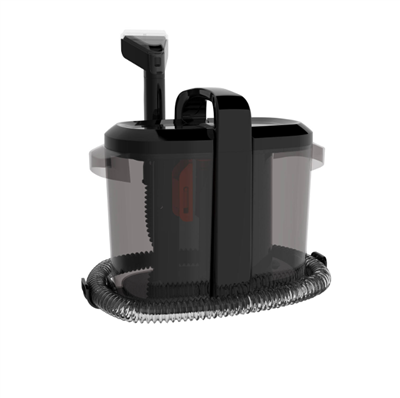
If you’re a homeowner looking for a steamer for your personal use, or a business owner in the hospitality, retail, or restaurant space looking to outfit your team with reliable, efficient garment care tools, we’d love to help. Contact our team to discuss your needs, learn more about our range of steamers, and get a quote tailored to your use case. We’ve worked with everything from small boutique hotels to large corporate uniform programs, and we’re here to make sure you have the right tool for all your shirt care needs, no matter the fabric.
Steam Mop References
- Textile Institute. (2019). The Science of Fabric Heat Transfer and Wrinkle Relaxation. Textile Research Journal, 89(12), 2345-2357.
- International Fabric Care Institute. (2021). Steam Care Guidelines for Common Dress Shirt Fabrics. IFCI Technical Bulletin No. 47.
- Journal of Hospitality Facility Management. (2022). Efficient Garment Care Practices for Frontline Staff. Vol. 15, No. 2, 112-121.
- American Cleaning Institute. (2020). Effect of High-Temperature Steam on Microbial Load of Cotton and Polyester Blends. ACI Research Report.
Ningbo MLE Electrical Appliance Co., Ltd.
Ningbo MLE Electrical Appliance Co., Ltd. is one of the most reliable garment steamer manufacturers and suppliers in China, also supports customized service. Welcome to buy advanced garment steamer made in China here and get pricelist from our factory. Quality products and reasonable price are available.
Address: 921 Room, Jinsejiangnan Building, Zhonghe Street, Yinzhou District, Ningbo, Zhejiang, China.
E-mail: Eileen@nbmle.cn
WebSite: https://www.cleaningappliance.com/
