If you’re running an industrial diesel generator set (y’know, the ones that keep warehouses, construction sites, or hospitals powered when the grid goes down), I get that one tiny part can feel easy to overlook—until it breaks. And trust me, skipping air filter changes is one of the most avoidable mistakes I see guys make when they hit me up for generator repairs or replacement parts. As someone who’s sold and serviced these bad boys for 12 years now, I can’t tell you how many times a customer’s unit sputtered out mid-critical run because their air filter was so clogged it starved the engine of oxygen. So let’s cut the jargon, no fancy whitepaper fluff—let’s talk: how often should you actually swap that air filter? Industrial Diesel Generator Set
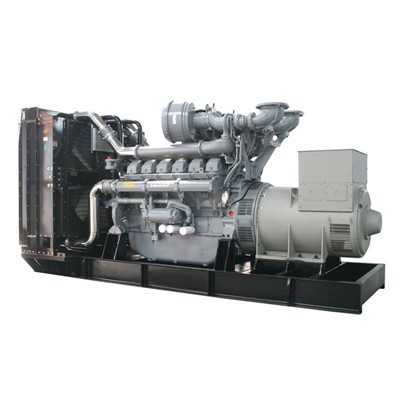
First, let’s get one thing straight: industrial generators aren’t your homeowner’s backup unit you fire up twice a year during a storm. Most of our customers run their diesels 24/7, 16 hours a day on construction sites where dust is thick enough to taste, or in manufacturing plants where metal shavings, wood chips, or even salt spray (if you’re near a coastal project) are nonstop. A “one size fits all” timeline? That’s garbage, and I’ll tell you why.
Let’s start with the basics: what does an air filter even do for these big units? It’s the gatekeeper for your engine’s combustion chamber. If that filter gets caked with debris, your engine has to work way harder to suck in air. That means more fuel burned, extra wear on pistons and valves, and eventually, if you wait too long, a full-on breakdown. I’ve seen a generator on a road construction site in Texas go down for three days because the crew waited 18 months to change the filter—all that red clay dust turned the filter into a brick, and the engine seized up mid-paving season. They ended up needing a new piston and a whole filter housing, which cost them way more than a $30 filter change would’ve.
Now, the “typical” baseline timeline. For light-duty use—say, a backup generator that only kicks on for 2-4 hours a month (like a small retail shop or a home farm) and runs in a semi-clean area, not a dusty worksite—you’re looking at every 12 months. But if you’re running your generator regularly, like for a construction site’s daily power tools, or a data center’s backup that tests monthly and runs 8 hours a test? Aim for every 6 months. Wait, but hold on—this is where most people mess up. If your environment is extra harsh (think: mining sites, sawmills, agricultural operations where pollen and chaff fly, or coastal ports with salt air), you might need to swap even every 3 months. I had a client out in a Wyoming mine who went 4 months once, and their filter was so full of coal dust it restricted airflow by 35%—their fuel efficiency dropped 20% that quarter. That’s not just a minor inconvenience; that’s $$$ out of their budget on extra fuel.
But here’s the real trick: don’t just go by a clock. The best way to know when to change your air filter is to check it regularly—like, once a month if it’s a high-use unit, every other month if it’s light use. How do you check it? Most industrial generators have a quick-access cover on the air filter housing; pop that off, and you can see right through to the other side. If you can’t see light through it, that’s a bad filter. If it’s gray or black with gunk, time to swap. Some of our higher-end generator models even have a built-in air restriction sensor—those little lights on the control panel that flash when airflow is low. Ignore that at your peril; that’s the engine’s way of yelling at you.
Wait, but what about safety? I’ve heard guys say “I’ll just clean the filter instead of replacing it.” Is that okay? For some heavy-duty, reusable filters (the kind with metal mesh or foam, not the paper ones), sure. But here’s the catch: you can only clean them a couple times. Paper filters—90% of the industrial ones we sell—are single-use. Try cleaning a paper filter, and you’ll tear the media, let all that debris through, and you’re back to the same problem, plus damaged engine parts. I’ve had a customer who tried cleaning a paper filter with compressed air once—they blew a hole right in the middle, and metal shavings got into the engine. Cost them $2,500 in repairs. Don’t do that.
Now, let’s talk about factors that change the timeline, ‘cause this isn’t one-size-fits-all. First: dust level. If you’re working in a construction site where they’re grading, or a lumber mill, dust is way thicker than an office park’s backup generator. I’ve seen filters on a sawmill go bad in 2 months ‘cause all those wood chips are tiny and get everywhere. Second: generator load. If your unit is running at 100% capacity (powering the whole site, not just a few lights), it needs more air, so a clogged filter will hit it harder than a unit running at 50% load. Third: fuel type. Wait, diesel is diesel, right? Well, low-quality diesel can leave residue that builds up on the air filter too, making it clog faster. If you’re buying cheap off-road diesel, you might need to swap the filter a month sooner than someone using premium fuel.
Let me give you a real example from a regular customer of mine: a solar farm in Arizona. They run their generator once a month to test the grid connection, and they’re out in the middle of the desert—super fine sand, blowing all the time. At first, they were swapping the filter every 6 months, same as the baseline. But after the first year, their air restriction sensor was going off every 3 months. We adjusted their timeline to every 4 months, added a pre-filter (a cheaper, thin foam filter that catches big debris before it hits the main air filter), and now it runs smooth. That pre-filter only costs $10, and it doubles the life of the main filter. Smart move, right? That’s the kind of thing we teach every customer when we sell them a generator—little hacks to save money.
Another common mistake: not replacing the filter with the right one. A lot of guys will grab a cheap off-brand filter to save a few bucks, but if it doesn’t match your generator’s CFM (cubic feet per minute) rating, it’s not gonna do its job. Too small, and it restricts airflow. Too big, and debris can get in around the edges. We’ve had customers come to us after buying a $10 filter from a hardware store, and it was the wrong size for their 50kW diesel generator—ended up costing them a whole new turbocharger. Sticking with the OEM (original equipment manufacturer) filter or a high-quality aftermarket one that’s matched to your unit is worth the extra $20-$30.
Now, let’s talk about when you absolutely, positively can’t wait to change the filter. If your generator starts showing these signs, don’t check your calendar—swap it right now: sputtering or rough idling, lower fuel efficiency, black smoke coming out the exhaust, or the air restriction sensor going off. I had a client last year who noticed his generator was using 5 gallons more fuel a day, checked the filter, and it was so clogged the engine was running rich. Swapped the filter, and his fuel use went right back down. That’s a quick fix, not a costly repair.
Wait, what about warranty? If your generator is still under warranty, changing the air filter yourself (or having us do it) doesn’t void the warranty, as long as you use the right filter. But if you skip changing it and the engine breaks, the warranty company will write that off as “improper maintenance.” I’ve seen that happen—guy had a 1-year-old generator, waited 12 months to change the filter, engine seized, and the warranty didn’t cover it. Don’t let that be you.
Now, let’s wrap this up, ‘cause I don’t want to bore you with too many numbers. The short version:
- Light use (2-4 hours/month, clean area): every 12 months
- Regular use (8+ hours/week, average environment): every 6 months
- Heavy use (24/7, harsh environment: dust, salt, debris): every 3 months
But always check your filter monthly, use the right filter, and add a pre-filter if you’re in a dusty spot. That’s the sweet spot.

At the end of the day, your industrial diesel generator is a workhorse—you rely on it to keep your business running, no matter what. Skipping a filter change is like skipping oil changes in your pickup: it seems like a small thing until it’s a huge problem. If you’re not sure what filter your generator needs, or you want us to hook you up with the right schedule for your specific setup, hit us up for a chat. We’re here to help you keep your generator running smooth, no hidden fees, no jargon.
Household Diesel Generator References
- Engine Makers Association. (2022). Maintenance Guidelines for Industrial Diesel Generator Sets.
- National Fire Protection Association. (2021). Standard for Stationary Engine Generator Assemblies.
- Diesel Technology Forum. (2023). Air Filtration Requirements for Heavy-Duty Diesel Engines.
Jiangsu Kaichen Electric Power Equipment Co., Ltd.
As one of the most professional industrial diesel generator set manufacturers and suppliers in China, we’re featured by quality products and low price. Please rest assured to buy discount industrial diesel generator set in stock here from our factory. If you have any enquiry about customized service, please feel free to email us.
Address: Dinghuo Industrial Park, Jiangdu District, Yangzhou City, Jiangsu Province
E-mail: 19962469616@163.com
WebSite: https://www.kaichenpowertech.com/
