If you’re here, you’re probably either a maintenance manager who’s spent enough hours troubleshooting babbitt journal bearings that started acting weird mid-shift, or a design engineer trying to nail down specs for a new piece of industrial gear. Either way, let’s cut the jargon and get real: testing these bearings isn’t just a checkbox on a quality report—it’s how you avoid costly downtime, and as a babbitt bearing supplier, I’ve seen firsthand how skipping the right tests leads to avoidable headaches. Let’s break down exactly how we test performance here, what you should be asking your supplier, and why this matters for your bottom line. Babbitt Journal Bearings

First off, let’s keep it simple: babbitt journal bearings work by that thin, slippery babbitt metal layer (usually tin or lead-based) sitting between your shaft and the bearing shell, right? The whole point is to separate those two metal surfaces so there’s no grinding, no heat buildup, and no premature wear. So testing their performance isn’t just “does it spin?”—it’s verifying that layer holds up under real-world conditions, which are never as nice as a lab’s controlled test rig.
Start With the Basics: What Even Counts as Performance Here?
Before we jump into tests, let’s align on what we’re measuring. For babbitt bearings, core performance metrics boil down to four things: load capacity, wear rate, friction coefficient, and thermal stability. If any of those are off, you’re looking at a bearing that’ll fail sooner than it should. I’ve had customers come to us after buying cheap bearings that wore out in 6 months—turns out, the supplier skipped testing for all four, cutting corners on the babbitt thickness or alloy quality. We test every batch of babbitt we use, because a bad babbitt mix is the #1 cause of early bearing failure.
The First Test We Do: Load Capacity on a Test Rig
Load is make-or-break for journal bearings. If you run a bearing at way less than its rated load, you might get a little extra wear, but run it over, and that babbitt layer will start to seize to the shaft—fast. Our go-to test for load capacity is a custom-built test rig that mimics the exact operating conditions a bearing will see: same shaft diameter, same rotational speed, same environment (ambient temperature, humidity, even the type of lubricant customers use). Here’s how it works: we mount the bearing in the rig, run the shaft at a steady speed (say, 1800 RPM for a typical industrial motor), and slowly crank up the load on the bearing step by step. Every 10 minutes, we check three things: temperature of the bearing shell, friction force between shaft and bearing, and if there’s any unusual noise or vibration (we use accelerometers for that—way more accurate than just listening).
Last quarter, we tested a batch of 5” babbitt bearings for a paper mill customer. Their original supplier claimed those bearings could handle 12,000 lbs of load, but our test showed they seized at 9,200 lbs—no wonder the customer was replacing them every 8 months instead of the 2-year lifespan they were promised. We gave them our test data, and they switched to us. That’s the value of real testing, not just specs pulled out of thin air.
We also test what’s called “impact load” too—because industrial equipment doesn’t always run at steady load. There are sudden starts, stops, and jolts from conveyor belts or heavy machinery. Our rig adds short, sharp load spikes (up to 20% above the rated load) and monitors for babbitt fatigue—tiny cracks that can turn into big problems over time. If a bearing fails that impact test, we adjust the babbitt alloy (we use a modified tin-babbitt for high-impact applications) or tweak the bonding between the babbitt and the steel shell, so it passes.
Wear Rate: The Test That Tells You How Long It’ll Last
Wear is another big one. You can have a bearing that holds load, but if it’s wearing away 10x faster than it should, it’s useless. For wear testing, we run the bearing in the same test rig for 100+ hours at its rated load, then weigh the bearing before and after, and measure the thickness of the babbitt layer with a micrometer. The magic number for most industrial babbitt bearings is a wear rate less than 0.001 mm per 100 hours of operation. If it’s higher than that, the babbitt isn’t bonded right, or the alloy has too much lead (which makes it softer, but not in a good way) or too many impurities.
We also test wear under different lubrication conditions. Some customers use mineral oil, some use synthetic, some even run with a little grease for low-speed applications. We don’t assume one lubricant works for all—we test each bearing with the exact lubricant the customer plans to use. A customer last year was using a synthetic lubricant their old bearings hated, and our test showed our babbitt bearings cut their wear rate in half just by matching the lubricant to the bearing design. That’s a tiny detail, but it adds up to huge savings.
Friction and Thermal Stability: The Hidden Culprits
Friction is the force that generates heat, and heat is the enemy of babbitt bearings. Too much heat, and the babbitt will soften or even melt—game over. So we track friction coefficient throughout the load and wear tests. A good babbitt bearing has a friction coefficient between 0.001 and 0.005 under full load. If it’s higher, that means the lubricant film isn’t forming right, or the babbitt surface isn’t finished smooth enough (we lap all our bearing surfaces to a 16 micro-inch finish, by the way—skip that step, and friction goes through the roof).
Thermal stability testing goes a step further: we run the bearing at its maximum rated load and speed, and let it run until it hits a steady temperature. For most industrial bearings, that steady temp should be 20-30°F above ambient. If it’s hotter, we check for poor heat transfer from the bearing shell to the housing, or if the babbitt alloy is the wrong mix. Last year, we had a customer who kept having bearings overheat in their steel mill. Our thermal test showed their old bearings were only transferring heat 60% as well as ours, because their steel shells were too thin. We adjusted our shell thickness to match their housing design, and the overheating stopped.
Field Testing: Because Lab Rigs Can’t Copy Everything
Here’s the thing about lab tests: they’re great for controlled conditions, but real equipment has variables you can’t replicate. That’s why we also offer field testing for customers who aren’t sure about their operating environment. We’ll send a test bearing to your site, install it alongside your existing bearings, and monitor performance for 3-6 months. We track temperature, vibration, and wear rate the whole time, then send you a full report. This works especially well for unique applications—like marine engines, wind turbine gearboxes, or heavy mining equipment—where lab conditions don’t perfectly match real use.
Last year, a wind turbine customer came to us because their bearings were failing after 14 months, way before the 5-year warranty. We sent them two test bearings: one from our standard babbitt mix, and one modified with a small amount of copper to add strength. The modified one lasted 32 months in their field test, and now they’re our repeat customer for all 200+ turbines in their fleet. That’s exactly why field testing matters—you can’t get that data from a test rig alone.
What Should You Expect From Your Supplier’s Testing?
Now, let’s switch gears to what you should be asking your babbitt bearing supplier. If they can’t show you test data for load capacity, wear rate, friction, and thermal stability, that’s a red flag. Any legitimate supplier will have test reports for every batch, or be willing to run custom tests for your specific application. Also, ask if they do impact testing or field testing—those are the differentiators between a good supplier and one that just stocks cheap, untested bearings.
We even offer custom testing for one-off applications—no job is too small. If you need a bearing for a vintage machine that’s no longer in production, we can machine a custom shell, cast your babbitt, and test it to make sure it fits your exact needs. No generic specs, no cutting corners, no surprises.
Common Mistakes We See Customers Make
Let’s wrap this up with a few mistakes I see way too often. First, buying bearings based only on price, not test data. That cheap bearing might cost 20% less, but if it fails 5x faster, you’re actually paying way more in downtime and replacement costs. Second, not checking the babbitt thickness—too thin, and the babbitt will wear through in no time, exposing the steel shell which will grind the shaft. Third, using the wrong lubricant—we can help you pick the right one, but a good supplier will tell you if your current lubricant is a bad match.
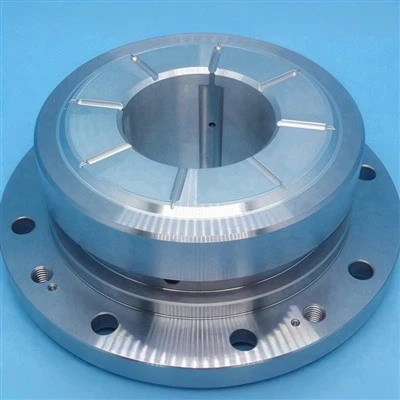
At the end of the day, babbitt journal bearings are simple in design, but their performance depends on small, precise details—all of which come down to testing. We don’t just sell bearings; we test every single batch to make sure they’ll hold up in your equipment, so you don’t have to stress about unplanned breakdowns.
Fluid Film Thrust Bearings If you’re tired of bearings that fail too soon, or just want to run tests to confirm your current setup, hit us up. We can walk you through our testing process, share past performance data, or even set up a custom test for your application. Let’s make sure your equipment runs smooth, no surprises, no extra costs.
References
- Stachowiak, G. W., & Batchelor, A. W. (2014). Engineering Tribology. Elsevier.
- American Society of Mechanical Engineers (ASME). (2020). Standard for Journal Bearings for Industrial Machinery. ASME International.
- Hamrock, B. J., Schmid, S. R., & Jacobson, B. O. (2004). Fundamentals of Fluid Film Lubrication. CRC Press.
- Babbitt Bearing Manufacturers Association. (2019). Testing Protocols for High-Performance Babbitt Bearings. International Tribology Council.
Wenzhou Zhengbang Bearing Co., Ltd.
We are one of the most professional babbitt journal bearings manufacturers and suppliers in China. With abundant experience, we warmly welcome you to buy customized babbitt journal bearings at competitive price from our factory. If you have any enquiry about free sample, please feel free to email us.
Address: Units 1-1 and 3-1, Building 12, Yongxing Nanyuan Small and Micro Enterprise Startup Park, Binhai 2nd Road, Yongxing Subdistrict, Longwan District, Wenzhou City, Zhejiang Province.
E-mail: zbbearing@zbbearing.com
WebSite: https://www.zb-bearings.com/
