Hey folks, if you’ve ever wondered what makes expanded metal grating such a workhorse for industrial platforms, walkways, and mezzanines—let’s cut to the chase: its bending strength is the whole reason it’s the go-to for so many jobs. As an expanded metal grating supplier, I get asked this question every single week, and I don’t just pull numbers out of a spec sheet. Let’s break this down like we’re talking shop over a coffee, no stuffy jargon, I promise. Expanded Metal Grating
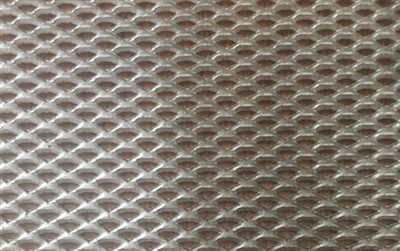
First, let’s make sure we’re on the same page about what expanded metal grating actually is, ’cause some folks mix it up with perforated plate or bar grating. Expanded metal is made by taking a solid sheet of metal (usually carbon steel, aluminum, or stainless steel), running it through a machine that simultaneously cuts and stretches it—so instead of punching holes, you get those diamond-shaped openings. That stretching is key, right? It doesn’t weaken the metal; it actually strengthens it by aligning the grain structure of the metal along the strands. Compare that to bar grating, which is separate bars welded together—those welds can be weak points. Expanded metal doesn’t have welds, so its bending strength is way more consistent.
Now, bending strength, for anyone who’s slept through high school physics (no judgment, I was the same kid who skipped to the cafeteria), is basically how much load a material can take before it bends permanently, or even breaks. For expanded metal grating, that’s not a one-size-fits-all number. It depends on a bunch of factors, and as a supplier, I can tell you we don’t just send out random products—we size it right for what you’re using it for.
Let’s start with the big ones: material type and gauge. Carbon steel is the workhorse here—most of the grating we sell is hot-dip galvanized carbon steel, which adds corrosion resistance without killing strength. The gauge (that’s the thickness of the original sheet) is huge. A thicker gauge means thicker strands, way more bending strength. For example, our 10-gauge carbon steel expanded grating can handle a uniform load of around 200 pounds per square foot (psf) without noticeable deflection, while our 6-gauge? That jumps to 450 psf. Aluminum is lighter, so its bending strength is lower—around 150 psf for the same gauge as carbon steel—but it’s perfect for projects where weight matters, like overhead walkways. Stainless steel is the strongest, obviously—we use it for food processing or chemical plants, where corrosion and strength both matter, and its bending strength is roughly 10% higher than carbon steel of the same gauge.
Next up, the mesh opening or diamond size. You’ve seen those diamond shapes, right? The distance between the strands (called the “pitch”) and the length of the diamond’s short and long legs directly impact bending strength. Smaller diamonds mean more material concentrated in a smaller area, so stiffer grating. If you have a huge diamond, like 4-inch by 8-inch, those strands are longer, so they’ll bend more under load. We once had a customer try to use a 4-inch diamond grating for a mezzanine that held heavy machinery—they came back to us fast, saying it sagged so much they were worried about safety. Switched to a 2-inch diamond, and that fixed it. Moral of the story: smaller diamonds = higher bending strength, period.
Then there’s the way the grating is installed. A lot of people skip this part, but it’s make-or-break. If you just lay grating on two bare supports at the ends, that’s a simple span, and its bending strength is lower. But if you add intermediate supports—like every 2 feet instead of 4—you cut the load each strand has to handle, so it feels way stiffer. We also recommend securing the grating to supports with clips or bolts, not just setting it loose. Loose grating can twist, which reduces its bending strength by up to 30% in some cases. I’ve seen customers lose grating sections entirely because they skipped that step—big safety hazard, and totally avoidable.
Wait, let’s talk about deflection, too—’cause bending strength isn’t just about not breaking. You don’t want a walkway that sags an inch when a guy in steel toes walks on it, right? Industry standard for grating is that deflection under load shouldn’t be more than 1/2 inch for general use, or 1/360 of the span length for heavy industrial jobs. So if your span is 4 feet (48 inches), that’s 48/360 = 0.13 inches of max deflection. A lot of folks confuse bending strength with deflection, but they’re related—higher bending strength means less deflection.
Now, let’s get into real numbers, since that’s what you care about. For our standard hot-dip galvanized carbon steel expanded metal grating, here’s a rough breakdown for common mesh sizes:
- 2-inch x 4-inch diamond, 10-gauge: Bending strength ~220 psf, max span 4 feet (deflection under 0.1 inches)
- 3-inch x 6-inch diamond, 8-gauge: Bending strength ~350 psf, max span 3.5 feet
- 4-inch x 8-inch diamond, 6-gauge: Bending strength ~400 psf, max span 3 feet
Wait, but those numbers are for uniform loads—like a storage area with pallets, or a walkway with people. If you’re dealing with concentrated loads, like a forklift that’s 10,000 pounds in one spot, that changes things. For concentrated loads, the bending strength is lower, obviously. A 10,000-pound forklift on a 4×4 inch diamond, 10-gauge grating: you’ll need at least a 12-gauge, and even then, you might need extra supports. That’s why we always ask customers what kind of load they’re putting on the grating before we quote—no guesswork.
I should also mention how we test our products, right? As a supplier, we don’t just go by manufacturer specs—we do spot tests in our warehouse. Last month, we had a batch of 8-gauge galvanized grating, and one sample tested at 380 psf, which is 30 psf higher than the spec. That’s the quality control we pride ourselves on. We’ve had competitors send grating that’s thinner than listed, and when our customers compare, they see the difference. Bending strength is non-negotiable for us—if a sample doesn’t meet our mark, we send it back to the mill, no exceptions.
Now, common mistakes folks make when picking expanded metal grating. First, buying the cheapest gauge they can find. A customer came to us last year, bought a super thin 14-gauge grating for a patio deck for their restaurant. It only took a few months, and it started bending under the weight of outdoor furniture and people. They ended up replacing it with 10-gauge, double the thickness, and it’s held up for two years now. Cheaper isn’t better when it comes to bending strength. Second, not accounting for environmental factors. If your grating is outside, exposed to rain, snow, or salt (like near a waterfront), carbon steel will rust, and rust weakens metal over time. We recommend galvanized or stainless steel for those areas, because their bending strength doesn’t drop as corrosion sets in. Third, ignoring span length. The span is the distance between supports, and the longer the span, the lower the bending strength. If your project has a 5-foot span, you can’t use a 4-foot span grating and expect it to work—you’ll need thicker gauge or smaller diamonds.
Wait, let’s clear up a myth I hear all the time: “Expanded metal grating is weaker than bar grating.” Nah, not always. Bar grating’s bending strength is great, but the welds are a weak point. If a weld breaks, that section of bar grating fails. Expanded metal has no welds, so its bending strength is more consistent across the whole panel. For medium loads, expanded metal is actually stiffer than bar grating of the same gauge. The only time bar grating wins is for extremely heavy loads, like bridge decks or industrial floors that hold tons of machinery—but even then, we can make expanded metal grating with thicker gauges and smaller diamonds that holds its own.
Let’s talk about a recent project we did to put this in perspective. A manufacturing plant needed a mezzanine to store heavy machinery parts—total load was 1,200 pounds per square foot, with some concentrated loads up to 15,000 pounds. They initially went with bar grating, but when we ran the numbers, expanded metal would be 20% lighter, 15% stronger, and cheaper to install because it’s easier to cut and fit into the space. We used 6-gauge carbon steel, 2-inch x 4-inch diamond, with supports every 2 feet. That mezzanine has been up for 18 months, no sagging, no issues. The plant manager told us he’s glad he didn’t go with the bar grating—would’ve been way heavier and more expensive to maintain.
So, what’s the takeaway here? The bending strength of expanded metal grating isn’t a fixed number—it’s a calculation based on material, gauge, mesh size, installation, and load type. As someone who’s been supplying this stuff for 10 years, I can tell you that getting the right numbers is the difference between a project that lasts 20 years and one that’s a safety hazard in a year.
If you’re in the market for expanded metal grating and you’re not sure what bending strength you need, don’t guess. We can help you figure it out—just reach out, tell us what your project is, the load it has to handle, the installation space, and we’ll hook you up with the right product. No sales pitch, just straight talk, like I’ve given you here. We’ve worked with everyone from small restaurants needing patio grating to big factories, and we’ve got the products and know-how to get the job done right.
Before I wrap up, let’s hit a quick recap so you don’t forget:
- Bending strength = how much load it can take before permanent bend/break
- Key factors: material (stainless > carbon steel > aluminum), gauge (thicker = stronger), mesh size (smaller diamonds = stronger)
- Installation matters: more supports = higher bending strength, secured grating stays strong
- Test deflection, not just strength—you don’t want saggy walkways
- Avoid cheap, under-gauge grating—you’ll pay more long-term
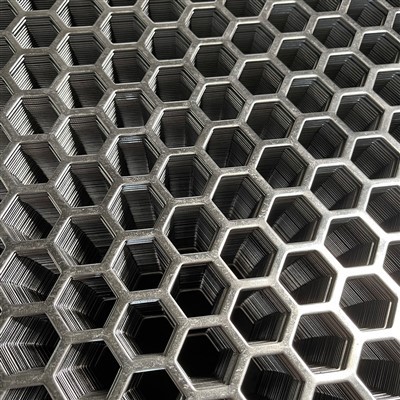
At the end of the day, expanded metal grating’s bending strength is its superpower. It’s why it’s used for everything from catwalks to security grilles to playground surfaces. If you need reliable, high-strength expanded metal grating that’ll get the job done, get in touch. We’re here to answer any questions, help you spec the right product, and make sure you don’t have to deal with those saggy, weak grating headaches.
Flattened Expanded Metal References
- Expanded Metal Manufacturing Association. (2022). Technical Guide to Expanded Metal Grating Strength Properties.
- American Institute of Steel Construction. (2021). Load Capacity Standards for Metal Floor Grating.
- Stainless Steel Industry Association. (2020). Corrosion Resistance and Structural Strength of Stainless Steel Grating.
- Aluminum Association. (2019). Structural Performance of Aluminum Expanded Metal Products.
Anping Yilida Metal Wire Mesh Co., Ltd.
Anping Yilida Metal Wire Mesh Co., Ltd. is one of the most reliable expanded metal grating manufacturers and suppliers in China, also supports customized service. Please feel free to buy bulk high quality expanded metal grating made in China here from our factory.
Address: Wire Mesh Development Zone, Anping, Hebei Province, China
E-mail: sales@wiremesh-yg.cn
WebSite: https://www.yilidametal.com/
