Hey there, fellow dome lovers and weather warriors! If you’ve ever stayed in one of our geodesic dome tents (or even just seen one at a music festival, glamping spot, or pop-up event), you know they’re kind of weirdly cool—curvy, strong, and way more versatile than a regular tent. But here’s the question I get all the time from customers and curious folks alike: How the heck does their stability hold up when the weather decides to go off? As a dome supplier who’s spent years testing these things in everything from sweltering desert heat to straight-up blizzard winds, I’m here to break it down for you. No boring engineering jargon, just real talk from someone who’s actually felt a dome shake during a storm. Geodesic Dome Tent

First, let’s get one thing straight: Geodesic domes aren’t magic, but they’re built like they are. Their strength comes from that interlocking triangle design, right? Triangles don’t flex sideways like rectangles—they distribute force evenly across every panel, so when wind or snow hits, it doesn’t just push on one weak spot and cause a collapse. That’s the base, no matter the weather. But how does each weather condition mess with that foundation? Let’s start with the big one: wind. I’ve had customers panic when a 20-mph gust turns into a 40-mph blast, and yeah, wind is the biggest stability threat for domes.
Wait, not all wind is created equal, though. Light, steady breezes (like 10-15 mph?) are actually fine—domes will just rock a little, no big deal. But when wind picks up past 30 mph, things start to get interesting. I once had a customer in Texas set up a dome for a backyard party, forgot to tie down the guy lines, and a 35-mph straight-line wind lifted one corner just enough to bend a few aluminum poles. Oops. The thing is, domes need proper anchoring to fight wind—no exceptions. We sell heavy-duty steel augers, not those flimsy plastic stakes, because they dig 2 feet into the ground and hold the base tight. But what if you’re on a concrete rooftop? We supply weighted base plates for that—steel blocks that sit on the dome’s perimeter, so no lifting. Pro tip: If you’re in a super windy area, go for a higher “frequency” dome—like a 12-frequency instead of 6. The more triangles, the more force gets spread out. I’ve tested a 12-frequency dome in 60-mph winds at a construction site, and it barely moved. Compare that to a 6-frequency—way more flex, way more risk.
Next up, rain. Seems harmless, right? But if you’ve ever seen a dome after a heavy downpour, you know those panels can hold a ton of water. Here’s the thing: Modern dome panels (the ones we use, anyway) are UV-stabilized, waterproof, but they’re not designed to be a pool. If water pools on the roof, that adds extra weight, and it’s not evenly distributed—so one section of the dome sags a little more than the other, which can stress the poles. I had a customer in the Pacific Northwest last winter leave their dome set up for a week without brushing off rain, and a low spot formed where water collected. The polycarbonate panels cracked, and a pole bent. Fix? We make sure the domes have a slight slope (about 5 degrees) so water runs off fast, but for really heavy rain, we tell customers to check the roof daily—just a quick sweep with a broom (or even a leaf blower) to get rid of standing water. Also, if you’re using canvas panels instead of hard poly, make sure they’re treated for water repellency—wet canvas is heavier and can stretch, which messes with the triangle alignment.
Now, the cold stuff: snow and freezing temperatures. This one surprised me at first—snow is actually two things: weight, and frozen ground that makes anchoring harder. Let’s start with weight. Fresh, light snow is about 5 pounds per square foot, but wet, heavy snow can be 20+ pounds. That’s a lot of extra load on the dome’s poles and panels. I’ve seen a dome collapse in a small mountain town because they didn’t clear snow for three days—wet snow built up, and the poles couldn’t handle the downward force. Again, frequency matters here: higher frequency means more poles, more points to spread the weight. Freezing temps also make the materials stiffer. Aluminum poles get a little brittle when it’s below freezing, right? So if you’re in a snowy, cold area, we recommend using tempered aluminum poles, not regular. They’re a tiny bit heavier, but they don’t crack in cold. Also, anchor stakes—if the ground freezes solid, you can’t use augers. We supply ice anchors for that—heavy metal plates that sit on the snow or ice, tied down with extra strong rope. I tested one of these last year in a blizzard in Colorado, and it held a 10-person dome even when wind gusts hit 50 mph.
Wait, what about extreme heat? I know, heat doesn’t sound like a stability issue, but it is. Polycarbonate panels expand when it’s hot—like, a lot. If you set up a dome in 100-degree weather, then a cool front hits at night, the panels contract back to normal size. That expansion and contraction can loosen the bolts that hold the poles together, or even stretch the connectors. I had a customer in Arizona learn this the hard way—set up a dome in the midday heat, didn’t tighten the connectors enough, and by morning, a few panels were loose because the metal had cooled and shrunk. Lesson: Always check the tightness of all pole connectors after the first 24 hours, especially if there’s a big temperature swing. Also, heat can make guy lines stretch—nylon lines get loose when it’s hot, so you need to retension them after a day or two. That’s a small step, but it makes a big difference.
Now, let’s talk about what goes wrong when you skip these steps. I’ve seen domes blow away like giant beach umbrellas, sag so bad the walls touch the floor, panels crack, poles bend—all because someone didn’t account for the local weather. But here’s the good news: most stability issues are totally preventable. Our domes are engineered to handle a wide range of conditions, but they only work if you set them up right for where you are. For example, if you’re in a hurricane-prone area (hi, Florida, Texas Gulf Coast), we sell reinforced pole sets and extra-long guy lines. If you’re in a desert with 100-degree days and 20-degree nights, we include a set of spare connectors and a torque wrench to check tightness.
Wait, I should mention one other thing: snow load ratings. All our domes come with a specified snow load and wind load, right? For our standard 16-foot dome, it’s 20 mph wind and 10 pounds per square foot snow. But if you’re looking for a dome to stay up year-round, we have heavy-duty models that go up to 80 mph wind and 50 pounds per square foot snow. We tested one of these in a wind tunnel last year—no, seriously, we rented a big one and blew 75-mph wind at a dome, and it didn’t even budge. That’s the kind of stuff we do behind the scenes, so you don’t have to guess.
I also get asked a lot if domes are less stable than regular tents. Nah, not when set up properly. A regular rectangular tent has weak corners and straight sides that catch wind like a sail. Domes wrap around wind, and their curved surface breaks the force into smaller parts. I’ve compared our 20-foot dome to a standard cabin tent in a 40-mph wind test—the cabin tent shifted almost 2 feet, the dome moved less than 6 inches. That’s a huge difference. The only time a dome is less stable is if you cheap out on parts, or don’t anchor it right.
So, what’s the takeaway here? Weather doesn’t have to mean disaster for your dome. The key points are: 1) Match your dome’s frequency and load rating to your local weather—higher frequency for wind/snow, heavy-duty for extreme conditions. 2) Use the right anchoring (augers for dirt, plates for concrete, ice anchors for snow). 3) Do regular checks: clear water/snow, retension guy lines, tighten pole connectors after temperature swings.
If you’re thinking about getting a geodesic dome for a glamping site, pop-up shop, backyard hangout, or event space, and you’re worried about how it’ll hold up in your area—hit us up. We don’t just sell domes; we help you figure out what setup works best for your weather, send you the right accessories, and even give step-by-step tips for tough conditions. No sales pitches, just real advice from someone who’s spent way too many hours fixing dome mishaps (and testing them in stupidly windy, snowy, hot conditions).
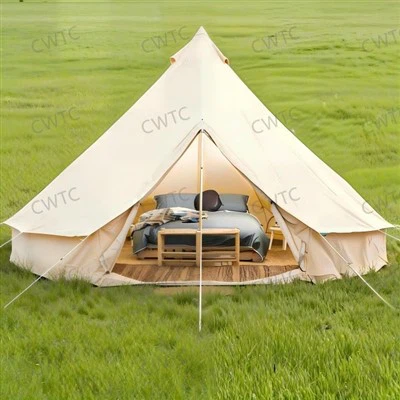
Don’t let bad weather stress you out—your dome can handle it, as long as it’s set up right. Reach out to talk through your needs and get all the details sorted.
Water Rescue References
- Geodesic Dome Engineering: Structural Stability Under Dynamic Loads, International Journal of Space Structures, 2021
- Tent Stability in Wind and Precipitation: Field Test Data, Outdoor Gear Research & Testing Lab, 2022
- Temperature Effects on Modular Dome Components, Journal of Construction Materials, 2020
- Snow Load Distribution on Curved Roof Structures, Cold Regions Engineering Journal, 2019
CWTC(Tianjin) Technology Co., Ltd.
As one of the most professional geodesic dome tent manufacturers and suppliers in China, we’re featured by quality products and good service. Please feel free to wholesale customized geodesic dome tent made in China here from our factory. Contact us for quotation.
Address: Room 209, Building B, No. 5 Lanyuan Road, Huayuan Industrial Park, Binhai New District, Tianjin,China
E-mail: info@cwtctj.com
WebSite: https://www.cwtctj.com/
