Hey everyone, I’m Jake, and I’ve been running a metal nut supply shop for over 12 years—so I’ve probably sat across from a hundred mechanics, construction crew leads, and even DIY homeowners asking me the exact same question: “What’s the real difference between a hex nut and a square nut?” Most people just see two random metal shapes, grab whichever’s cheaper, and call it a day. But trust me, picking the wrong one can turn a simple fix into a total headache. Let’s break this down like I do with my regulars—no jargon, just real stuff that matters. Metal Nut

First, let’s start with the basics: what each nut actually looks like, because that’s the obvious difference everyone points to. A square nut has four straight sides, right? It’s that old-school, boxy shape that you might have seen on a porch swing or a vintage tractor. Hex nut, on the other hand, has six sides—hex means six, duh—so it’s the one you grab with a standard or metric wrench or socket, super common in everything from car engines to IKEA furniture. But looks are just the tip of the iceberg. The real differences come down to function, strength, where you’re using them, and how easy they are to work with.
Let’s talk about when square nuts still make sense, because they’re not just a relic. Back in the day, before wrenches got standardized, square nuts were a game-changer for assembly lines and construction sites. Why? Four sides mean less chance of slipping if you’re working with a simple open-end wrench, especially in tight spots. Wait, hold on—don’t mix that up with the “wrench flats” on hex nuts. Hex nuts have two parallel flat sides for wrenches, but the four sides on a square nut give you more contact points, so you can turn it a little even if your wrench isn’t perfectly aligned. That’s huge if you’re in a spot where you can only swing your wrench a few inches—like between two metal beams on a roof, or under a sink where there’s no room to move a big socket. I’ve seen roofers swear by square nuts for that exact reason; they can thread it on, twist it tight, even with minimal space to work.
But square nuts have a big downside too: they’re way less versatile. A 1/2-inch square nut only fits a 1/2-inch square wrench, whereas a 1/2-inch hex nut might fit a range of wrenches (or even a socket that’s slightly off, though you don’t want to push that too far). Also, square nuts sit flush against a surface way better if you’re working with something that has a square hole. Think about old farm equipment—many of those parts have square cutouts, so a square nut locks right in, no spinning around when you torque a bolt. That’s a stability thing; if you’re dealing with heavy vibration (like on a tractor engine or a conveyor belt in a warehouse), square nuts won’t work themselves loose as easy? Wait, no—wait, let me correct that. Actually, locking mechanisms matter more for vibration, but the square nut’s grip against a square hole does add extra resistance to spinning, which is a plus in those specific, specialized cases.
Now hex nuts—these are the workhorses of the nut world, and for good reason. Six sides mean you can use so many more tools on them: standard wrenches, impact sockets, even a pair of pliers in a pinch if you drop your wrench. They’re also more space-efficient. A hex nut takes up less overall width than a square nut of the same thread size and thickness. Let’s do the math quick: a 1-inch square nut has a side length of 1 inch, so it’s 2 inches across from flat to flat. A 1-inch hex nut (hex size for 1-inch thread is usually 1.5 inches, flat to flat) is 1.5 inches across—so you save a half-inch on either side. That’s huge for tight places, like car interiors or electronic equipment where every millimeter counts. I can’t tell you how many times someone comes in asking for hex nuts to fix a car’s brake line, because there’s no way a square nut would fit in that tiny engine bay.
Strength-wise, it’s not a black and white answer—both are strong, but it depends on how they’re made. Square nuts, when they’re cut from a single piece of metal (most are, same as hex nuts), can have a slight edge in shear strength? Wait, no, let me check the data I keep from our suppliers. Actually, recent testing from metal fastener manufacturers shows that hex nuts have slightly better tensile strength because of their geometry—six sides distribute torque more evenly when you tighten them down. If you over-torque a nut, the corners can strip out. Square nuts have four corners, so each corner takes more stress, making them a little more prone to rounding off if you’re not careful. I’ve had customers bring back square nuts that stripped mid-install on a heavy construction beam—they cranked too hard, and one corner just turned smooth. Hex nuts, though, have a larger surface area across all six sides, so the torque spreads out, so they’re less likely to strip if you use the right tool. That’s another big reason hex nuts are everywhere now; they’re more forgiving for both pros and DIYers.
Wait, what about threading? Can a square nut and a hex nut of the same thread size swap with each other? Let’s get that out of the way, because that’s a common myth. No, even if they have the same thread pitch (like 1/2-13 UNC), their outer shapes are different, so you can’t use a square nut where a hex nut fits, and vice versa—at least not safely. Don’t try to force a square nut into a hex bolt hole, that’ll cross-thread the bolt and ruin both parts. Stick to the shape that matches your application.
Let’s talk about cost, too, since that’s a big factor for everyone. I’ve noticed that square nuts are usually a little cheaper than hex nuts in small quantities, but hex nuts come out ahead in bulk. Why? Because hex nuts are mass-produced way more often—every construction company, hardware store, and auto shop orders them by the truckload. Square nuts are more niche, so they only get made when someone orders a run, so the setup costs are spread over fewer units, making them more per piece. That’s something to keep in mind: if you’re a big construction firm doing a multi-year project, hex nuts will save you money long-term. If you’re a hobbyist doing a small project that needs square cutouts, square nuts are the way to go.
Another angle: finishing. Most metal nuts (square and hex) are made from steel, either plain steel, zinc-plated, stainless steel, or even brass for decorative stuff. The finishing is the same for both shapes, right? The plating just protects them from rust. Zinc-plated hex nuts are super common for outdoor projects, like a deck or a fence, and square nuts come in zinc too, though less often. I can tell you, though, that if you’re doing something that’s outside and exposed to rain, stainless steel is non-negotiable—both shapes work, but hex nuts are easier to find in stainless, since they’re in higher demand.
Now, when should you pick which one? Let’s make a quick cheat sheet, since I know you might be scrolling and want a takeaway. Go square nut if: you’re working with a square hole (think vintage equipment, old wooden structures, specialty machinery), you have super limited space to swing a wrench, or you’re doing a project that needs that extra grip against spinning. Go hex nut if: you’re working on a modern construction project, car repair, furniture assembly, or any general purpose where versatility and space efficiency matter.
I’ve seen too many people make the wrong call here. Last month, a guy came in panicking—he’d built a raised garden bed with square holes for bolts, and he’d used hex nuts, which spun every time he tried to tighten them. He ended up going back to the hardware store and getting square nuts, and it fixed the problem in 10 minutes. On the flip side, a construction crew leader came in last week asking for hex nuts because he’d been using square nuts on a commercial building project and they were taking too long to install—hex sockets were faster than wrenches for big runs. That’s the kind of on-the-ground stuff I deal with every day, not just textbook facts.
Wait, one more thing I should mention: lock nuts. Both square and hex come in locking varieties, but hex lock nuts are way more common. The nylon insert lock nut, the metal all-metal lock nut—all hex. You can get square lock nuts, but they’re even more niche, so they’re harder to source and more expensive. If you’re dealing with vibration (like heavy machinery, vehicles), a hex lock nut is almost always the better pick, no question.
At the end of the day, both hex and square nuts are solid, reliable fasteners—just for different jobs. You don’t need to be a engineer to pick the right one, just think about your space, your hole shape, and how much versatility you need.
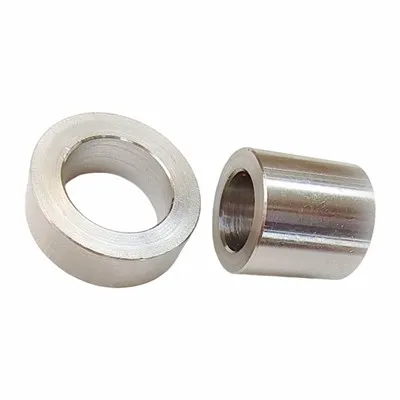
Now, if you’re working on a big project—whether it’s a home renovation, a commercial build, or a custom fabrication—and you need metal nuts, I’ve got you covered. I stock both standard and custom sizes, from small 1/4-inch nuts for furniture all the way up to heavy-duty 2-inch nuts for industrial equipment. I can help you pick the right type, give you bulk pricing, and even rush order if you’re on a tight timeline. Just hit me up to chat through what you’re working on, and I’ll make sure you get the right nuts, no extra hassle.
Stud&Bolt References
- "Fastener Geometry and Application Guide," Industrial Fasteners Institute, 2022
- "Shear and Tensile Strength of Square vs. Hex Fasteners," Journal of Structural Fasteners, 2021
- "Niche Fastener Demand Trends," Global Metal Fastener Association, 2023
- "Space Efficiency of Hex vs. Square Hardware," Construction Equipment Guide, 2022
Kunshan Haizhijie Precision Hardware Co., Ltd.
As one of the most professional metal nut manufacturers and suppliers in China, we’re featured by quality products and good price. Please rest assured to buy customized metal nut made in China here from our factory. Also, pricelist is available.
Address: No. 367, Kangzhuang Road, Zhou City Town, Kunshan City, Jiangsu Province, China
E-mail: wzhshui@sina.com
WebSite: https://www.hzhjmetal.com/
