If you’ve ever stared at a conveyor line moving boxes at a warehouse, or tuned up a bike to ride on local trails, you’ve relied on something small and unassuming to keep things moving smoothly: deep groove ball bearings. As a bearing supplier who’s spent 12 years talking to manufacturers, machinists, and mechanics about these components, one of the most common questions I get is about the hardness of their rolling balls. It makes sense—hardness isn’t just a random specification; it’s what determines whether a bearing will run for 10,000 miles or 100,000, whether it’ll hold up in a high-speed electric motor or a damp agricultural irrigation pump. Let’s break this down like I would for a customer on a shop floor, no overly complicated jargon, just real-world context that matters for anyone who depends on these parts. Deep Groove Ball Bearings
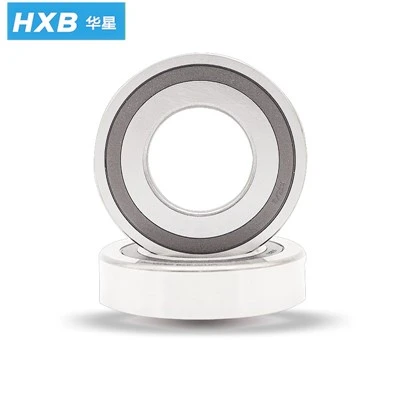
First, let’s set a basic frame: deep groove ball bearings work by their balls rolling between two grooved rings (the inner and outer races), with the balls taking the brunt of the load between those two surfaces. If either the balls or the races are too soft, they’ll wear down fast, develop indentations called brinelling, or even deform under load. If they’re too hard, they’ll be brittle, crack, or chip when hit with sudden, heavy loads—like when a forklift’s forks slam onto a pallet, or a motor’s shaft misaligns under high torque. Hardness is that sweet spot between soft enough to distribute load evenly and hard enough to resist wear, and for deep groove ball bearing balls, that sweet spot isn’t pulled out of thin air—it’s rooted in decades of material testing and real-world application data.
Most deep groove ball bearing balls aren’t made of a single material, which is why their hardness can vary based on what they’re designed for. The standard, workhorse balls for most general-purpose bearings are made through-hardened chrome steel, often called 52100 steel in the bearing industry. This is the material I stock most of, and for good reason—its hardness is consistent, it’s affordable, and it works for 70% of the bearings I ship every week. When we process 52100 steel for bearing balls, we run it through a controlled heat treatment cycle: first, we heat it to around 850 degrees Celsius to harden its entire structure, then we quench it in oil to lock in that hardness, followed by tempering at a lower temperature (usually 150 to 200 degrees Celsius) to reduce brittleness. The final hardness of these balls? We measure it on the Rockwell C scale, which is the standard for bearing components, and for 52100 through-hardened balls, that’s 60 to 66 HRC. Let me put that in perspective: a typical household knife blade is around 56 to 58 HRC, so these bearing balls are significantly harder, but not so hard that they’ll shatter if they take a minor impact. Last year, I supplied 2,000 sets of these balls to a food processing plant that uses their bearings in packaging lines, and none have failed due to hardness in the 18 months since installation—they deal with constant high speeds and mild moisture, and this hardness range holds up perfectly.
But not all applications call for 52100 steel. For environments that are extra harsh—think mining equipment that’s exposed to dust and abrasive debris, or wind turbine bearings that have to handle sudden wind gusts and fluctuating loads—we use a different material for balls: case-hardened carbon steel, often 10Cr6 or a similar low-carbon steel. Case hardening is different from through-hardening: instead of hardening the whole ball, we only harden the outer layer, leaving the core softer and more flexible. The reasoning here is simple: a ball that’s hard on the outside will resist wear from abrasive dust, but a softer core will absorb shock better than a fully hard ball. These balls have a surface hardness of 58 to 64 HRC, which is slightly lower than 52100’s top end, but the core flexibility means they’re less likely to chip under impact. I recently sold a batch of these to a mining equipment supplier, and their lead engineer told me that in a side-by-side test, these case-hardened balls lasted 3 times longer than 52100 balls in their primary crusher’s feeder bearings. That’s the kind of real win that comes from matching hardness to application.
For even more extreme environments, we turn to stainless steel balls. A lot of people don’t realize that not all deep groove ball bearings go into dry, clean spaces—some go into medical devices (like surgical tools or implant pumps), marine equipment, or chemical processing machinery where corrosion is a constant threat. The two most common stainless steels for bearing balls are 440C and 316L. 440C is a martensitic stainless steel, which means we can harden it, just like chrome steel. Its hardness ends up at 58 to 64 HRC, similar to case-hardened carbon steel, and it’s ideal for applications that need moderate corrosion resistance and good wear resistance—like small bearings in dental drills, which are cleaned with harsh sterilizing solutions. 316L is an austenitic stainless steel, and it can’t be hardened with heat treatment alone. Instead, it’s work-hardened—meaning we shape the ball, and the mechanical force of forming it adds hardness. The resulting hardness for 316L balls is around 40 to 50 HRC, which is softer than chrome steel, but it’s 100% corrosion-resistant even in saltwater or acidic chemicals. I once supplied 316L balls to a boat propeller manufacturer for their steering system bearings, and they reported no corrosion issues after two years of offshore use, which would have been a problem with chrome steel balls.
Wait, there’s another type of ball that’s worth mentioning because it’s become more common over the last decade: ceramic balls. A lot of customers come to me asking about ceramics because they’ve heard they’re faster and last longer, but they don’t fully grasp the hardness tradeoffs. The most common ceramic for bearing balls is silicon nitride, which has a hardness of 72 to 78 HRC—way harder than steel, more like the hardness of a diamond. That extreme hardness means ceramic balls have almost no wear, and they’re lighter than steel, so they reduce friction at high speeds. But here’s the catch: they’re also much more brittle. If a ceramic ball takes a sudden heavy load, like a misaligned shaft slamming into it, it will crack or shatter, whereas a steel ball of comparable hardness would just dent or deform slightly. I only recommend ceramic balls for applications that are extremely clean, well-aligned, and run at constant high speeds—like electric vehicle motor bearings or high-end robotics. Last year, I supplied a set to a robot manufacturer for their assembly line pick-and-place arms, and they’ve cut their bearing replacement time by 70%, but I never push ceramics on a customer whose application involves heavy shock or debris; they’d end up with broken bearings.
Now, why does all this hardness matter beyond just the material? Let’s talk about the testing we do here at my facility to make sure every ball meets specs, because I’ve seen bearings fail just because their balls were too soft or too hard, even if they were made from the right material. We test each batch of balls with a portable Rockwell hardness tester, pressing a tiny diamond tip into the ball’s surface and measuring how much it indents—lower indent = higher hardness. For 52100 balls, we reject any that come in below 60 HRC or above 66 HRC. If a ball is too soft, it will wear quickly against the races, and the races will develop pits that ruin the bearing. If it’s too hard, it’s brittle and will crack. We also do a drop test occasionally: we take a ball from a batch and drop it from a standard height onto a hard steel surface, and if it chips, the whole batch gets rejected. That’s a simple test that catches hardness issues that the Rockwell test might miss, like a ball that’s too hard on its surface but has a soft core, which would fail under load.
I also want to address a common myth I hear all the time: “harder is always better for bearing balls.” That’s just not true. I had a customer a few years back who bought a batch of extremely hard chrome steel balls (68 HRC, way above our standard) for a conveyor bearing in a warehouse. He came back to me a week later saying the balls were cracking left and right. When I looked at the specs, he’d ordered balls meant for high-speed motor use and installed them on a conveyor that’s often overloaded. That hardness was too high for his application—no flex, no shock absorption, so every time the conveyor was overloaded, the balls cracked. That’s the kind of mistake I help customers avoid all the time: matching hardness to their specific load, speed, environment, and shock levels, not just picking the hardest option available.
So, to circle back to the original question: the hardness of deep groove ball bearing balls isn’t a single number—it’s a range tailored to what the bearing will be used for. Most general-purpose deep groove ball bearings use 52100 chrome steel balls at 60 to 66 HRC, case-hardened balls for heavy load/shock applications at 58 to 64 HRC, 440C stainless for corrosion and wear at 58 to 64 HRC, 316L stainless for extreme corrosion at 40 to 50 HRC, and ceramic balls for high-speed, clean applications at 72 to 78 HRC. As someone who’s been in this business long enough to see good and bad bearing choices, the biggest piece of advice I can give is to not focus on hardness in isolation. Talk to a supplier who knows these specs, explain your application, and they’ll help you pick the right hardness (and right material) to get a bearing that lasts.
If you’re in need of deep groove ball bearings, whether for a small DIY project or a large industrial operation, I’m here to help. I’ve worked with customers across every industry, from medical device makers to agricultural equipment suppliers, and I can help you specify the right bearing, including the right ball hardness, for your needs. Don’t hesitate to reach out to discuss your requirements, ask questions, or get a quote— I’m always happy to share what I’ve learned over the last 12 years in the bearing industry.
Deep Groove Ball Bearings References
- Neale, M. J. (Ed.). (2001). Tribology Handbook (2nd ed.). Butterworth-Heinemann.
- Stachowiak, G. W., & Batchelor, A. W. (2014). Engineering Tribology (4th ed.). Elsevier.
- American Bearing Manufacturers Association. (2018). ABMA Standard 10: Deep Groove Ball Bearings.
- Budinski, K. G. (2010). Engineering Materials: Properties and Selection (8th ed.). Pearson.
- Hansson, M., & Josefson, B. L. (2005). Contact fatigue in deep groove ball bearings: Effects of material hardness and surface roughness. Wear, 258(11-12), 1727-1735.
Hangzhou Huaxing Kechuang Holding Group Co., Ltd.
Hangzhou Huaxing Kechuang Holding Group Co., Ltd. is one of the leading manufacturers and suppliers of deep groove ball bearings in China, featured by quality products and good service. Please rest assured to buy bulk durable deep groove ball bearings from our factory. Welcome to view our website for more information.
Address: No.553 Yingbin Road, Linping, Hangzhou, 311100, China
E-mail: wmb@huaxingbearing.com
WebSite: https://www.hxbbearing.com/
