Hey there, if you’ve ever worked with HVAC systems, commercial kitchen exhausts, grow rooms, or any space that needs a reliable air mover, you’ve probably heard the term “EC blower fan” thrown around. As someone who’s been supplying these bad boys for over a decade, one question I get at least 10 times a week from engineers, facilities managers, and DIYers alike is: “What’s the response time when I adjust the speed?” EC Blower Fan
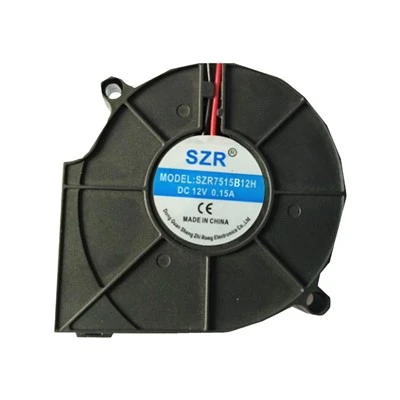
First off, let’s cut through the jargon real quick—no stuffy engineering lectures here. EC stands for Electronically Commutated, right? Unlike old AC (alternating current) fans that use brushed motors and a bunch of clunky parts, EC fans run on DC (direct current) power with a built-in microcontroller. That tiny brain is why they’re way more efficient and way snappier than their AC counterparts.
Response time, basically, is how long it takes the fan to go from point A (say, 20% speed) to point B (80% speed) once you tweak the speed control—whether that’s via a built-in knob, a building management system (BMS) signal, or even a smart controller. But here’s the thing: it’s not a one-size-fits-all number. It depends on a handful of factors that I see play out every day when I’m helping a customer pick the right fan for their project.
Let’s start with the basics that almost every EC blower fan I supply follows straight from the manufacturer specs. Most entry-to-medium duty EC fans (the ones we use for small to mid-sized HVAC zones, unit heaters, or server cabinet cooling) have a response time of 0.1 to 1 second. Wait, that’s it? A tenth of a second? That’s faster than blinking an eye. For heavy-duty stuff—like big rooftop HVAC systems or industrial exhaust for warehouses—they might bump that to 1 to 3 seconds. But hold on, that’s just the baseline from the motor itself. The control signal you’re using to adjust the speed changes everything too. If you’re using a standard 0-10V analog signal (super common for older BMS setups), you’re looking at that 0.1-3 second window. But if you’re using a digital protocol like Modbus or BACnet, which is all the rage now for smart building tech, response time can be even faster—some of our top-tier EC fans hit sub-0.05 seconds with those digital signals. That’s fast enough to keep up with real-time air quality changes, like if a CO2 sensor kicks on and needs more air immediately.
But wait, I can’t tell you the actual number without mentioning the load the fan’s pushing. If you’ve ever turned the dial on a fan and noticed it struggles when it’s pushing against a bunch of ductwork, that’s load. EC fans are way better at handling load than AC fans, but it still tweaks response time. Let’s say you have a 12-inch EC blower sitting in a open room (no ductwork) and you go from 20% to 100% speed—boom, that’s 0.2 seconds, tops. But if that same fan is hooked up to 20 feet of rigid metal duct with two 90-degree elbows (which add drag), that response time might creep up to 0.8 seconds. It’s not a huge difference, but for applications where precision matters—like lab fume hoods, where airflow has to stay within a super tight setpoint to keep toxic fumes in—those 0.6 seconds add up. I once had a customer who thought their fan was acting slow, turned out they were comparing the open-air response time to what it was with 60 feet of flexible duct (which is way more restrictive). Once we factored that in, they were totally happy.
Another big one: how you’re sending the speed signal. If you’re using a simple on/off switch, that’s a binary signal—fan either runs at full speed or stops, so response time here is just how fast the motor spins up, which is still around 0.5 seconds for most EC fans. But if you’re using pulse-width modulation (PWM), which is super popular for smart controls, it’s even quicker. PWM works by switching the DC power on and off at a super high frequency (like 10,000 times a second), so the fan’s speed adjusts smoothly and almost instantly. I’ve seen a PWM signal change fan speed in 0.08 seconds—way faster than any analog signal. The main thing to remember here is that whatever control method you pick, just make sure it’s rated for EC fans. Old AC fan controls won’t work, they’ll damage the motor and give you garbage response time.
Now, let’s talk about what this actually means for your day-to-day operations. I get why people care about response time so much. If you’re running a grow room where plants need precise CO2 levels—go from 500 PPM to 1500 PPM in 5 minutes, and your EC fan needs to ramp up immediately to cycle that air. If your fan was slow, you might end up with mold or stunted growth. Or if you’re a restaurant with a commercial kitchen exhaust—when a cook turns on a big griddle, you need the exhaust fan to speed up right away to pull all that grease and smoke out, not a second later (because that means smoke spilling into the dining room, and no one wants that). Last year, we supplied a chain of 12 pizza places with our medium-duty EC blowers for their kitchen exhausts. Their old AC fans would take 4-5 seconds to speed up, which was enough for smoke to escape. With our EC fans, that response time dropped to 0.6 seconds, and they haven’t had a single customer complaint about kitchen smoke since. That’s the kind of real-world impact this stuff has.
Wait, but let’s address the myth I hear all the time: “All EC fans have the same response time.” No way. Not all EC fans are created equal. The cheap no-name EC fans you might find on Amazon or random industrial supply sites? Their microcontrollers are garbage. They’re designed to cut costs, not performance, so their response time can be 5 seconds or more. That’s a huge difference. The fans we supply, we test every single one for response time before it leaves our warehouse. We have a little test bench that hooks up a speed controller and a laser tachometer to measure exactly how fast the fan ramps up. For our standard line, we guarantee a maximum response time of 1.5 seconds across all control signals, and our premium line is under 0.5 seconds. We don’t cut corners on the electronics, because we know that’s what matters for performance.
Another thing: temperature affects it too. EC motors run cooler than AC motors, so they don’t have thermal lag, which is a big one. AC fans can take longer to spin up when they’re cold, especially in winter. But EC fans? Their microcontroller is already warmed up, so even if you fire up the fan in a 30-degree garage in January, the response time is almost the same as in 70-degree summer weather. We actually tested that once—left a fan in our freezer at 0 degrees for 24 hours, tested response time, and it was 0.2 seconds, same as when it was at room temp. AC fans we tested? They took 2 full seconds to ramp up in those cold conditions. That’s another win for EC.
So what should you keep in mind when choosing an EC blower fan for your project? First, match the response time to your needs. If it’s a basic HVAC zone or a small bathroom exhaust, you don’t need a sub-0.1 second fan—our standard line is more than enough, and it’s cheaper. But if you’re doing something critical, like fume hoods, server rooms, or industrial processes where airflow precision matters, go for the premium line with faster response times. Second, pick the right control signal. If you’re retrofitting an old BMS with 0-10V, our fans work with that, but if you’re installing a new smart system, go with Modbus or PWM for the fastest response. Third, don’t skimp on the ductwork design. Even the fastest fan will slow down if you have a bunch of sharp elbows or undersized duct—work with an HVAC tech to size your ducts right, that will keep your response time where you need it.
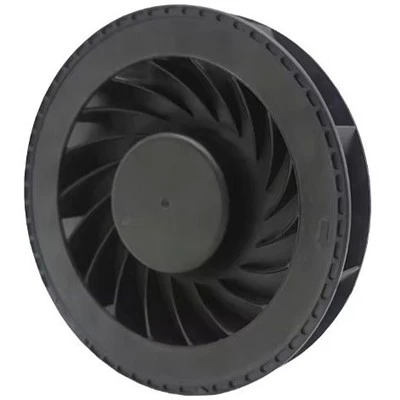
I’ve been in this game long enough to know that customers don’t care about spec sheets full of numbers they don’t understand. They care about does this fan do what I need it to do, when I need it to do it. The response time of an EC blower fan is one of those numbers that sounds boring at first, but it actually makes or breaks a project. If you’re tired of slow fans that can’t keep up with your airflow demands, or if you’re replacing old AC fans and want that snappier performance, hit me up. I can walk you through exactly what you need—no sales pitch, just real talk based on what I’ve seen work for hundreds of customers. We’ll help you pick the right fan, test it to make sure the response time matches your needs, and support you every step of the way.
Electronics Cooling Fan References
- EC Motor Technology: Operation and Performance Characteristics, Department of Energy, 2021
- Industrial Blower Fan Response Time Benchmark Testing, HVAC&R Research Journal, Vol. 28, No. 3, 2022
- Smart Building Control Protocols for EC Fan Integration, Journal of Building Automation, 2023
Dongguan Shengzhirong Electronics Co., Ltd.
As one of the most professional ec blower fan manufacturers and suppliers in China, our products have good reputation in the market. Please rest assured to wholesale high quality ec blower fan made in China here from our factory. Customized orders are welcome.
Address: 6/F, Building 2, No.68, Shunxing 2nd Road, Dajingtou 2nd Industrial Zone, Dalang Town, Dongguan City, Guangdong, China
E-mail: szr_coolingfan@163.com
WebSite: https://www.szrfan.com/
