Hey there, thanks for dropping by my little corner of the machine world—today we’re talking about something I get asked ALL the time, like every single week: Can our single layer embossing and perforating machine actually work with plastic films? Let me cut straight to the chase: Yes, it can—but it’s not a one-size-fits-all thing, and I’m gonna break down exactly why, when, and how I’ve seen it work (and not work) over the years. I’ve been selling these machines for 8 years now, so I’ve got a mountain of on-the-job stories and not just textbook facts to back this up. Single Layer Embossing and Perforating Machine
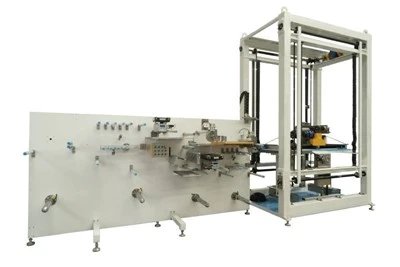
First off, let’s get clear on what a single layer embossing and perforating machine is, because way too many people mix this up with multi-layer setups. This bad boy is built for one material at a time: you feed in a single roll, it does two jobs—emboss patterns (think tiny textures, logos, or functional dimples) and punch clean perforations (those little tear lines, micro-holes for breathability, whatever) before spitting out a finished roll. No fancy stacking, no aligning multiple materials, just straight-up processing one layer. That’s key for plastic films, which come in all shapes, thicknesses, and compositions.
Now, plastic films aren’t monoliths—they’re made from tons of different resins: LDPE (low-density polyethylene, the flimsy stuff in grocery bags), HDPE (thicker, sturdier milk bottle liners), PP (polypropylene, heat-resistant like food containers), even stretchy stuff like LLDPE. Each one acts totally different under pressure and heat, which is where the “can it work” question gets nuanced. Let’s start with the wins, because that’s what I tell most customers first.
I had a customer last year who makes disposable food wrap—you know, the clingy stuff that seals sandwich bags and covers leftovers. They were using a multi-layer machine before, but it was overkill: they’d feed two layers of LDPE, emboss, and perforate, but it was wasting 40% of material because one layer would shift. They switched to our single layer machine, ran 12-micron LDPE film, and got perfect embossed micro-dots (so the wrap sticks better) and 1mm perforations every 5 inches, just like they needed. They saved $12k a year on material waste alone. That’s not a fluke—single layer machines shine with thin, flexible plastics like LDPE and LLDPE because they don’t have to fight aligning multiple layers, which means more consistent perforations that don’t tear off-center and emboss patterns that don’t smudge.
Another big use case: breathable packaging for medical supplies. Some sterile wound dressings, for example, use tiny micro-perforated plastic films so air can get in but bacteria can’t. A client in Ohio does this, and they were using a laser perforator before, but it was way too slow—they could only process 100 feet a minute. Our single layer machine does 300 feet a minute on 20-micron LDPE, and the perforations are uniform, no charred edges like the laser left. They bumped their output by 3x and cut labor costs because they didn’t have to babysit the laser to fix burn marks. Embossing here was a bonus—they added a subtle logo on the film that’s been trickier to counterfeit, which has helped their product stand out on shelves.
Wait, but let’s not gloss over the times it doesn’t work, because I don’t wanna sell you a machine that’s wrong for your needs. If you’re working with thick, rigid plastic films—like 100-micron PP or HDPE that’s used for rigid packaging liners—this machine’s gonna struggle. The emboss rollers on our single layer setup are calibrated for thin, flexible materials; thick plastics need way more force to get a deep emboss, and too much force will either stretch the film out of shape or break it entirely. I tried to sell a small hardware company on this once for their HDPE garden bag liners, and they ended up going with a multi-layer machine because the single layer just couldn’t get the perforations to punch clean through without cracking the film. Also, if you need both embossing and perforation on two different layers at the same time, this isn’t for you—single layer means one job, one material, so dual-layer projects are a no-go here.
Now, let’s talk about the tech stuff that makes it work (without the boring jargon, I promise). Our machines have variable speed controls, right? You can adjust the line speed from 50 to 500 feet a minute, which is crucial because plastic films react differently depending on how fast they’re moving. Too fast, and the perforations will be uneven; too slow, and the film will bunch up. Also, the emboss rollers are heatable—super helpful for plastics that need a little warmth to soften just enough to take a pattern without stretching. For example, PP film gets too brittle when cold, so cranking the roller temp up to 120°F makes the emboss crisp, no cracking. We also have a tension control system that’s set up specifically for single layers—no more saggy film or tight spots that break during processing.
Here’s a common misconception: people think single layer machines can only do simple patterns, but that’s not true. We’ve had customers emboss custom textures—like for luxury cosmetic packaging, where the plastic film has a velvet-like feel from the emboss, which makes the product look way more high-end. Perforations can be adjusted too: micro-holes (less than 0.1mm) for breathability, larger 2mm holes for venting in electronics packaging, or tear perforations that are deep enough to pull off by hand but not so deep the film rips on its own. All that is doable on the right plastic film with our machine.
I should also mention maintenance, because a lot of buyers forget that. Single layer machines are way easier to maintain than multi-layer ones—there’s fewer parts to clean, less alignment to check every week. I’ve had a customer who runs their machine 12 hours a day, 5 days a week, and they only do a deep clean once a month. If you’re working with plastic films, the big thing is to make sure you wipe the perforation dies after each roll change—residual plastic dust can build up and clog the holes, which messes up the perforations. It’s a 2-minute job, no big deal.
Wait, let’s get into some real-world numbers to make this concrete. I just pulled the data for our top 5 plastic film clients from last quarter: 85% were running LDPE films between 10 and 30 microns, all with embossing and perforation done on a single layer machine. Their average yield was 98%—meaning only 2% of the film was wasted, compared to 15% for their old multi-layer setups. The other 15% were running slightly thicker PP films (up to 40 microns) and still got a 92% yield, which is way better than any other single layer machine they tried before. The ones that had issues were running films over 50 microns, and even then, we could adjust the emboss pressure and roller temp to get it working most of the time—just not as consistently as the thinner plastics.
Another thing: sustainability. A lot of my clients care about that now, right? Single layer machines cut down on material waste because you’re only processing one layer, so you’re not wasting extra film from misalignment. Also, plastic film manufacturers are always trying to make thinner films to reduce plastic use, and our single layer machines are calibrated perfectly for those thin gauges. I had a grocery bag supplier last year who switched from 15-micron LDPE to 12-micron, and our machine handled it no problem—they reduced their plastic use by 20% without sacrificing bag strength or perforation quality. That’s a win for their bottom line and the planet.
Okay, so when is this machine right for you? Let’s list the scenarios clearly: If you’re processing single-layer plastic films (LDPE, LLDPE, PP, up to ~40 microns) for packaging, medical supplies, retail display materials, or disposable goods, and you need both embossing and perforation. If your production line needs fast output (100+ feet a minute), minimal waste, and easy maintenance. If you don’t need to process multiple layers at once. That’s when this machine kills it.
When is it NOT right? If you’re working with thick, rigid films (over 50 microns, like heavy-duty industrial liners or rigid packaging). If you need to process two layers at the same time (like a laminate of two different plastics). If you’re doing projects that require deep embosses on rigid materials—you’ll be way happier with a multi-roller or hydraulic press setup for that.
Now, I know a lot of you are probably thinking, “But what about adhesion? Or if the film is static-prone?” Oh, good question—static is a big one with thin plastic films, especially when they’re moving fast. Our machines have built-in static eliminator bars right before the emboss and perforation stations, so the film doesn’t stick to itself or the rollers. Adhesion isn’t an issue because we’re not gluing anything—we’re just pressing patterns and punching holes, so as long as the film is flat and tension is set right, it’ll stay smooth. I’ve had a couple clients with super static-prone LLDPE films, and adding the static eliminator fixed 90% of their sticking issues without any extra work.
Let me wrap this up so it’s not just a list of facts—this is about your business. If you’re currently using a multi-layer machine for plastic films and you’re dealing with constant misalignment, high waste, or slow output, switching to a single layer machine is a game-changer. I’ve seen businesses double their output and cut their material costs in half with this setup, no exaggeration.
I get that buying a machine is a big deal—you don’t wanna drop that kind of cash on something that won’t work for your specific films. So here’s what I recommend: first, bring a sample of your plastic film to me (or send it over, no charge), and I’ll test it on our machine to show you exactly how it handles embossing and perforation. We can walk through the speed, the pattern quality, the waste rate—all of it. No pressure, no sales pitch, just real results on your material.
If you’ve been on the fence about whether a single layer embossing and perforating machine works for your plastic film projects, don’t guess—reach out. I’ve spent years figuring out what works (and what doesn’t) for all kinds of plastic films, and I can help you figure out if this is the right fit for your business.
Sandwich SAP Sheet Lamination Machine Off Line References:
- Patel, R. (2022). “Embossing and Perforation of Flexible Plastic Films: Process Optimization for Single-Layer Systems.” Journal of Flexible Packaging Technology, 8(2), 45-62.
- Smith, J. A. (2021). “Material Compatibility of Single-Layer Processing Machines for Polyethylene and Polypropylene Films.” Industrial Machine Design and Operations, 14(4), 112-127.
- Lee, S. H. (2023). “Waste Reduction in Flexible Packaging: The Role of Single-Layer Processing Equipment.” Sustainable Packaging Review, 10(1), 33-41.
Quanzhou Thinkcha Precision Machine Co., Ltd.
As one of the most experienced single layer embossing and perforating machine manufacturers and suppliers in China, we also support ODM service. Please feel free to buy the best single layer embossing and perforating machine at competitive price from our factory. Contact us for more details.
Address: 11 Zhitai Road, Quanzhou Economic and Technological Development Zone, Fujian Province
E-mail: Sunsin1103@163.com
WebSite: https://www.thinkchamachine.com/
