If you’re running a business that works with metal, plastic, or fabric rolls, chances are you’ve got (or are thinking about getting) a slitting machine on your floor. But here’s the thing: even the best slitter won’t deliver clean, consistent cuts if your operators don’t know how to use it right. I’ve been selling and supporting slitters for 12 years now, and I’ve seen firsthand how half-baked training leads to wasted materials, messed-up orders, and even safety slips that could’ve been avoided. So let’s break this down—no jargon, no corporate fluff, just what I tell every shop that buys a slitter from us. Slitting Machine
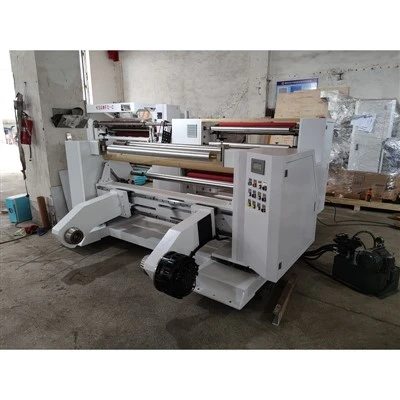
First off, let’s start with the boring stuff you can’t skip: pre-job prep. This isn’t just “turn the machine on and go”—skipping this step is how you end up with a roll that’s off-center, a blade that’s dull, or a mess of material sitting on the floor. Most new operators want to rush into feeding the roll, but I make them spend 10 minutes here every single time. First, they need to inspect the raw material roll. Hold it up to the light—do you see any dents, warps, or thin spots that could snap mid-slit? Check the core too; if the cardboard or metal core is cracked, it’ll wobble when it spins, leading to uneven cuts.
Next up, set up the machine correctly. This is where 90% of new operators mess up. Let’s talk about blade setup first. Slitting machines have two main types of blades—circular knives (for thin materials like foil or paper) and shear knives (for thicker stuff like steel or plastic). You can’t just slap any old blade on there. For thin materials, you need a clearance between the knives that’s almost paper-thin—too big and you’ll get ragged edges, too small and you’ll chew through the material or nick the opposite blade. For thick materials, the clearance is a bit more, usually 5-10% of the material’s thickness. I always tell new ops to test with a scrap piece first before running production material. Grab a scrap of your actual material, run it through, and check the edge—if it looks like it was cut with a butter knife, adjust the clearance.
Then there’s the roll alignment. If the raw roll isn’t straight on the mandrel, every slit will be off by a fraction of an inch, and add that up over 1000 rolls and you’re throwing away thousands in material. Most modern slitters have a side guide adjustment, but even so, I have operators mark the edge of the roll with a sharpie before loading it, so they can line it up with the guide in 2 seconds. Don’t over-tighten the mandrel either—cranking it down so hard it bends the core will warp the entire roll, which is a nightmare to fix.
Once the setup is done, it’s time for a test run. This is non-negotiable for anyone who’s never used your slitter, even if they’ve used another brand before. Every machine is a little different, even the ones that look the same. For the test run, use a scrap piece of the same material you’ll be using for production. Set the speed slow at first—like 50 feet per minute, max. Fast speed makes it easier to mess up alignment and blade tension. Watch the cut edges as it comes off the machine. Do they look smooth? Is the slit width exactly what you ordered? If not, tweak the blade tension or speed before you run full production. I’ve had shops skip the test run because they “know how it works” and end up with 500 feet of scrap that’s impossible to sell. That’s a $200 mistake, all because they didn’t take 2 minutes for a test.
Now, safety—this is where I can’t cut corners, even if an operator swears they “never mess up.” Slitting machines have sharp blades, fast-spinning mandrels, and heavy rolls that can fall if not handled right. First, never leave the machine unattended while it’s running. I don’t care if it’s just a 2-foot run—if you walk away, something could go wrong, and you won’t be there to hit the emergency stop. Speaking of emergency stops, make sure every operator knows where that button is, and how hard it is to push. A lot of newer machines have E-stops that are recessed, so if you’re panicking, you might not hit it right. I make every new operator practice hitting the E-stop 5 times in a row within 2 seconds of turning on the machine.
Then there’s roll handling. Raw rolls can weigh anywhere from 50 pounds to 2000 pounds, depending on the material. Never try to move a roll by hand—use a roll jack or a forklift with a roll clamp. Even if you think you can lift it, a slip here can lead to a broken foot, or a roll falling into the machine and breaking a blade. Also, when removing the finished slit rolls, make sure they’re properly supported. If you let a 100-pound roll hang over the edge of the cart, it’ll roll off and make a mess (or hurt someone).
Now, the ongoing stuff that even experienced ops forget: maintenance and troubleshooting. A slitting machine won’t run forever without upkeep, and most of the issues people blame on the machine are just because it’s dirty or neglected. First, clean the machine every day after use. Dust, metal shavings, or leftover material can get between the blades and cause uneven cuts. Wipe down the mandrel, the blade holders, and the guides—use a soft cloth, not a power washer, because water can get into the motor and cause problems.
Blade replacement is another big one. Dull blades are the #1 cause of bad cuts and wasted material. How do you know if your blade is dull? The edges will look ragged, the material will pull instead of cut, and you might hear a squeaking noise when it runs. I tell operators to change the blades every 5000 feet for thin materials, every 10,000 feet for thicker stuff—but that’s a rough guide. If the cuts start looking off, change the blade, even if you think it still has life in it. A new blade is $50, but scrap material from a dull blade can be $500 a run.
Troubleshooting common issues is key too. Let’s say you’re getting width inconsistencies. First, check the roll alignment—9 times out of 10, that’s the problem. If alignment is perfect, check the blade clearance. If the edges are curling too much, that’s usually too much blade tension—loosen it a little. If the material is snapping mid-run, it’s probably too much speed, or the blades are too tight. I keep a little cheat sheet taped to every slitter we sell, so ops can reference that instead of guessing when something goes wrong.
Now, let’s talk about on-the-job training for operators. A lot of shops just throw a new guy at the machine and say “figure it out,” but that’s a recipe for mistakes. We offer hands-on training for every shop that buys a slitter from us, because I know that in-person is way better than a YouTube video. Pair new ops with a veteran operator for at least 3 shifts. Have the new one do the prep, test runs, and basic adjustments while the veteran oversees. Let them make small mistakes on scrap material at first, not on expensive production rolls. That way, they learn without costing you money.
Also, keep training ongoing. Even seasoned ops can get complacent. Every 6 months, do a refresh: go over safety rules, check blade condition, troubleshoot a sample issue. I’ve had a shop that’s had the same slitter for 5 years, and their ops still do a 10-minute test run every time they change material—consistency like that is why their cuts are perfect 99% of the time.
Wait, let’s not forget about material-specific tips. Slitting foil is way different than slitting steel, or fabric. For thin, flexible materials like plastic film, you need to use tension control on the rewinder—too much tension and the rolls will be tight enough to split, too little and the slits will warp. For thick, rigid materials like aluminum, you need to make sure the blades are sharp and the machine has enough power to pull the roll through without bogging down. I always tell operators to adjust the speed based on the material—softer, thinner materials run faster, thicker, harder materials run slower.
One more thing: record keeping. Have operators log every run: material type, blade number, slit width, speed, and any issues they had. This helps you spot patterns. If every run with material X has uneven cuts, maybe the material is warped—you can call your supplier and ask for better stock. If every run with blade 3 is coming out dull, it’s time to change your blade supplier. This small step saves a lot of headaches down the line.
At the end of the day, a slitting machine is only as good as the people operating it. You can buy the fanciest, most automated slitter on the market, but if your ops don’t know how to set it up, test it, or keep it safe, it’ll be a paperweight. I’ve seen shops go from 20% scrap to 2% just by training their operators right.

If you’re in the market for a slitting machine, or you have one but your team could use better training, reach out to us. We don’t just sell machines—we train your people to use them right, so you get the most out of your investment. No stuffy training manuals, no confusing jargon, just hands-on help that fits your shop’s needs.
Foil Rewinding Machine References:
- Occupational Safety and Health Administration (OSHA). Machine Guarding for Slitting Machines. 2022.
- American Society for Metals (ASM International). Guidelines for Slitting Blade Selection and Maintenance. 2021.
- Packaging Machinery Manufacturers Institute (PMMI). Operator Training Best Practices for Converting Equipment. 2020.
- Manufacturing Extension Partnership (MEP). Reducing Scrap Through Proper Machine Setup and Training. 2023.
Wenzhou Sanhui Machinery Manufacturing Co., Ltd.
Wenzhou Sanhui Machinery Manufacturing Co., Ltd. is one of the most professional slitting machine manufacturers and suppliers in China. We have world-leading production equipment and strong manufacturing capabilities. Please feel free to wholesale advanced slitting machine made in China here from our factory. Customized orders are welcome.
Address: B17-8, Mechanical Industry Park, Wanquan Light Industry Production Base, Wanquan Town, Pingyang County, Wenzhou City, Zhejiang Province
E-mail: sanhui.slittingmachine@gmail.com
WebSite: https://www.sanhuislittingmachine.com/
