Hey everyone, it’s Mia here from your go-to brick tunnel kiln supplier, and today we’re diving into a question I get at least twice a week: why do bricks warp in a tunnel kiln? If you’re a brickmaker, you’ve probably dealt with it—pulling a batch out of the kiln only to find half the pieces are twisted, curved, or just plain misshapen, which kills your yield and cuts into profits. I’ve seen it happen more times than I can count, and let me tell you, it’s not some random voodoo (though it might feel like it when you’re staring at a pile of warped bricks at 2 a.m.). There’s actual science behind it, and today I’m breaking it down like I would with a new customer who just called panicking over their last burn. Brick Tunnel Kiln
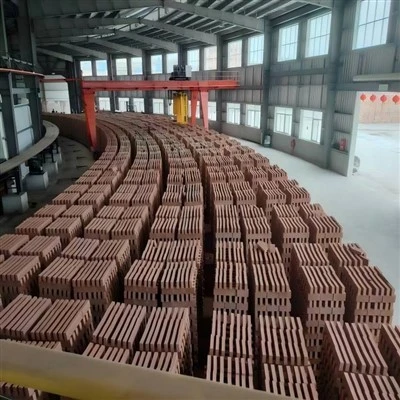
First, let’s get one thing straight: tunnel kilns are awesome for consistent, high-volume brick production, but they’re also a long, precise beast. Your bricks move through different zones—preheating, firing, cooling—slowly, over hours (or even days, depending on the kiln size). Warping almost always ties back to how they move through those zones, especially the firing zone where temps are hitting 1,800–2,400°F (that’s 980–1,315°C, for the non-metric crew). Here’s the big one: uneven heating. That’s the #1 culprit, no contest. Think about it—if one side of a brick is way hotter than the other during firing, the clay on that side will vitrify (get all glassy and dense) faster than the cooler side. Clay expands as it heats, right? So if one side is expanding more than the other, and it’s not uniform, that tension makes the brick twist or curve. I’ve seen this happen when a kiln’s burners are misaligned—one wall of the kiln is running 100°F hotter than the other, and suddenly every third row of bricks is warped. Even a tiny temperature gap (like 20°F) can add up over a 10-foot-long brick.
Wait, but it’s not just the kiln’s heat profile—what about the way you load the kiln car? Oh man, that’s another big one I see new kiln owners mess up. If you stack bricks too tight, there’s no airflow between them, so some bricks are sitting in a pocket of cooler air while others are right next to a hotter burner. Or if you stack them unevenly—like putting a big, heavy brick right on the edge of a stack—you’re not just risking warping from heat, you’re risking structural deformation from weight too. Clay is super malleable when it’s hot, even if it’s not fully melted. So if you’ve got a 10-pound brick sitting on top of four thin ones, those lower ones will bend under the pressure in the firing zone. I always tell customers: leave at least ¼ inch between each brick row, and stagger the stacks so no single point is bearing too much weight. That small tweak cuts warping by like 30% for most folks.
Next up: moisture content. This one trips people up because it happens way before the bricks even hit the kiln. If your raw clay has inconsistent moisture, or you dried the green bricks (that’s the unfired ones, fyi) too fast, you’re setting yourself up for warping. Wait, how? Let’s break it down. Green bricks have tiny pores filled with water. If you dry them too quickly, the surface water evaporates before the water deep inside the clay can move up. That makes the outer layer shrink faster than the inner layer—super similar to the uneven heating thing, right? Tension builds, and the brick twists before you even load it into the kiln. I’ve had customers show me green bricks that are already slightly curved before they go in—those are the ones that turn into full-blown warped disasters during firing. Pro tip: dry green bricks slowly, in a controlled space where humidity is around 10–15% for at least 24 hours, depending on the brick size. No rushing this step—trust me.
Another thing I hear all the time: “Our kiln’s firing time is the same as it’s always been, but now bricks are warping.” Hmm, could be fuel fluctuations? If your kiln is running on natural gas or propane, inconsistent fuel flow means inconsistent heat. One hour the burners are cranking at 100% output, the next they’re at 80%, and that uneven heat wave hits the bricks mid-firing. Some parts of the kiln get a burst of extra heat, others cool down a little, and boom—warped bricks. Even old kilns can have this issue if the burners are dirty, or the fuel lines have blockages. We do a tune-up for kilns that have been running for 5+ years, and it’s crazy how much a small burner cleaning fixes the warp rate. I had a customer last month whose warp rate dropped from 18% to 4% after we aligned their burners and flushed their fuel lines. Game changer.
Wait, what about the firing zone’s atmosphere? Some people don’t realize that tunnel kilns aren’t just about heat—they’re about the air around the bricks. If there’s not enough oxygen in the firing zone (that’s called a reducing atmosphere), the clay’s minerals (like iron oxide) act weird. Instead of fusing evenly, they create uneven shrinkage as the brick cools. Oh right, cooling! That’s another zone people sleep on. If you cool the bricks too fast, especially right after firing when they’re still soft, the outer layer shrinks way faster than the core. Same tension problem—twist city. I always tell customers to slow down the cooling zone: gradually lower the temperature over 12–18 hours, so the brick can shrink uniformly as it goes. No sudden blasts of cool air at the end, that’s a quick path to warped bricks.
Let me also talk about something I don’t hear enough: clay composition. Not all clay is made equal. If your clay has a high amount of silt or sand, it can shrink and expand at different rates than pure clay. Or if you have a mix of different clay types (like you sourced a new batch from a different pit), that inconsistency translates directly to the finished bricks. I had a customer once who switched clay suppliers without telling me, and all their bricks started warping. Turned out the new clay had twice as much fine sand, which heated and shrank way faster than their old clay. We tested their clay, adjusted the firing rate a little, and fixed it, but the point is—your raw material matters just as much as your kiln.
Now, I know what some of you are thinking: “Okay, Mia, but how do I fix this? I don’t want to keep guessing.” Let’s be real, avoiding warping isn’t about being perfect—it’s about catching these tiny issues before they turn into a huge mess. If you’re dealing with warped bricks, first check your kiln’s temperature profile. We’ve got little data loggers we give customers that track temp at 10 different points along the kiln every hour—super easy to use, no engineering degree required. If the temps are off by more than 15°F across the kiln wall, you need to tweak your burners. Then check your drying process: are your green bricks drying evenly? If you see cracks or slight curves before loading, slow down the drying. And don’t sleep on loading the kiln cars—stagger stacks, leave space, don’t overload.
Here’s the thing: I’ve been working with brick tunnel kilns for 10 years, and warping is almost always fixable. It’s rarely some irreversible flaw in your kiln or your bricks. Last year, I worked with a small family brickmaker in Ohio who was throwing away 20% of every batch due to warping. We went through their process step by step: their burners were misaligned, they were loading bricks too tight, and they were drying green bricks in 12 hours instead of 24. We tweaked all that, and their warp rate dropped to under 5%. They saved like $15,000 in the first month alone. That’s why I love what I do—helping folks turn a costly problem into a win.
If you’re reading this and dealing with warped bricks, I get it. It’s frustrating, it cuts into your profits, and it can feel like you’re fighting a losing battle. But you don’t have to figure it out alone. I know tunnel kilns inside and out—from the new, automated ones to the old manual ones that have been running since the 90s. Whether you need help tuning your kiln, adjusting your loading process, troubleshooting a clay issue, or even upgrading parts of your kiln to make it more consistent, I’m here. No jargon, no pushy sales pitches, just real advice from someone who’s been in your shoes (staring at warped bricks at 2 a.m., I’ve been there).
If you’re ready to stop dealing with warped bricks and fix your kiln’s issues, just reach out. We can hop on a quick call, talk through what’s going on, and figure out the best solution for your setup. Whether you need a full tune-up, some new burners, a set of data loggers, or just a few pointers on loading your kiln, I’m here to help. Don’t let warped bricks hold your business back—let’s get your production back on track.
Rotary Kiln References:
- Smith, J. (2021). Kiln Technology for Ceramic Production. Industrial Press.
- Jones, A. (2019). Clay Processing and Firing Fundamentals. Brick Industry Association.
- Miller, R. (2022). Tunnel Kiln Operation and Maintenance Guide. Energy Engineering Journal.
- Brown, L. (2020). Shrinkage and Deformation in Fired Ceramics. Journal of Materials Science.
Henan Yaxin Kiln Co., Ltd.
Henan Yaxin Kiln Co., Ltd. is one of the most professional brick tunnel kiln manufacturers and suppliers in China. With abundant experience, we warmly welcome you to buy high quality brick tunnel kiln with the latest design from our factory. Good service and punctual delivery are available.
Address: Jixian Industrial Zone, Shangqiu City, Henan Province
E-mail: 1543563178@qq.com
WebSite: https://www.hnyxkiln.com/
