If you’ve ever worked with a precision injection molded part—say, a tiny medical component that fits inside a pacemaker, a connector that’s critical for your car’s electrical system, or a part for a consumer electronics device that has to align perfectly with another part—you’ve probably wondered why a part that’s designed to be exactly 10mm wide ends up just a hair smaller once it’s pulled from the mold. That tiny difference? It’s shrinkage rate, and for anyone in the precision injection molded parts supply chain, it’s not just a technical detail—it’s the difference between a part that works as intended and one that renders a product useless. As someone who’s spent the last 12 years running our precision injection molded parts facility, troubleshooting mold issues, and walking customers through why their parts are slightly smaller than their CAD files, I’m here to break down what shrinkage rate actually is, why it matters so much for precision work, and how we (as your supplier) account for it to get parts right the first time. Precision Injection Molded Parts
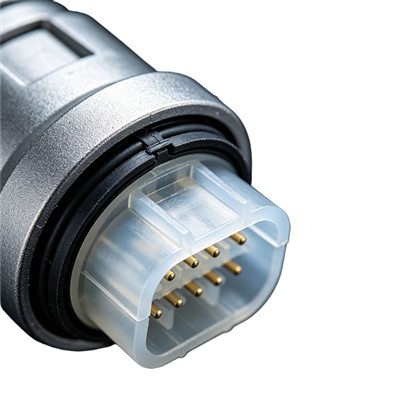
First, let’s start with the basics: what is shrinkage rate in injection molding, exactly? When you inject molten plastic into a mold cavity, the plastic doesn’t just fill the space and stay there. As it cools and solidifies, it contracts. The shrinkage rate is the percentage difference between the dimensions of the part right when it’s removed from the mold (the “as-molded” part) and the final, cooled dimensions it reaches when it’s at room temperature (usually 23°C / 73°F, the standard industry reference point). It sounds simple, but it’s not a one-size-fits-all number—and that’s where precision injection molding gets tricky.
A lot of people new to our industry think shrinkage is just a random quirk of plastic, but it’s actually a highly predictable phenomenon if you know what you’re looking at. It breaks down into two main types, both of which we track like hawks in our facility. The first is “flow shrinkage,” which happens when plastic molecules align in the direction they’re flowing when they’re injected into the mold. If you’ve ever noticed that a plastic cutting board shrinks more along its length than its width, that’s flow shrinkage at work. The second is “non-flow shrinkage,” which happens perpendicular to the direction of flow, driven more by how tightly the plastic packs into the mold cavity as it cools. For precision parts, we care about both—especially when tolerances are measured in thousandths of a millimeter, not millimeters.
Now, why does this matter for precision injection molded parts? Let’s take a real example from a customer I worked with last year: a medical device maker that needed a 5mm-tall luer lock connector for insulin pens. Their CAD file specified a tolerance of ±0.02mm, which is tight enough that if we’d ignored shrinkage, the part would have been too small to screw onto a pen needle. Here’s what happened when we got their CAD file: our engineers pulled up the shrinkage data for their chosen material—a medical-grade polypropylene, which has a nominal shrinkage rate of 1.8%. Wait, that sounds straightforward, right? 5mm multiplied by 1.8% is 0.09mm, so we’d make the mold 5.09mm tall to get a final part of 5mm. But that’s where it gets complicated. The luer lock had thick sections and thin sections. The thick base of the connector cooled slower, so it shrank more than the thin top rim. If we’d just used the nominal 1.8% number, the top rim would have been spot-on, but the base would have been 0.05mm too small—enough to make the connector leak during testing. That’s why generic shrinkage rates on material data sheets are just a starting point, not a final number.
So what actually causes shrinkage to vary? It’s not just the type of plastic, though that’s a big factor. For example, amorphous plastics like ABS or polycarbonate have lower shrinkage rates—usually 0.2% to 0.8%—because their molecules are more random and don’t pack as tightly when cooling. Semi-crystalline plastics like polypropylene or nylon have much higher shrinkage, often 1.5% to 3.5%, because their molecules form ordered crystal structures that contract more as they solidify. But even with the same material, shrinkage changes based on how we run the molding process. If we inject the plastic at a higher temperature, it flows easier and forms more crystals in semi-crystalline materials, leading to more shrinkage. If we apply higher packing pressure as the mold fills, that pushes more plastic into every nook, so when it cools, there’s less empty space to shrink into. It’s the same idea as blowing up a balloon—if you press it in while it’s soft, it won’t shrink back as much when you let it set. Mold temperature also plays a role: a hotter mold cools the plastic slower, so crystals have more time to form, leading to higher shrinkage.
This is where our team’s expertise as a precision injection molded parts supplier comes in. We don’t just pull a shrinkage number off a data sheet and call it a day. For every new part we work on, we run a trial mold first—usually a small, low-cost tool that lets us test shrinkage under real production conditions, not just lab conditions. For the luer lock connector, we ran three trial molds: one with packing pressure set to the industry standard, one 10% higher, one 10% lower. We measured each part after 24 hours of cooling (not right when it came out of the mold, because parts can keep shrinking for up to 72 hours after molding, especially semi-crystalline materials). The higher packing pressure trial gave us a shrinkage rate of 1.6%, not the 1.8% on the data sheet, so we adjusted the final production mold to be 5.08mm tall instead of 5.09mm. That small adjustment was the difference between a part that passed leak testing 100% of the time and one that failed 30% of the time. You don’t get that kind of consistency with a generic shrinkage number.
Another common mistake we see new customers make is mixing up “linear shrinkage” with “volumetric shrinkage.” Linear shrinkage is the change in one dimension (length, width, height), which is what matters for precision parts. Volumetric shrinkage is the total volume change, which is mostly used for things like packaging or large, low-tolerance parts. For example, a customer once brought us a part for a power tool battery housing that was supposed to have a 200mm internal slot. They calculated shrinkage based on volumetric data, and when they tried to use a generic linear shrinkage rate, the slot ended up 0.4mm too small—enough that the battery wouldn’t slide in. We explained that linear shrinkage is always slightly different from volumetric, especially for parts with varying wall thickness, so we ran a small trial to get the exact linear shrinkage rate for the slot’s geometry, and nailed the tolerance on the first production run.
There’s also something called “post-mold shrinkage” that we have to account for, especially for parts that will be used in different environments. Some plastics keep shrinking over time, especially when exposed to heat or moisture. For example, a nylon part used in outdoor equipment might continue shrinking 0.2% to 0.5% over a year as it’s exposed to sunlight and temperature changes. We test our parts’ long-term shrinkage in environmental chambers that simulate the customer’s intended use—if a part is for a car engine, we test it at 120°C for 1,000 hours to make sure shrinkage doesn’t cause it to warp or fail after a few months of use. A lot of competitors skip this step, but that’s why we have customers come back to us year after year for precision parts that perform reliably for their product’s entire lifecycle.
Let’s talk about how we actually control shrinkage in our facility, because it’s not just about testing—it’s about process control. We use a combination of in-mold sensors and post-mold inspection to track shrinkage every hour of every production run. Our molds are made from high-grade tool steel, which is less prone to warping or wear than cheaper steel, so our cavity dimensions stay consistent over time. We also have a team of molding technicians who adjust process parameters (temperature, pressure, cooling time) in real time if shrinkage starts to drift. For example, if the ambient temperature in our facility drops on a cold winter day, the mold cools faster, so shrinkage increases. Our sensors pick that up, and a technician adjusts the mold cooling time by a fraction of a second to keep shrinkage at the target rate. It’s like tuning a guitar—small adjustments that make a huge difference in the final product.
I know this all sounds technical, and if you’re not an injection molding expert, it’s easy to overlook shrinkage as just another factory detail. But for the customers we work with—whether they’re making medical devices, automotive parts, or aerospace components—precision isn’t a nice-to-have. It’s a requirement. A few thousandths of a millimeter of extra shrinkage can mean a connector that doesn’t seal, a part that breaks under stress, or a device that doesn’t work at all. That’s why we don’t just sell precision injection molded parts—we sell consistency, and consistency starts with mastering shrinkage rate.
If you’re working on a project that needs precision parts, or you’ve had issues with parts that don’t meet your tolerances, we can help. We don’t just make parts to your CAD files—we work with you from the design stage, adjusting for shrinkage and other molding factors before you even cut a mold. That saves you time and money, because you don’t have to redo molds or scrap parts that don’t fit. Our team has decades of experience with all types of materials, from medical-grade plastics to high-temperature engineering resins, and we can run trials, test shrinkage, and deliver parts that meet your exact requirements.
When you partner with us, you’re not just getting a supplier—you’re getting a team that cares about making parts that work, no exceptions. If you’re ready to discuss your project, we’d love to hear from you.
Connector Plastic Components References
Rosato, D. V., Rosato, M. G., & Rosato, D. V. (2000). Injection Molding Handbook (3rd ed.). Kluwer Academic Publishers.
Brunskill, I. (2018). Shrinkage Control in Precision Injection Molding. Journal of Injection Molding Technology, 22(3), 145-152.
Ozisik, M. N., & Orlande, H. R. B. (2021). Thermal Analysis of Polymer Injection Molding: Shrinkage and Warpage. Polymer Engineering and Science, 61(4), 987-1002.
Modelon Precision Industry (Suzhou) Co., Ltd.
With abundant experience, we are one of the most professional precision injection molded parts manufacturers and suppliers in China. Welcome to buy customized precision injection molded parts at competitive price from our factory. If you have any enquiry about pricelist, please feel free to email us.
Address: 1st Floor, Building 22, No. 2628 North Gate Road, Kunshan City, Jiangsu Province, P.R.China
E-mail: jessica_huang2025@163.com
WebSite: https://www.modeloncn.com/
