If you’ve ever found yourself staring at a broken car part, a rusted old wrench, or even the microchip from an old phone, and thought “I wish I could look closer at why this broke” — you’ve probably wondered if you can skip the fancy, super expensive metallography supplies and grab stuff from your kitchen or garage instead. I get it, I’ve been there. As someone who’s been in the metallographic consumables game for years (and yeah, I sell the real, specific stuff too), I’ve had so many labs, students, and even hobbyists hit me up asking if dish soap, sandpaper from the hardware aisle, or even toothpaste works just as well as the specialized consumables we sell. Let’s break this down straight — no jargon, no fluff, just real talk about what’s possible, what’s a terrible idea, and when sticking to the good stuff is non-negotiable. Metallographic Consumables

First, let’s talk about what metallography actually needs to do, quick, because that’s the baseline here. When you prepare a metal sample for metallography, you basically have to do three big steps: cut a tiny, clean piece of your material without messing up its internal structure, grind it flat and smooth to remove the damage from cutting, and polish it to a mirror finish so you can etch it (aka add a tiny chemical stain) to see the grain structure, defects, or why it failed. All of those steps need specific, consistent materials to work right. So can household items fill in here? Sometimes, but only if you know exactly what you’re doing, and even then, it’s a temporary fix, not a replacement.
Let’s start with grinding, because that’s where people reach for sandpaper first. The big question here: can you use regular sandpaper from the hardware store instead of metallographic grinding paper? Short answer: for super basic, low-stakes stuff, maybe. But wait — hardware store sandpaper (usually aluminum oxide or silicon carbide) is made for wood or drywall, right? Its grit sizes aren’t standardized the way metallographic grinding paper is. Like, a 120-grit sandpaper from one brand might be way coarser or finer than 120-grit from another. Metallographic papers have consistent, uniform abrasive particles, so each step of grinding removes exactly the right amount of material, no random scratches or unevenness. If you grab a random 220-grit sandpaper from the dollar store, you might end up with some clumps of abrasive that gouge your sample, or so little grit that you waste 20 minutes grinding instead of 5. Also, regular sandpaper has a sticky back or a paper base that can get gummy when you use water — and almost all metallographic grinding is wet grinding, to keep the sample cool, wash away debris, and prevent too much damage to the metal. Regular sandpaper can fall apart in water fast, especially the cheaper kind, so you’ll be replacing it every two samples, which ends up being more expensive anyway.
Then there’s polishing — this is the step where people really go wild with household items. Polishing is all about getting that scratch-free mirror finish so etching works. Some folks use toothpaste, right? Toothpaste has tiny abrasive particles, like calcium carbonate or silica, which is similar to some polishing compounds. But again, size matters. Most toothpaste has a mix of particle sizes, from super tiny ones to bigger bits that will leave micro-scratches you can’t see with the naked eye but will totally mess up your metallography results. Unless you’re just looking at a super rough, obvious defect, that’s a problem. Some people also use baking soda — which is even coarser than most toothpaste, so forget that unless you’re trying to buff a rusted bike part, not look at its grain structure. And what about buffing pads? Can you use a old t-shirt or a paper towel instead of a real polishing cloth? Maybe for a super quick, rough buff, but paper towels leave lint, t-shirts have loose fibers that get stuck in the soft metal (like aluminum or copper) and you can’t get them out. Real metallographic polishing cloths are designed to hold the abrasive evenly and release debris so it doesn’t scratch your sample. Old clothes just don’t cut it.
Now, what about etching? That’s the step where you use a chemical to bring out the grain boundaries, right? Can you use household chemicals instead of metallographic etchants? A lot of people ask about vinegar, and yeah — vinegar is a weak acid, so it will etch some metals, like mild steel, to show grain structure. But it’s inconsistent. Vinegar has other stuff in it, like water, maybe even some flavorings or preservatives, so the etch rate is all over the place. Metallographic etchants (like nital for steel, or Kellers for aluminum) are formulated to work at a specific, consistent rate, so you get the same result every time. If you etch with vinegar one time, you might leave it on too long and the whole sample gets dark, or not long enough and you see nothing. Also, some metals need stronger etchants to show their structure at all — vinegar won’t work on stainless steel or titanium, for example.
Wait, but let’s not be all negative here — there are actually a few household items that work for very specific, non-critical metallography work. If you’re a hobbyist doing a one-off project, not for a school lab or a manufacturing QA check, here’s what you can get away with: for grinding, use silicon carbide sandpaper from the auto parts store — that’s designed for wet sanding, so it holds up better than regular hardware store stuff, and its grit is a little more consistent. For polishing, a tiny drop of non-gel toothpaste (the kind for sensitive teeth usually has finer, more consistent abrasives) on a soft cotton cloth works for quick, low-magnification looks. And for etchants, white vinegar works great for mild steel, no extra stuff needed. But here’s the catch: these are workarounds, not solutions. If you need results that are repeatable, if you’re submitting work for a class, if you work in a factory checking parts for defects, or if you care about accurate data, household items will fail you every single time.
Let me give you a real example I ran into last month. A guy from a small machine shop hit me up, panicking, because their usual metallographic supplier had a delay, and they had a batch of steel parts that failed a pressure test, and they needed to find out why fast. He grabbed regular sandpaper from the local home center, toothpaste, and vinegar, and spent 3 hours grinding and polishing a sample. When he looked at it under his microscope, all he saw was random scratches from inconsistent sandpaper, and the vinegar etched the whole surface unevenly so he couldn’t tell if the problem was a defect in the metal or a scratch from his grinding. He ended up wasting a whole week waiting for our supplies, and missed his client’s deadline. That’s the thing about metallography — if you skip the right consumables, you don’t just get bad results, you waste time, money, and opportunities.
Now, let’s talk about why the specialized stuff exists, because it’s not just a scam to make us suppliers richer. Metallographic grinding papers, for example, have abrasive particles that are all the same size, bonded to a paper backing that’s designed to stay flat and not break down in water. Each grit step is calibrated to remove only the damage from the previous step, so you don’t have to grind 10 times as long to get a smooth surface. Polishing compounds are graded from coarse to ultra-fine, so you work your way up, removing scratches without introducing new ones, and the polishing cloths are made of specific materials (like silk, nylon, or wool) depending on the metal you’re working with, so you get the best finish without contamination. Etchants are tested and standardized, so every time you use the same etchant on the same metal, you get the same result — that’s non-negotiable for any lab that needs consistent data.
But wait, I don’t want to sound like a snob, okay? I know that not everyone has a $10,000 lab setup. I’ve worked with high school science teachers on tight budgets, hobbyists restoring old cars, and small startups testing new materials, and I get that dropping hundreds of dollars on grinding paper and polish every month isn’t always feasible. That’s why we offer bulk options, smaller kits for hobbyists, and even educational discounts for schools — we’re not here to price people out, we’re here to give them options that work when they need them. And if you really can’t spring for the full set right now, at least get a proper silicon carbide grinding disc and a small bottle of nital etchant instead of the household stuff — it’s way more reliable, and it lasts longer than cheap sandpaper.
Another common question: can I use a regular buffer instead of a metallographic polisher? Again, maybe for hobby work, but a regular buffer spins too fast most of the time, and can put too much pressure on the sample, causing deformation or scratches. Metallographic polishers have adjustable speeds, and are designed to hold the polishing cloth flat, so you get even pressure across the whole sample. A drill with a buffing attachment might work in a pinch, but you have to be super careful not to burn or damage the metal.
Let’s wrap this up with a clear, straight answer to the original question: Can you use household items as metallographic consumables? For one-off, low-stakes hobby projects, sure. For anything that needs accurate, repeatable results — like school lab reports, manufacturing quality control, failure analysis, or research — no, you absolutely cannot. The inconsistent grit sizes, variable abrasive particles, unstandardized etchants, and cheap materials will lead to bad data, wasted time, and missed opportunities.
Here’s the thing: metallography is all about precision. You’re looking at tiny details that determine if a part will hold up under pressure, if a new metal alloy is safe for medical devices, or if a research project’s data is valid. If you cut corners on the supplies, you’re cutting corners on the accuracy of that work.
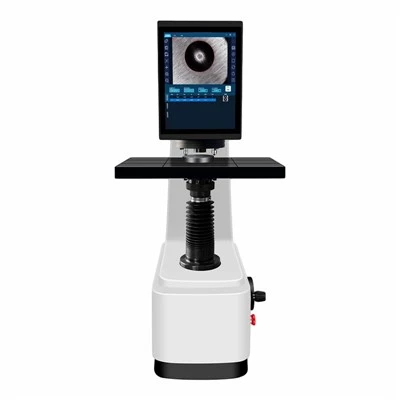
If you’re tired of wasting time and money on inconsistent household workarounds, or if you need supplies for a school lab, manufacturing line, or research project, we’ve got you covered. We carry all the metallographic consumables you need — from grinding papers and polishing compounds to etching solutions and polishing cloths — in sizes and quantities that fit your budget, whether you’re a hobbyist needing a small kit or a large facility ordering bulk. We don’t sell overpriced stuff that you don’t need, and we’re here to answer any questions you have about what works for your specific project. Don’t gamble with your results — reach out to connect with our team to get the right supplies for your metallography work.
Metallographic Pre-Grinding Machines References
ASM International. Metallography and Microstructures. ASM International, 2004.
Scott, V. D. Metallography: Principles and Practice. Chapman & Hall, 1992.
Keller, F. “A Comparative Study of Etchants for Aluminum and Its Alloys.” Journal of Metals, vol. 5, no. 2, 1953, pp. 267-270.
ISO 14105:2017. Metallic Materials — Preparation of Metallographic Specimens. International Organization for Standardization, 2017.
Laizhou Metallographic Testing Equipment Co., Ltd.
As one of the leading manufacturers and suppliers of metallographic consumables in China, we have world-leading production equipment and strong manufacturing capabilities. Please rest assured to wholesale customized equipment at competitive price from our factory. Welcome to contact us for quotation.
Address: TENG GE PO ZI VILLAGE, HU TOU YA TOWN, LAIZHOU CITY, YANTAI SHANDONG, CHINA
E-mail: nicolecheng@lzmetaltest.com
WebSite: https://www.metalnesscn.com/
