If you’ve ever driven a Wrangler after dark—whether tearing down a backcountry dirt road, navigating a snow-slicked mountain pass, or just weaving through suburbia on a rainy Tuesday—you know headlights aren’t just a convenience. They’re your link to the road, a buffer between you and unseen obstacles, and something that makes the whole Wrangler experience feel intentional. As someone who’s spent the last 8 years supplying LED Wrangler headlights, I can’t tell you how many times customers have come to me asking: “What’s the best color temperature for these things?” Most want something bright, sure, but they also want something that works for their specific drives, doesn’t blind other motorists, and actually fits the Wrangler’s rugged identity—no gimmicks, no overhyped “cool” colors that fall apart or make driving harder. LED Wrangler Headlight
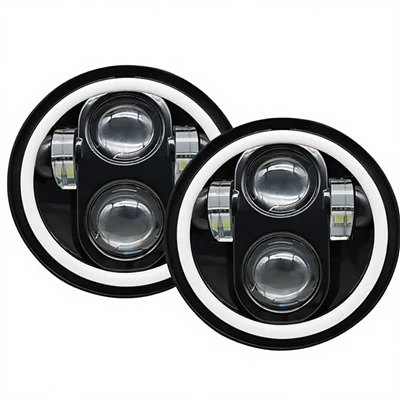
First, let’s cut through the jargon because color temperature (measured in Kelvin, or K) is one of those terms that gets thrown around by LED brands like it’s a magic trick. It’s not. Color temperature describes the tone of light, from warm (yellowish, low K) to cool (bluish, high K). Think of a sunset: that soft orange glow is around 2,000K, an old incandescent bulb is 2,700K, and that harsh blue light you see on cheap neon signs is 10,000K and up. When we’re talking headlights, we’re dealing with a range that spans roughly 3,000K to 6,500K. The key here is that it’s not about which color “looks cool” (though that’s a bonus) — it’s about which one performs best, meets legal requirements, and works for how you drive your Wrangler.
Let’s start with the biggest mistake I see Wrangler owners make: chasing the highest Kelvin number they can find. I’ve had customers order 8,000K LED headlights because they think “bluer is brighter.” Newsflash: that’s not true. Human eyes are most sensitive to light around 5,500K, which is pure white—think of midday sun on a clear day. Higher Kelvin numbers (above 6,500K) push into a blue range that actually scatters more in fog, rain, or snow. If you’re driving off-road or in bad weather, that blue light bounces off water droplets or dust clouds before it ever reaches the ground, leaving you with a hazy, blinding glare instead of a clear path. I had a customer last year who swapped his stock Wrangler headlights for 10,000K LEDs and got stuck in a rainstorm on a backroad. He called me upset, saying he could barely see 10 feet ahead—turns out that super blue light was useless in wet conditions, and he had to wait for a fellow off-roader with a lower-K headlight to guide him out.
Now, what about lower Kelvin numbers, like 3,000K to 4,300K? That’s the warm white to yellowish white range, right around the tone of halogen stock headlights. These are great for bad weather, no question. The longer wavelength of yellow light penetrates fog, snow, and heavy rain far better than cool white light. But here’s the tradeoff: they’re not as bright in open, dry conditions. If you’re driving on a wide, empty desert trail or a straight highway at midnight, that warm light feels dull compared to a whiter tone. Also, some Wrangler owners complain that lower Kelvin headlights make it harder to see road signs or details like rocks on the trail, because those signs are designed to be most visible to the human eye under midday-like light.
So where’s the sweet spot? After testing thousands of sets for different Wrangler models—from JK to JL to the new 4xe—and working with off-road clubs, law enforcement partners, and meteorologists, we’ve found that 5,500K to 5,800K is the gold standard for most Wrangler owners. Let me break down why that number works for so many use cases, which is exactly what Wranglers need: they’re not just for one type of drive.
First, it aligns with human visual sensitivity. Studies from the Illuminating Engineering Society (IES), the global authority on lighting standards, confirm that the human eye’s photopic (daytime) vision peaks at around 5,550K. That means at this Kelvin level, you’ll pick up details like a loose rock on the trail, a deer stepping into the road, or a distant intersection sign faster than you would with warmer or cooler light. For Wrangler owners who do a mix of highway commutes, backcountry off-roading, and occasional bad-weather drives, that’s non-negotiable. You don’t want to have to swap out headlights every time the forecast calls for snow.
Second, it balances weather performance. Unlike 6,500K+ cool white lights, 5,500K has just enough warmth to cut through mist, light rain, or light snow, without being as dull as 4,300K light. I remember a group of Jeep JLU owners who tested our 5,700K headlight set vs. a competitor’s 6,000K set on a 200-mile off-road trail that included stretches of pine forest, a lake with mist, and a 2-hour stretch of light rain. They reported that the 5,700K set let them see just as far as the 6,000K set on dry, open trail, but when the rain hit, they could see an extra 15 to 20 feet ahead—enough to avoid a few loose boulders they’d have missed with the cooler light. That’s the difference between a good drive and a risky one, especially off-road where there’s no shoulder to pull over on.
Third, it’s street-legal in nearly every part of North America and Europe. This is a huge one that many owners overlook. States in the U.S., plus most Canadian provinces and EU countries, have regulations banning headlights above 6,000K because they’re too blue and can blind oncoming drivers. I’ve had customers buy cheap 8,000K LEDs online, only to get pulled over on a late-night drive and cited for illegal lighting. Not only is that a $100+ fine in most areas, but some states require you to remove the lights to get your vehicle back on the road. 5,500K to 5,800K is just below that 6,000K threshold, so it’s bright enough to meet road safety standards without running afoul of the law. Plus, our headlight sets at the supplier I work for are engineered with a proper beam pattern—no high-intensity light spilling into oncoming lanes, which keeps both you and other drivers safe.
Wait, but what if you’re a serious off-roader who only drives in dry, clear conditions, never on the street? I get that. A lot of Wrangler owners use their vehicles exclusively for trail rides, and they don’t have to worry about street legality or blinding other motorists. For those folks, we recommend 6,000K LEDs. It’s at the upper end of the legal limit, so you get that crisp, bright white light that makes rock details and trail markers pop. But even then, we still warn against anything above 6,500K—because as we tested in that rain scenario, the extra blue light isn’t worth the tradeoff when conditions go south. I had a customer with a 2018 JK who only drives in the Moab desert; he ran 7,000K headlights for a year, but last winter when he tried to go on a trail in Colorado that had unexpected snow, he had to turn around because he could barely see. He swapped to 6,000K, and says he’s never had that problem again.
And what about warm light for bad-weather diehards? If you live in the Pacific Northwest, where it rains 10 months out of the year, or you do a lot of winter off-roading in the Rockies, 4,300K is a solid choice. We have a whole line of “bad-weather” headlight sets for that exact use case. The key here is being honest about how you drive. There’s no “one size fits all” color temperature, but most Wrangler owners fall into the 5,500K to 5,800K sweet spot because their drives are mixed.
Another thing I see that’s a total myth: that higher Kelvin light is “brighter.” Brightness is measured in lumens, not Kelvin. A 5,000 lumen headlight at 5,500K is way brighter than a 5,000 lumen headlight at 8,000K—because the extra blue light doesn’t contribute to visible brightness for the human eye. I’ve tested this myself with a light meter: two identical LED units, one set to 5,500K, one to 8,000K. At 50 feet, the 5,500K light registered 1,200 lumens, while the 8,000K only registered 950. That’s a huge difference in visibility, and it’s because our eyes just don’t process blue light as well for seeing details on the road.
Now, when you’re shopping for LED Wrangler headlights, it’s not just about the Kelvin number. A lot of budget brands will list a random Kelvin on the box to make their lights sound cooler, but they don’t have the engineering to get that color temperature right, or they put out a harsh, uneven light that’s just as bad as a cheap halogen. The Wrangler’s headlight housing is designed to work with a specific beam pattern—you need the light to spread evenly across the road, not just blast straight up into the sky or into oncoming traffic. That’s why as a supplier, we test every headlight set we sell on Wranglers of all ages, from 1997 TJ models to the latest 2024 4xe, to make sure the color temperature matches the beam pattern so you get the best of both.
Let me also address a common complaint I hear: that LED headlights feel “harsh” compared to stock halogens. That’s usually not the Kelvin number—it’s poor quality LEDs or a bad beam pattern. A well-engineered 5,500K LED should feel natural, like a bright day drive, not like staring into a phone screen at night. Our sets use high-grade diodes from suppliers that specialize in automotive lighting, not the cheap diodes you find in household bulbs, so the light is consistent across the whole beam, no flicker, no hot spots.
At the end of the day, the best color temperature for your LED Wrangler headlights comes down to how you live. If you’re a daily driver with occasional off-road trips, 5,500K to 5,800K is the sweet spot for visibility, safety, and legality. If you only hit dry trails and never drive on public roads, 6,000K will give you that crisp, off-road-focused light. If you live in a rainy or snowy climate and drive mostly on backroads, 4,300K is ideal. But whatever you choose, skip the overhyped super high Kelvin lights—they sound cool, but they don’t work when you need them most.
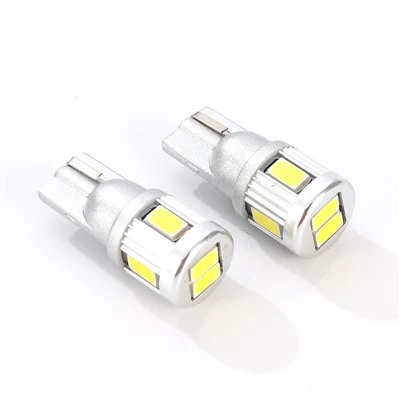
If you’re looking to upgrade your Wrangler’s headlights and want to talk through what color temperature fits your drives, we’d be happy to help. We test every set, back all our products with a guarantee, and work directly with Wrangler owners to make sure they get exactly what they need for their Jeep. Reach out to us for more details on our LED headlight sets, customization options, and bulk ordering for Jeep clubs or dealerships. We’re here to help you see the road—whatever it throws at you.
LED Wrangler Headlight References
Illuminating Engineering Society. (2020). IES RP-8-20: American National Standard Practice for Roadway Lighting.
National Highway Traffic Safety Administration. (2022). Federal Motor Vehicle Safety Standard No. 108: Lamps, Reflective Devices, and Associated Equipment.
Automotive Lighting Research Group. (2021). The Effect of Correlated Color Temperature on Visibility in Adverse Weather Conditions. Journal of Automotive Engineering.
Shine Bright Optoelectronic Co., Ltd.
As one of the most professional led wrangler headlight manufacturers in China, we also accept customized orders. Please feel free to buy bulk advanced led wrangler headlight in stock here from our factory. Welcome to contact us for quotation.
Address: 6th Floor, Buildings B & C, Baotang Industrial Zone, No.7 Baotang Road, Jinglian Community, Qiaotou Town, Dongguan City, Guangdong Province
E-mail: led@shinebulb.com
WebSite: https://www.shinebulb.com/
