If you’ve ever stood near a power substation, watched a wind turbine farm power up a city, or even plugged a backup generator into a large commercial building, you’ve likely encountered a step up transformer. As someone who’s spent 12 years building and supplying these units for critical industrial and utility projects, I can tell you one of the most common questions I get from new clients—whether they’re a municipal utility engineer, a renewable energy developer, or a small facility manager expanding their operations—isn’t just “how does it work?” It’s: What size do I actually need? Step Up Transformer

It’s a fair question. Pick a transformer too small, and it’ll overheat, trip unexpectedly, or fail mid-operation—costing you thousands in downtime and repair. Pick one too big, and you’re wasting money on extra capacity you’ll never use, plus higher energy losses from operating an oversized unit at low load. Over the years, I’ve worked on projects ranging from 50 kVA transformers for small residential solar arrays to 50 MVA units for cross-country transmission lines, and the size never fits a one-size-fits-all mold. Let’s break down how we determine that size, what factors shift the numbers, and why it matters for your specific use case.
First, let’s get clear on what a step up transformer does, because that’s the foundation of sizing it. Unlike step down transformers, which reduce voltage for safe end-use in homes and offices, step up transformers take low-voltage power generated on-site—whether that’s from a wind turbine (usually 480V to 690V), a rooftop solar array (240V to 480V), or a backup generator (120V to 600V)—and boost it to a higher transmission or distribution voltage (often 13.8 kV, 34.5 kV, or even 115 kV) so it can travel long distances without wasting energy. The “size” of a transformer isn’t measured in inches or feet, by the way—it’s measured in kilovolt-amperes (kVA) or megavolt-amperes (MVA), a unit that combines voltage and current to show how much power the unit can handle. That’s the number we start with.
The most basic rule of thumb for sizing is to calculate your total connected load, then add a 10% to 25% buffer for future growth and unexpected spikes. But here’s where it gets nuanced, and where my team and I have to adjust for every client: your specific application changes everything. Let’s walk through the most common use cases I see, and what size transformers we typically supply for each.
For small-scale renewable energy projects—like a 100-kW rooftop solar array for a grocery store, or a 500-kW community wind turbine—we usually recommend transformers between 150 kVA and 750 kVA. Wait, why the big range? A grocery store’s solar array might generate power to offset its on-site usage, but if they add electric vehicle chargers next year, they’ll need extra capacity. A small wind turbine, by contrast, is often feeding power back into the grid, so it has to follow utility standards for voltage and load fluctuations. For that reason, we size a step up transformer for a grid-tied wind project at the higher end of the buffer—around 20% extra capacity—because wind speed can vary, leading to uneven power output. I once worked on a 1 MW community solar project in Ohio where the initial load calculation was 1,100 kVA, but we went with a 1,500 kVA unit because the utility warned that sudden grid demand spikes could happen during peak summer afternoons, when AC units were all running. That small extra size saved the project from needing an expensive replacement two years later.
For larger utility-scale projects, like a 50 MW solar farm or a 100 MW wind farm, the numbers jump to 10 MVA all the way up to 100 MVA or more. These transformers aren’t small, boxy units you can mount on a pole—they’re massive, floor-mounted units that weigh tens of thousands of pounds, sometimes even split into two parts for transport to remote project sites. The sizing here isn’t just about the current load; it’s about the transmission line capacity and utility interconnection requirements. A utility might require a step up transformer to handle a 15% overload for short periods, to account for grid contingencies like a nearby line going down. We once supplied a 75 MVA step up transformer for a wind farm in West Texas, where the site is 30 miles from the nearest substation. The transformer had to be oversized enough to handle the wind farm’s full output plus 10% extra to support the substation’s backup power needs during maintenance. If we’d sized it exactly to the wind farm’s rated output, the transformer would have been under strain during peak wind events, leading to premature insulation failure.
Another common use case is backup power generation for commercial facilities and data centers. A data center, for example, might have several 2 MW generators that run during grid outages, and those generators often output at 480V, which needs to be stepped up to 13.8 kV to feed the facility’s internal distribution grid. For a 10 MW data center, we usually recommend a 12.5 MVA step up transformer—again, a 25% buffer—because data centers have non-negotiable uptime requirements. A transformer failure in a data center can cost tens of thousands of dollars per minute in lost revenue, so we prioritize a buffer here to avoid any risk of overloading. I’ve had clients in the healthcare sector (hospitals, which rely on backup power for emergency rooms and intensive care units) ask for transformers sized to handle 30% extra capacity, and I always agree—because a hospital can’t afford a power outage, ever.
Now, let’s talk about the factors that can make a “standard” size wrong for your project. First is voltage ratio. A transformer’s size is tied directly to its voltage output and input. If you need to step up from 480V to 13.8 kV versus 690V to 34.5 kV, the kVA rating changes even if the total power output is the same. That’s because voltage and current are inversely proportional: to get a higher voltage, you need a lower current, and vice versa. A transformer designed for 480V input will have a different current capacity than one designed for 690V input, so the kVA (which is V x A) shifts. I once had a client come to me with two different projects, both needing a 1 MW step up transformer, one with a 480V input and one with 690V input. The first was 1,800 kVA, the second was 1,200 kVA—same power, different size, because of the voltage ratio. That’s a detail a lot of new project managers miss, and it’s why we always ask for the input and output voltages before we even quote a size.
Second is ambient temperature and elevation. If your project is in a hot, dry desert (like Arizona or New Mexico) or at high elevation (above 3,000 feet, where air is thinner), transformers lose efficiency because the cooling system works less effectively. That means you need a larger transformer to compensate for the heat or thinner air. I learned this the hard way early in my career, when I supplied a 500 kVA step up transformer for a solar project in Phoenix. The client installed it without accounting for the summer temperatures, and within a year, the transformer’s internal temperature was running 15 degrees higher than the manufacturer’s recommended limit. We ended up replacing it with a 650 kVA unit, which was 30% larger, to handle the heat. Now, our sizing process includes a full site assessment of local climate and elevation, because cutting corners on that leads to costly returns.
Third is load type. Are you stepping up power for a steady, predictable load, like a manufacturing plant’s constant operation, or a variable load, like a wind farm where output changes with wind speed? Variable loads need larger buffers because they can have sudden spikes or drops in power demand. A manufacturing plant that runs 24/7 with a consistent load might only need a 10% buffer, but a wind or solar project needs 20% to 25%. I also work with clients who use harmonic-producing equipment—like variable frequency drives, which are common in industrial motors. Harmonics add extra load to transformers, so we size those units 15% larger to avoid overheating from the extra electrical distortion.
Now, what about the physical size of the transformer? A lot of people ask, “If it’s a 10 MVA transformer, how big is it physically?” The answer is that it depends on the design, cooling method, and voltage rating. A 10 MVA oil-cooled transformer (the most common type for utility and industrial use) is usually between 10 and 12 feet long, 6 and 8 feet wide, and 8 to 10 feet tall, weighing 30,000 to 50,000 pounds. A larger 50 MVA unit is around 20 feet long, 12 feet wide, and 15 feet tall, weighing over 150,000 pounds. If it’s a smaller unit, like a 500 kVA pole-mounted transformer for a small commercial solar array, it’s about 4 feet tall and weighs 1,500 to 2,000 pounds. But for our business, the physical size is only a concern if you have space constraints at your site, or if you need to transport it to a remote location. We can customize the physical size of most transformers to fit your site’s footprint, as long as we know those requirements upfront.
One thing I always stress to new clients: don’t let price be the only factor when choosing a size. I’ve had clients come to me wanting the smallest possible transformer to cut costs, but that almost always leads to problems down the line. A $5,000 savings on a smaller transformer can end up costing $50,000 in emergency repairs and downtime a few years later. We work with every client to find the sweet spot: a transformer that fits their current load, has enough buffer for future growth, and is sized to handle the site’s specific conditions. That’s why we don’t just sell transformers—we offer sizing consulting, too, which is a service a lot of our competitors skip.
Over the years, I’ve seen too many projects go wrong because someone guessed the transformer size instead of calculating it properly. Last year, a small manufacturing plant in Illinois came to us after their 1 MW step up transformer failed six months after installation. The owner had bought a used transformer from an online marketplace, sized exactly to his generator’s 1 MW output. But he didn’t account for the plant’s new welding equipment, which added 200 kW of harmonic load. The transformer overheated, the insulation broke down, and he lost two days of production. We sized him a 1.5 MVA custom unit, with a harmonic-resistant design, and he’s been running without issues ever since. That’s the difference between working with someone who knows the details and someone who just sells a number.
If you’re in the market for a step up transformer, whether it’s for a small solar project, a data center, a wind farm, or a manufacturing facility, the first step is to share your project details: your input and output voltages, your total load, your site’s climate and elevation, and any future growth plans. We’ll walk you through the sizing process, explain why we recommend a specific kVA rating, and make sure the transformer fits both your power needs and your physical site constraints. Don’t gamble on a guess—get a sizing calculation from someone who’s worked on projects just like yours, because the right size transformer is the foundation of reliable power, no matter what your operation is.
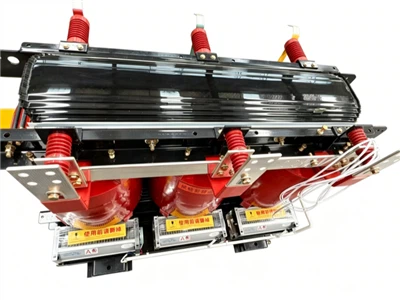
Reach out to our team to discuss your step up transformer needs and get a tailored sizing recommendation.
Intelligent Integrated Distribution Cabinet References
- American National Standards Institute (ANSI). Standard for Transformers, Voltage Regulators, and Reactor Units. ANSI C57.12, 2022.
- Institute of Electrical and Electronics Engineers (IEEE). Standard for Liquid-Immersed Distribution, Power, and Regulating Transformers. IEEE Std C57.12.00, 2020.
- National Electrical Manufacturers Association (NEMA). Application Guide for Power Transformers, Section 4: Sizing and Selection. NEMA Publication TP 1-2018.
- U.S. Department of Energy (DOE). Renewable Energy Systems Technology Fact Sheet: Transformers for Grid Integration. Office of Energy Efficiency & Renewable Energy, 2021.
Huachi Electric Co., Ltd.
We’re well-known as one of the leading step up transformer manufacturers in China, featured by quality products and good service. Please rest assured to buy customized step up transformer made in China here from our factory. Contact us for more details.
Address: Plastic Park, Tongyu Street, Luqiao District, Taizhou City, Zhejiang Province
E-mail: HCDQ2026@163.com
WebSite: https://www.huachi-electric.com/
