Hey there! If you’ve ever walked past a fab shop on a weekday, chances are you’ve seen a welding robot hunched over a metal workpiece, torch buzzing, sparks flying, and doing work that would have had a human welder exhausted by 3pm. But have you ever stopped to wonder what’s actually making that robot tick? I’m with a welding robot supplier, and trust me, the control system is the unsung hero here—without it, that robot’s just a fancy, overpriced hunk of metal and wiring that can’t weld a straight line to save its life. Welding Robot
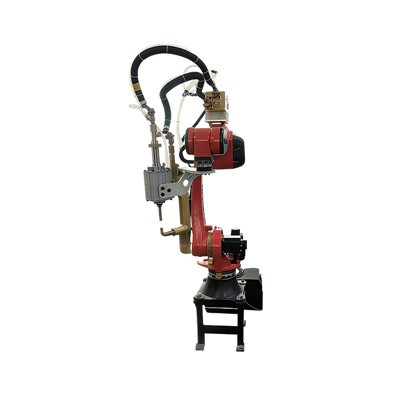
Let’s break this down like we’re talking shop over a coffee, no stuffy engineering jargon to bore you. First off, what even is a welding robot control system? Simply put, it’s the robot’s brain, nervous system, and steering wheel all rolled into one. It doesn’t just tell the robot where to move; it adjusts the weld heat, speed, and wire feed on the fly—stuff that used to be a welder’s gut feel. And yeah, it’s way more complex than the old manual controls we used to see on early 2000s automated welders. These days, it’s got enough processing power to run a small laptop, plus tools that make even a first-time operator feel like a pro.
Let’s start with the core hardware, because you can’t have a working brain without the parts that make it work. First up is the teach pendant—you’ve seen ’em, right? That little handheld box with a screen and a bunch of buttons that operators use to program the robot. Back in the day, teach pendants were just clunky, text-heavy devices where you had to type in every single point the robot needed to hit, one by one. Now? Ours have touchscreens, drag-and-drop interfaces, and even 3D previews of the workpiece so you can drag the weld path right on the model. No more standing on a ladder reaching for a tiny button while the robot swings around like a wind-up toy.
Then there’s the robot controller cabinet—this is where the magic really happens. It’s a box that sits on the shop floor (we make ’em compact so they don’t take up half your workspace) with a main processor, memory, and all the I/O ports that connect to other parts: the welding power source, sensors, your conveyor belt that moves parts, even safety light curtains. Think of this as the robot’s CPU and memory—if it’s slow, the robot will fumble a weld; if it’s got low memory, you can’t program complex jobs without it crashing mid-operation. We spec our controllers with extra processing power because we’ve seen too many shops try to cut corners here and end up replacing their whole setup a year later.
Now, the software side—this is where it gets fun, because it’s not just code, it’s the stuff that makes programming fast. Let’s talk about offline programming (OLP) first. Before OLP, you’d have to hook up the teach pendant to every new part, spend hours moving the robot arm through each weld joint, testing and retesting to make sure it doesn’t crash into the workpiece or its own fixture. Now, you can design the part in your CAD software, import the model into the robot’s OLP tool, and program the whole weld path on your office computer. Then you just “download” it to the robot, and boom—ready to go. We’ve had small fabricators tell us this cut their programming time from 8 hours per part to 45 minutes. That’s not a number; that’s money back in their pockets.
But wait, the control system doesn’t just follow pre-programmed paths—its adaptive control features are what make welding robots actually better than human welders for repetitive, high-volume jobs. Let’s say you’re welding a batch of steel brackets, and one has a tiny warp that makes the gap between pieces a little bigger than normal. The old-school control system would just blast the same amount of heat, leading to a weak weld or burn-through. Our control system has adaptive welding logic that uses sensors (more on those in a sec) to measure that gap in real time, adjusts the wire feed speed and weld current automatically, and keeps the weld consistent every single time. No more rejections from QA because of uneven welds.
Speaking of sensors—they’re the control system’s eyes and ears. You can’t have a robot adjusting to real-time changes if it can’t see or feel them. First, there’s vision sensing: most of our robots come with a 2D or 3D camera mounted on the end of the arm, right near the weld torch. It scans the joint before the weld starts, checks for gaps, spatter, or misaligned parts, and tells the control system to adjust the path if needed. We recently added 3D vision to our entry-level models because customers kept asking for it—turns out, even small shops need that adaptability when parts come in slightly off spec.
Then there’s force torque sensing (FTS). This sensor sits between the robot arm and the weld torch, and it measures how much force the torch is applying to the workpiece. If the robot is pushing too hard, it can scratch the metal or warp it; too soft, and the torch might not stay in the joint. The control system uses FTS data to adjust the robot’s movement mid-weld, so every weld is clean and consistent. We had a customer who was welding thin aluminum parts (super tricky, because aluminum warps easy) tell us the FTS feature cut their reject rate from 12% to less than 1%. That’s a game-changer.
Now, let’s not sleep on safety—because a control system is useless if it doesn’t keep your operators safe. Welding robots move fast, and sparks fly everywhere, so safety is non-negotiable. Our control system has built-in safety features, not just extra add-ons. For example, if the safety light curtain around the cell detects someone stepping in, the robot stops immediately—no more waiting for a human to hit an emergency stop (which could lead to a crash). It also has collision detection: if the robot arm bumps into something it’s not supposed to (a misloaded part, a dropped tool), the control system cuts power right away and logs the error, so you can figure out what went wrong instead of having a $10k repair bill.
Wait, let’s address a common myth here: some folks think more complex control systems are only for big auto factories. No way. We designed our control systems for all sizes of shops—from a 2-person small fabricator to a mid-sized steel manufacturer. The entry-level models have a simplified interface that lets a new operator be up and running in an hour, while the advanced models have all the adaptive and offline programming tools for high-volume jobs. We don’t believe in one-size-fits-all, so our control systems are customizable—you can add features like vision or extra memory only when you need them, instead of paying for stuff you’ll never use.
Let me give you a real example to make this concrete. Last quarter, a customer came to us who made farm equipment parts—like tractor frames and plow blades. They were using 3 human welders, working 10-hour days, and still couldn’t keep up with orders during planting season. Their old automated welder had a clunky control system that took 6 hours to program a new frame, and it messed up welds on warped steel parts all the time. We installed one of our 6-axis welding robots with our standard control system. They learned to program the first frame in 45 minutes (thanks to the touchscreen teach pendant), and the adaptive control fixed the warped steel issue. Now, that one robot does the work of 2 human welders, runs 2 shifts a day, and their reject rate dropped from 8% to 1.5%. They told us they paid for the robot in 10 months. That’s the stuff that matters.
But here’s the thing: a welding robot is only as good as its control system. You can buy a cheap robot arm from a no-name brand, but if its control system is slow, buggy, or doesn’t have adaptive features, it’ll end up costing you more in downtime, repairs, and rejections than it’s worth. We’ve seen customers try to cut corners on control systems before—they’d get a super cheap robot, then spend twice as much fixing issues or reprogramming every week. Our control systems are built with reliability in mind, so you’re not dealing with random crashes or software glitches when you’re on a tight deadline.
Another thing I love about our control systems? The support. You don’t have to be a robotics engineer to use them, and if you run into a problem, our techs can connect to the controller remotely (with your permission) to troubleshoot. No waiting 3 days for a service guy to drive out to your shop. We also offer free webinars for operators, so you can learn how to use all the features—even the fancy adaptive stuff—without spending money on outside training.
Wait, let’s clarify something people often mix up: the control system vs. the robot arm. The arm is just the physical part that moves—like a human’s arm. The control system is the brain that tells it where to go, what to do, and how to adjust when things go sideways. Without the control system, the arm is just a hunk of metal that can’t do a single weld. That’s why when we talk to customers, we always emphasize that the control system is the most important part of the setup, not the arm itself.
Now, if you’re thinking “this sounds great, but what’s in it for me?” Let’s wrap this up with what a good control system does for your shop: faster programming times, consistent welds, lower reject rates, less downtime, and operators who don’t have to be experts to run it. We’ve set up hundreds of welding robots for all kinds of jobs—automotive parts, agricultural equipment, metal furniture, even playground equipment. No matter what you’re welding, the control system will make your process smoother.
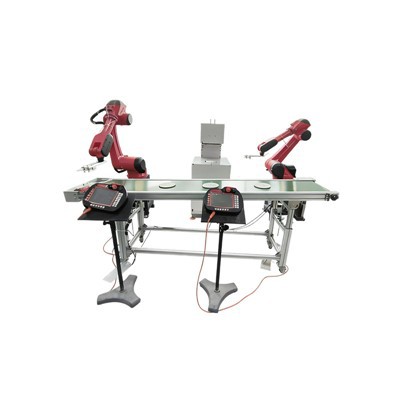
If you’re ready to stop dealing with inconsistent welds, slow production, and high labor costs, we’re here to help. We can walk you through what kind of control system fits your shop’s needs, show you how it works in a demo, and even help you figure out the ROI. Just reach out to us to talk through your welding robot needs—we’re all about making this stuff less confusing, and more profitable, for you.
Spray Painting Robot References
- ASTM International. (2021). Standard Guide for Robotic Welding System Components and Integration. ASTM F2921-21.
- Robotics Industries Association. (2022). Safety Standards for Industrial Robots and Robot Systems. RIA R15.06-2012 (R2022).
- Zhang, Y., & Li, J. (2020). Adaptive Control Systems for Arc Welding Robots: A Review. Journal of Manufacturing Processes, vol. 58, pp. 1122-1135.
- International Organization for Standardization. (2019). Industrial Robots—Programming Environment for Robotic Welding. ISO 10218-1:2011 (R2019).
Dongguan Chuanglida Intelligent Equipments Co., Ltd.
As one of the most professional welding robot manufacturers and suppliers in China, we also support customized service. Please feel free to buy discount welding robot in stock here from our factory. For price consultation, contact us.
Address: Room 201, Building 2, No. 61, Shachang 1st Road, Dalang Town, Dongguan City, Guangdong Province
E-mail: haoguangli001@outlook.com
WebSite: https://www.boruntestech.com/
