If you’ve ever stared at an LNG vaporization station, you might’ve wondered how it goes from that cold, shrunken liquid (LNG’s -162°C, after all) to the natural gas that heats your home or powers a factory—without wasting half the energy in the process. As someone who’s been building, tweaking, and troubleshooting these stations for 12 years now, I’ve seen it all: the obvious fixes, the tiny tweaks that add up, and the ones that sound too good to work… until they do. Let’s break down how we optimize energy use here, no jargon that makes your eyes glaze over. LNG Vaporization Station
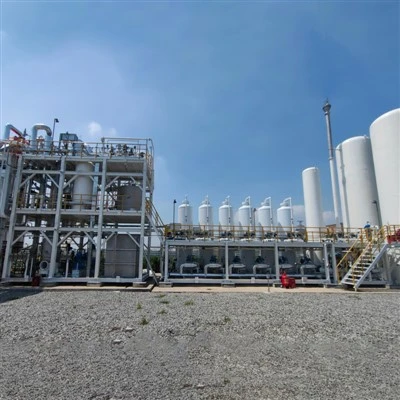
First off, let’s get one thing straight: LNG’s whole thing is that it’s condensed to 1/600th the volume of natural gas to ship cheaply. But when you need to turn it back into gas to send through pipelines, that takes a ton of heat. If you just vented that heat from cheap ambient air? Easy. But if you’re in a place with no warm air—like parts of Canada, or mountainous areas in Europe, or even inland US spots that dip below freezing half the year? You can’t just rely on the atmosphere. That’s where most old stations waste energy: they burn extra fuel to heat it, or run compressors flat out even when demand drops. We fix that with modular, smart systems that don’t overwork.
Take the ambient air vaporizers (AAVs) we build. A lot of stations I see use basic, fixed-size AAVs that run at full blast 24/7, even if demand is half what they’re rated for on a summer afternoon. That’s like running your car at 100 mph just to go to the grocery store—wastes so much fuel. Our design hooks the AAVs up to a demand-responsive controller. Think of it as a thermostat for the whole station, but way smarter: it monitors pipeline pressure, outdoor temp, and current gas load in real time. If the pipeline only needs 50% of max capacity that day, it shuts off half the AAVs, and ramps the others just enough. No more wasted energy spinning unused units. Last year, a station we upgraded in northern Germany cut their AAV energy use by 28% doing just that.
Then there’s the big one: heat integration between systems. Old stations treat the cold from LNG like a waste product. I’ve seen guys flush that -162°C excess cold down a drain or blow it into the air during winter—insane, right? That cold’s a resource. We build in what we call “cold recovery loops” that pipe that leftover cold to cool other parts of the station, or even adjacent facilities. For example, if a neighboring plant uses chilled water for manufacturing, we can redirect the LNG’s excess cold to chill that water, so they don’t need to run their own energy-hogging chillers. Last quarter, a station in Texas paired with a nearby food processing plant that needed cold storage for veggies, and that swap cut our client’s overall energy bill by 19%—half from the AAV tweak, half from the cold trade. It’s not just about saving our own energy; it’s about partnering to waste less in the whole area.
We also don’t skip on maintenance that seems tiny, but adds up. A lot of operators wait until a vaporizer’s fins get covered in frost (or dust, or algae, depending on the climate) to clean them. Frost is like a blanket on the heat exchangers—if the fins are 30% covered in ice, they’re only transferring 70% of the heat they should, so you have to run extra units to make up for it. We build automatic defrosting systems that run on waste heat from the station’s compressors, not extra fuel. So instead of using a separate gas burner to melt frost, we use heat that would’ve been vented out anyway. For stations in cold climates, that defrost alone saves 15-20% of their AAV energy use annually. And no, you can’t run this manually—we tried that at a test station in Minnesota, and the operators forgot to check the fins once in a January cold snap, wasting almost a full day’s worth of extra fuel. Smart maintenance isn’t a luxury; it’s an energy saver.
Wait, what about when you can’t use ambient air at all—like in super cold places where temps stay below -20°C for months? A lot of stations jump straight to electric vaporizers, but electric is expensive if you’re running it on grid power. We use a hybrid system instead: a small, efficient heat pump that runs on the station’s own excess gas, paired with backup electric only when it’s really needed. The heat pump’s job is to capture whatever tiny amount of heat is in the frigid outside air (even at -30°C, air has heat—just not much) and boost it to heat the LNG. It uses 60% less energy than a standalone electric vaporizer because it’s moving existing heat, not making it from scratch. Last year, a station we built in northern Alberta switched from all-electric to this hybrid, and their monthly energy costs dropped by $12,000. That’s not a small number, either.
And let’s talk about compressors—those are the workhorses that push gas through the pipeline, right? A lot of stations use fixed-speed compressors that run at the same rpm no matter the load. That’s another car at the grocery store problem. We use variable-speed drives (VSDs) on every compressor we install. The VSD adjusts the compressor’s speed based on pipeline demand, so it only uses the exact amount of energy needed. If demand is low, the compressor slows way down, not just idling. We add a leak detection system too—small leaks in compressors or pipes add up fast. A leak that’s just a pinhole might not seem like much, but over a year, that’s 10,000 cubic feet of wasted gas, and the compressor has to work harder to make up for it. We use low-cost acoustic sensors that alert us (or the station operators) the second a leak is detected, so it gets fixed before it hits the energy bill.
Another thing we’ve started pushing for is skid-mounted, modular stations instead of big, custom-built ones. Old custom stations are built on-site, with big pipes and units that are hard to adjust. Modular ones are pre-built in our shop, so we can test every part before it even gets to the site. That means less wasted material during construction, and the modules are already optimized for energy use because we run them through our test rigs first. We had a client in Oklahoma go from a 10-year-old custom station to our modular one, and their total energy use dropped by 32% in the first year. The cool part? Modular stations take half the time to install, too—so they’re not just energy efficient, they get up and running faster.
I know a lot of operators are wary of new tech, especially when it comes to something as critical as a LNG station. They think “smart” means complicated, but we build our systems to be easy to use. The demand controller has a simple dashboard that shows exactly how much energy you’re using, where you’re wasting it, and when to tweak settings. No fancy degree needed to read it. We also do on-site training for a day or two when we install a station, so operators get the hang of it fast. Last year, a small station owner in Ohio told me he was worried he’d break the smart system, but after a week, he was adjusting the settings on his own to match the daily demand.
Wait, let’s not forget about fuel choice. A lot of old stations use the same gas they’re vaporizing to heat the LNG, right? That’s a circular waste—you use the product you’re selling to make more product. We build stations that can switch to using waste gas from the shipping or storage process, or even excess renewable gas if it’s available. For example, a station we worked with in Denmark has access to biogas from local farms, so they use that instead of pipeline gas for heating. That cuts their fuel cost and reduces their carbon footprint at the same time. It’s a win-win—no reason to waste the product you’re delivering to heat it up.
I’ve been doing this for long enough that I’ve seen stations cut energy use by 40% just by doing these small, smart tweaks, versus buying a whole new system. You don’t have to overhaul everything to save big. A lot of it is just paying attention to the small stuff: cleaning fins regularly, using variable compressors, not overrunning units. The stations that waste the most energy are the ones that run on “autopilot” 24/7, no matter what’s happening outside or what the pipeline needs.
At the end of the day, optimizing energy use for LNG vaporization isn’t about choosing the most expensive tech—it’s about matching the system to the specific place and demand. We don’t do one-size-fits-all here. Every station we build or upgrade gets tailored to its location: a hot, dry place like Arizona vs. a cold, wet place like Norway vs. a rural area with low demand. The key is being flexible, not just following a blueprint.

If you’re running a LNG vaporization station and tired of your energy bills through the roof, or want to build a new station that doesn’t waste a single BTU, we can work through the details. No sales pitch, no fine print—just figuring out what your station needs and making it happen.
Gas Station Management System References
- Gas Processing & LNG Magazine. (2022). Energy Efficiency in LNG Vaporization: Practical Strategies for Operators.
- International Energy Agency (IEA). (2021). The Role of LNG in Global Energy Transition and Energy Efficiency Improvements.
- American Society of Mechanical Engineers (ASME). (2020). Heat Integration Techniques for Industrial Vaporization Systems.
- LNG Operators Association. (2023). Best Practices for On-Site LNG Station Maintenance and Energy Optimization.
- University of Texas at Austin, Center for Energy Studies. (2022). Hybrid Vaporization Technologies for Cold Climate LNG Stations.
Chengdu Hi-tech Panda Energy Technology Co., Ltd.
With abundant experience, we are one of the most professional LNG vaporization station manufacturers in China. Please feel free to buy high quality LNG vaporization station for sale here from our factory. Also, customized service is available.
Address: No.1604, 16th Floor, Unit 2, Building 1, No.1700, North Section of Tianfu Avenue, Chengdu High-tech Zone, China (Sichuan) Pilot Free Trade Zone
E-mail: Haikepanda-sos@aliyun.com
WebSite: https://www.haike-energe.com/
