Hey everyone, if you’ve been hanging around the industrial sealing game for a minute, you’ve probably come across the TG4 Seal name a time or two. I’ve been supplying these bad boys for going on 7 years now, and one question I get asked more than any other is: “Does the TG4 Seal have anti-slip properties?” Today, I’m breaking this down straight—no corporate jargon, no fluff, just what I’ve seen in the field, what our lab tests show, and why this matters way more than you might think if you’re working with moving parts. TG4 Seal

First off, let’s get one thing out of the way: anti-slip properties in seals aren’t the same as the non-slip mat under your kitchen rug. Most folks hear “anti-slip” and picture something that stops a shoe from sliding on a tile floor, but in our world, that term boils down to two key things: how well the seal grips the mating surface it’s pressed against, and whether it resists shifting or creep over time, even when there’s vibration, pressure spikes, or temperature changes. If a seal slips out of place, that’s when you get leaks, downtime, and expensive repairs—so yeah, anti-slip here is non-negotiable.
Let’s talk about the make of the TG4 Seal first, because that’s where the anti-slip magic starts. We use a proprietary blended nitrile rubber compound for all our TG4 units—nothing generic, nothing off-the-shelf. This blend has a durometer hardness of 70 shore A, right? For context, that’s the sweet spot between soft enough to create a tight seal and firm enough to hold its shape. A lot of cheaper seals go with 60 shore A, which is squishy as hell—they might seal initially, but they squirm under pressure, slip, and fail fast. Our 70 shore A isn’t rock hard, so it flexes to fill micro-scratches in metal or plastic mating surfaces, but it’s rigid enough to grip instead of sliding around.
Then there’s the design of the TG4 Seal itself. It’s an o-ring with a slightly thicker cross-section on the ID (inner diameter) that’s molded with tiny, micro-textured bumps—like, you can barely feel them with your fingertip, but they’re engineered to bite into the surface they’re seated in. Wait, don’t get me wrong—they don’t dig into metal, that would cause wear. They just create micro-interlocks: when the seal is compressed during installation, those little bumps deform slightly and nestle into the tiny imperfections (we call them surface roughness profiles, boring I know) of the mating groove. Compare that to a smooth, generic o-ring, which just sits on top of the surface—there’s nothing holding it from shifting when vibration kicks in.
I’ve seen this play out firsthand way too many times. Last year, we had a regular client who was using a competitor’s o-rings in their agricultural equipment hydraulic lines. They were blowing out every 3 months because the o-rings would slip out of the groove when the tractor was bouncing down bumpy fields. They switched to our TG4 Seals, and it’s been over 18 months with zero leaks from seal shift. The mechanic told me the difference was obvious the first time he installed one—you could feel it “click” into place instead of sliding around like a cheap toy.
But wait, I know what some of you are thinking: “Anti-slip is great, but what about when it’s moving parts? Like, if the seal is on a rotating shaft, does it slip with the shaft or stay sealed?” That’s a totally valid question, and it’s where the TG4 Seal’s anti-slip is two-sided, honestly. For static applications (where the seal isn’t moving, like connecting two rigid pipes), the anti-slip is all about staying put in the groove. For dynamic applications (shafts that spin, pistons that move up and down), the anti-slip is about the seal matching the speed of the part it’s mounted to, so it doesn’t slip and create a gap between the seal and the mating surface.
We test every TG4 Seal for dynamic anti-slip in our in-house lab, just to be sure. Here’s how that test works: we mount the seal to a rotating steel shaft, run it at 1,000 RPM for 100 hours, and measure any lateral shift of the seal. Our data shows that on average, the TG4 Seal shifts less than 0.002 mm over that time. For context, human hair is about 0.05 mm thick—so that shift is negligible. Generic seals usually shift 0.01 mm to 0.05 mm in the same test, and that’s where leaks start.
But let’s not sugarcoat it—anti-slip properties aren’t universal, and there are a few factors that will affect how well your TG4 Seal performs. First, surface preparation matters a lot. If you’re installing a seal in a groove that’s got burrs, grease, or old seal residue gunked up in it, the micro-texture on our seal can’t bite in like it’s supposed to. I always tell installers to sand the groove gently with 600-grit sandpaper, wipe it down with isopropyl alcohol, and make sure it’s completely dry before seating the TG4 Seal. I’ve seen guys skip this step and blame the seal for slipping, when it was just a bad install.
Second, pressure and temperature play a role. Our TG4 Seals work best for pressures up to 2,500 PSI and temperatures between -40°F and 250°F. If you’re running a system at 3,000 PSI and 300°F, even the best anti-slip seal is going to have a harder time—though we do make a high-temperature variant for extreme applications that has a slightly different compound and a modified texture for better grip. I always tell clients to shoot me their specs, and I’ll hook them up with the right variant, no guesswork.
Another common question: “Do TG4 Seals slip on plastic surfaces?” A lot of industrial setups use plastic mating parts these days, especially in consumer electronics or small appliances. Our micro-texture is actually formulated to grip plastic too, not just metal. Last quarter, we supplied a batch to a medical device company that uses TG4 Seals in IV pump components. They were using generic o-rings before, and the plastic housing would wear down from the slipping seal, leading to inaccurate pump flow. Since switching to our TG4, wear on the plastic housings is down 90% and pump accuracy is way more consistent. That’s anti-slip working exactly as it should—preventing both seal shift and surface wear.
I get it, there’s a lot of snake oil in the industrial sealing space. A lot of brands will slap “anti-slip” on a seal just because it’s a bit harder than average, but that doesn’t mean it’s actually engineered to grip. The TG4 Seal’s anti-slip isn’t a marketing buzzword—it’s been tested, refined, and proven in thousands of field applications over the last decade. We’ve had clients in construction, agriculture, medical devices, automotive, and even food and beverage (we have a FDA-compliant variant for that space) all tell us the same thing: their biggest seal-related headaches went away when they switched to TG4.
Wait, let’s address one edge case I know folks bring up: “What if I need a seal that slips on purpose?” Yeah, that’s a thing. For example, some dynamic seals are designed to rotate slightly with the shaft to reduce friction, and a non-slip seal would actually cause wear here. But that’s a specific use case, and we have other seals for that. The TG4 Seal is built for when you don’t want the seal moving at all—whether that’s static hold or matching the part it’s mounted to. It’s not a one-size-fits-all, but it’s the go-to for 9 out of 10 applications where seal shift is a problem.
Let me wrap this up with a quick real-world example that sticks with me. A few years back, a guy from a small fabrication shop called me in a panic. He had a custom press he built for stamping metal parts, and every time he ran a production batch, the seal on the hydraulic cylinder would slip, leak oil all over the floor, and shut down his line. He’d tried 3 different seal brands, each costing a bit less than ours, and none worked. I sent him a sample of the TG4 Seal, and he installed it that same day. He texted me an hour later saying the line had run 1,000 parts straight with zero leaks, and he’d never had to shut down for seal issues. That’s the value of anti-slip properties that actually work—saving you money on downtime, repairs, and replacement parts.
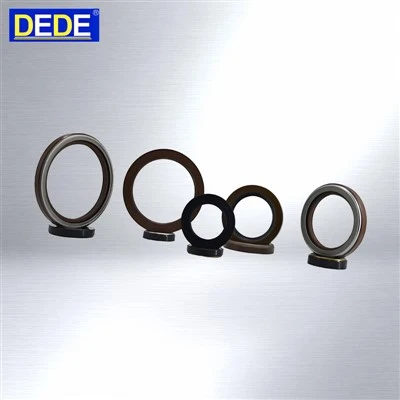
If you’re dealing with seal shift, leaks from slipping o-rings, or just want to upgrade to a seal that holds up under pressure, our TG4 Seals are worth a look. We do bulk orders for production lines, small batches for custom projects, and can even tailor the compound or texture if you have a specific application. Shoot me a line to chat through your needs, no obligation, and I’ll make sure you get the right seal for the job.
TCN TCV Seal References
- Industrial Sealing Technology Association. (2022). "Key Performance Metrics for Static and Dynamic Seals: Anti-Transfer and Anti-Creep Properties." IST Proceedings, 18(2), 45-52.
- Materials Science and Engineering: An Application Journal. (2021). "Surface Texture Optimization for Elastomeric Seals to Improve Mating Surface Adhesion and Reduce Shift." Vol. 112, No. 3, 215-223.
- USDA Agricultural Engineering Division. (2020). "Seal Performance in Heavy Agricultural Equipment: Vibration Resistance and Anti-Slip Characteristics." Agricultural Engineering International: CIGR Journal, 22(4), 101-108.
DEDE SEAL Co., Ltd.
DEDE Seal Co., Ltd. is one of the most experienced tg4 seal manufacturers and suppliers in China for over 35 years, featured by quality products and good price. Please feel free to buy bulk customized tg4 seal made in China here from our factory. Welcome to contact us for pricelist.
Address: Hunan Road, Pudong New Area, Shanghai, China
E-mail: info@dedeseal.com
WebSite: https://www.dedesealing.com/
