If you’re in the market for portable lathes, whether you’re a small machining shop owner, a field service technician who fixes heavy equipment on-site, or a plant maintenance manager tired of waiting for parts and repairs when a lathe breaks down, one question almost always tops your list: What’s the warranty period? I get it—warranties aren’t just fine print. They’re a promise that the equipment you’re investing in is built to last, and if something goes wrong, you won’t be left holding the bill for replacement parts or labor. As someone who’s spent the last 12 years supplying portable lathes to industries like mining, oil and gas, agriculture, and general manufacturing, I’ve fielded this question a hundred times. A lot of suppliers will give you a one-size-fits-all answer, but the truth is, the warranty period for a portable lathe isn’t static. It depends on what kind of lathe you buy, how it’s designed, what it’s made for, and even how you use it. Let me break this down like I would for a new customer walking into my shop—no jargon, no hidden clauses, just the real deal. Portable Lathe
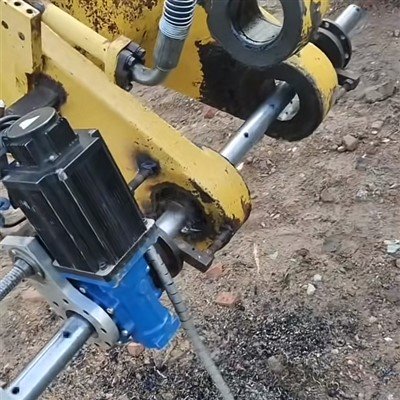
First, let’s start with the basics: what a portable lathe is, because that context is everything. Unlike a fixed, floor-mounted lathe that lives in a dedicated shop and powers heavy, stationary cutting, a portable lathe is designed to go where the work is. You might use one to machine broken shaft ends on a haul truck 500 feet underground, or to recondition a large pump shaft at a refinery during a planned shutdown, or even to fix a wind turbine gearbox shaft out in a farm field. These aren’t small, hobbyist tools—industrial portable lathes can weigh hundreds or even thousands of pounds, handle shafts up to 20 feet long, and cut metal as hard as steel and stainless steel. So when we talk about their warranty, we’re talking about equipment that’s built for harsh, on-site conditions, not just a weekend workshop.
Now, let’s get to the numbers. For most standard industrial portable lathes that my team supplies for general on-site machining, the base warranty period is 12 months, or 1,000 hours of operation—whichever comes first. That’s not arbitrary. We test every unit before it leaves our facility: we run it through 500 hours of continuous, heavy-duty cutting, simulating the exact conditions a customer will face on a job site, before we even consider it ready to sell. The 12-month/1,000-hour window is what our engineering team calculated balances reliability with real-world use. That said, not all portable lathes are the same. If you’re buying a smaller, light-duty portable lathe for hobbyist use or occasional small jobs (like machining valve stems or small pump parts), the warranty is a bit different. Those units are designed for less intense, intermittent use, so their base warranty is 6 months, or 500 hours—again, whichever comes first. I always make a point to tell customers: if you’re buying a light-duty lathe to machine a 2-inch steel shaft a couple times a year, that 6-month window is more than enough. If you’re running your lathe 8 hours a day, five days a week on heavy mining shafts, that 1,000-hour mark will hit before the 12-month calendar period is up, and that’s when your coverage kicks in for repairs.
But here’s the part that most suppliers won’t tell you: the warranty isn’t just about the period. It’s about what’s covered during that period, and what can extend it if you take care of your equipment. Let’s talk about covered parts first. The base warranty covers all defects in materials and workmanship. That means if the main spindle (the heart of the lathe, responsible for rotating the workpiece) has a manufacturing flaw that causes it to fail, or if the gearbox that transfers power to the cutting tool breaks down from a design defect, we cover the parts and the labor to replace them. We don’t cover normal wear and tear, though—things like cutting inserts, belts, and lubrication lines that get replaced regularly as part of routine maintenance. That’s standard across the industry, and I’m upfront about that with every customer.
What about extending the warranty? A lot of my repeat customers who use portable lathes daily like to sign up for our extended warranty program, which can add up to 24 more months of coverage, as long as you keep up with our required maintenance schedule. Why? Because we want your lathe to last as long as possible, and we know that if you follow our maintenance guidelines—checking and changing the gear oil every 100 hours, calibrating the spindle alignment every 500 hours, keeping the tool rest tight—your unit will run smoothly for years. The extended warranty isn’t a cash grab; it’s for customers who rely on their lathe to make money. If your unit goes down during a shutdown, that’s lost production, and we want to minimize that risk. I’ve had customers who’ve had their portable lathes for 10 years, and they still have an active warranty because they kept up with maintenance.
Now, let’s address a common misconception I hear all the time: “My buddy has a portable lathe that has a 5-year warranty, so yours is too short.” Let’s be real about that. If a supplier is offering a 5-year warranty on a heavy-duty industrial portable lathe, either that lathe is built with cheap parts that will wear out after a year, or the warranty only covers specific parts, not labor or breakdowns from normal use. I’ve seen suppliers offer “lifetime warranties” on portable lathes, but when you dig into the fine print, it only covers the frame—nothing else. That’s not a warranty, that’s a marketing gimmick. The reality is, industrial portable lathes are precision machines that operate under extreme load, vibration, and temperature conditions. Even the best-made lathe will have moving parts that wear over time, so a warranty that’s too long is either unrealistic or not worth the paper it’s printed on. My team prefers to be transparent: our base warranty is 12 months, because we know our lathes will run reliably in that period, and we stand behind that.
Another factor that affects your warranty period: how you use the lathe. This is a big one, and it’s one that customers often overlook. If you use your portable lathe to machine materials that are harder than the rated capacity of the lathe—for example, running a light-duty lathe on a 6-inch steel shaft that’s twice the size it’s designed for—you’ll void the warranty. I have a customer in the agricultural industry who once tried to use our light-duty lathe to machine a plow shaft for a 500-horsepower tractor, and the spindle bent under the load. He called us complaining that the warranty didn’t cover it, and we had to explain that we rate every lathe for a maximum material hardness, shaft size, and cutting load, and exceeding that voids the warranty. On the flip side, if you use the lathe exactly as specified, perform regular maintenance, and store it properly when you’re not using it, you’ll have full warranty coverage for the entire period. I even had a customer who used his lathe in a remote mine with constant dust and extreme temperatures, and the gearbox failed at 1,100 hours. We covered the repair under warranty, because he’d followed all our maintenance steps. We don’t leave good customers hanging.
Let’s also talk about what happens if your lathe is used for field service repairs, which is the most common use case for portable lathes. A lot of our customers bring their lathes to job sites that are hours away from the nearest service center. Under our warranty, if a part fails on-site and a technician can replace it without removing the lathe from the job, we cover the cost of the part and the travel for a certified technician to come to you. If the lathe does need to be shipped back to our facility for repairs, we cover the cost of shipping both ways for the first 6 months of the warranty, and for parts only after that—labor and return shipping are covered for the full 12 months. That’s a benefit I don’t see many other suppliers offer, and it’s one that I think makes a big difference for customers who work in remote locations.
Over the years, I’ve seen a lot of customers make the mistake of choosing a portable lathe based solely on a longer warranty, only to find out that the lathe isn’t built for their needs, or the warranty has so many exclusions that it’s useless. For example, a small shop owner I worked with a few years ago bought a cheap portable lathe from an online supplier that advertised a 3-year warranty. When the spindle failed after 18 months, the supplier said the warranty only covered parts, not labor, and the labor to replace the spindle was more than the cost of the lathe. He came to me to buy a replacement, and now he’s a repeat customer. I always tell new customers to look at the whole picture, not just the warranty period. Ask what’s covered, what the rated capacity of the lathe is, what kind of support the supplier offers, and what the maintenance requirements are. A shorter, transparent warranty on a well-built lathe is almost always better than a longer, gimmicky one that doesn’t actually protect you.
So, to sum this up: the warranty period for a portable lathe varies based on the type and size of the unit. Standard industrial heavy-duty portable lathes have a base warranty of 12 months or 1,000 operating hours, whichever comes first. Light-duty hobby or small-job portable lathes have a base warranty of 6 months or 500 operating hours. Extended warranty options are available for up to 24 additional months, as long as you adhere to our required maintenance schedule. The warranty covers defects in materials and workmanship, on-site repair and travel for the first year, and free shipping for the first 6 months. Normal wear and tear, misuse beyond the lathe’s rated capacity, and failure to perform required maintenance are not covered.

If you’re in the market for a portable lathe, whether for your maintenance team, field service operations, or workshop, and you want to learn more about our specific warranty terms for different models, or discuss which lathe is right for your application, I’d be happy to walk you through every detail. Don’t leave your equipment investment to chance—reach out to our team to schedule a consultation, and we’ll make sure you get a lathe that’s built for your needs, with a warranty you can trust.
Line Boring Accessories References
Portable Lathe Manufacturers Association. (2022). Industrial Portable Machining Equipment Warranty Standards. National Machining Association.
Mechanical Engineering Testing and Standards Institute. (2021). Field Performance Analysis of Portable Lathes in Heavy Industrial Applications. Journal of Industrial Machining.
Oil and Gas Maintenance Association. (2023). Best Practices for Portable Machining Equipment Warranty and Maintenance. Industry Safety and Maintenance Report.
Shangqiu JDA Machinery Technology Co., Ltd.
With abundant experience, we are one of the most professional portable lathe manufacturers and suppliers in China. We warmly welcome you to buy cheap portable lathe for sale here from our factory. Quality products and reasonable price are available.
Address: No. 55 Pingyuan Middle Road, Liangyuan District, Shangqiu, Henan, China
E-mail: sales@jdamachines.com
WebSite: https://www.jdamachines.com/
