Hey there! I’m part of a high – pressure membrane supplier team, and today, I wanna dive deep into the fascinating topic of what effect membrane charge has on its separation efficiency. It’s a hot topic in the membrane industry, and I’m excited to share what we’ve learned over the years. High Pressure Membrane
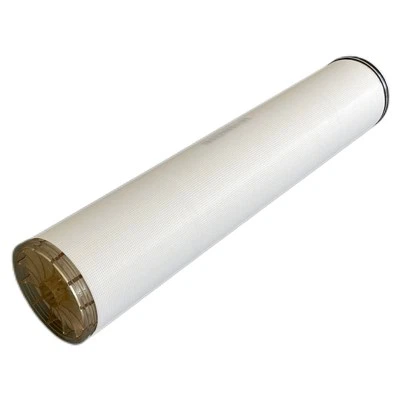
First off, let’s talk about what membrane charge actually means. In simple terms, a membrane can have a positive, negative, or neutral charge. This charge comes from the chemical groups on the membrane surface. For example, if there are a lot of carboxyl groups (-COOH) on the membrane, it’ll usually have a negative charge because these groups can lose a proton (H⁺) and become negatively charged (-COO⁻). On the flip side, amino groups (-NH₂) can gain a proton and give the membrane a positive charge.
Now, why does this charge matter? Well, it has a huge impact on how the membrane separates different substances. One of the main ways it does this is through electrostatic interactions.
Let’s start with the case of a negatively charged membrane. If you’re trying to separate a solution that contains positively charged ions or molecules, the negatively charged membrane is gonna act like a magnet for them. These positively charged species will be attracted to the membrane surface. This can be a good thing if you’re trying to remove these positive charges from the solution. For instance, in water treatment, if you have heavy metal ions like copper (Cu²⁺) or lead (Pb²⁺) which are positively charged, a negatively charged membrane can effectively capture them.
The electrostatic attraction between the positively charged metal ions and the negatively charged membrane makes it easier for the membrane to hold onto these contaminants, increasing the separation efficiency. But there’s a catch. If the solution also contains a lot of other positively charged ions, like sodium (Na⁺) or potassium (K⁺), they’ll also compete for the binding sites on the membrane. This competition can reduce the membrane’s ability to specifically target the heavy metal ions, and in some cases, it might even lead to a decrease in the overall separation efficiency.
On the other hand, a positively charged membrane works in the opposite way. It’s great for separating negatively charged substances. In biological applications, this can be super useful. For example, in the separation of proteins, many proteins have a negative charge at physiological pH. A positively charged membrane can selectively attract these negatively charged proteins, allowing for a more efficient separation.
However, just like with the negatively charged membrane, there can be issues due to competition. If the solution has a high concentration of other negatively charged ions, like chloride (Cl⁻) or phosphate (PO₄³⁻), they’ll compete with the target proteins for the binding sites on the membrane. This competition can mess up the separation process and make it less efficient.
A neutral membrane, as you might expect, doesn’t have these strong electrostatic interactions. It relies more on other separation mechanisms, like size exclusion. But that doesn’t mean it’s not useful. In some cases, where you don’t want electrostatic effects to interfere with the separation, a neutral membrane is the way to go. For example, when separating molecules based solely on their size, like in some filtration processes for macromolecules, a neutral membrane can provide a more straightforward separation.
Another important aspect of membrane charge and separation efficiency is the effect of the charge on the membrane’s fouling behavior. Fouling is a big problem in membrane separation processes. It refers to the buildup of unwanted materials on the membrane surface or inside its pores, which reduces the membrane’s performance over time.
A charged membrane can either increase or decrease the fouling rate depending on the nature of the foulants. If the foulants have a charge opposite to that of the membrane, they’ll be attracted to the membrane. For example, if a negatively charged membrane is used to filter a solution with positively charged organic matter, the organic matter will stick to the membrane surface. This can lead to more severe fouling and a decrease in separation efficiency.
But if the charge of the membrane and the foulants are the same, there’ll be an electrostatic repulsion between them. This repulsive force can prevent the foulants from attaching to the membrane surface, reducing fouling and maintaining the membrane’s separation efficiency over a longer period.
Let’s talk about how this knowledge translates into real – world applications for us as a high – pressure membrane supplier. When customers come to us, they often have very specific separation needs. We use our understanding of membrane charge to recommend the right type of membrane for their application.
For example, if a customer is in the food and beverage industry and wants to separate proteins from other components in a solution, we might recommend a positively charged membrane. This is because most proteins are negatively charged under typical conditions in the food industry, and a positively charged membrane can effectively bind these proteins, improving the separation efficiency.
In the pharmaceutical industry, where purity is of utmost importance, we need to be very careful about choosing the right membrane. If a company is trying to separate a negatively charged drug from other impurities, a positively charged membrane can be a great option. But we also need to consider the concentration of other ions in the solution to make sure there’s no excessive competition that could reduce the separation efficiency.
In the water treatment sector, we have to deal with all sorts of contaminants. If a customer is facing issues with heavy metal contamination in their water supply, we’d likely suggest a negatively charged membrane. This way, the membrane can capture the positively charged heavy metal ions, making the water cleaner and safer.
We also offer customization services. If a customer has a very unique separation requirement, we can modify the membrane charge to optimize the separation efficiency. For example, we can use chemical treatments to add or remove certain functional groups on the membrane surface, changing its charge density.
At the end of the day, understanding the effect of membrane charge on separation efficiency is crucial for us as a high – pressure membrane supplier. It allows us to provide the best solutions to our customers and help them achieve their separation goals.
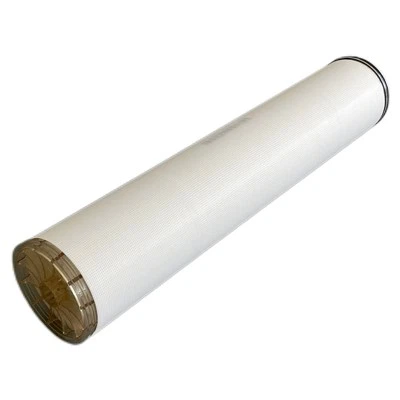
If you’re in the market for high – pressure membranes and want to improve your separation efficiency, we’d love to hear from you. Whether you’re in the food industry, pharmaceuticals, water treatment, or any other sector that requires membrane separation, our team of experts can work with you to find the perfect membrane solution. Reach out to us to discuss your specific needs, and let’s work together to take your separation processes to the next level.
Containerized Water Treatment System References
- Cheryan, M. (1998). Ultrafiltration and Microfiltration Handbook. Technomic Publishing.
- Mulder, M. (1991). Basic Principles of Membrane Technology. Kluwer Academic Publishers.
- Baker, R. W. (2012). Membrane Technology and Applications. Wiley.
Hangzhou Nanoimp Environmental Technology Co., Ltd.
With abundant experience, we are one of the most professional high pressure membrane manufacturers and suppliers in China. Welcome to wholesale high quality high pressure membrane in stock here and get pricelist from our factory. We also accept customized orders.
Address: Road 25, Baiyang Street, Qiantang District, Hangzhou City, Zhejiang Province
E-mail: keith.wang@nano-sepmer.com
WebSite: https://www.nanoimp-membrane.com/
