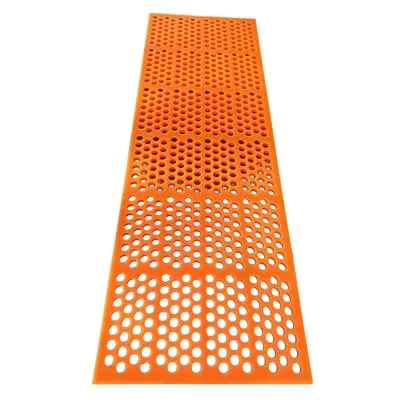
Polyurethane screens are widely recognized for their durability, high abrasion resistance, and excellent screening performance, which makes them a popular choice in various industries such as mining, quarrying, and recycling. As a polyurethane screen supplier, I’ve encountered numerous inquiries from customers about the substances that could potentially damage these screens. In this blog, I’ll delve into the chemicals that pose a threat to polyurethane screens, the reasons behind the damage, and how to mitigate these risks. Polyurethane Screen
1. Strong Acids
Strong acids, such as sulfuric acid (H₂SO₄), hydrochloric acid (HCl), and nitric acid (HNO₃), can significantly deteriorate polyurethane screens. Polyurethane is a polymer composed of organic units joined by carbamate links. When exposed to strong acids, the acid molecules react with the polyurethane structure.
The acidic protons in strong acids can break the urethane bonds in the polyurethane. For instance, sulfuric acid, a highly corrosive acid, can protonate the oxygen and nitrogen atoms in the urethane linkage. This protonation weakens the chemical bonds, leading to chain scission. As a result, the integrity of the polyurethane screen is compromised, and it loses its mechanical strength. The screen may become brittle, develop cracks, and eventually fail to perform its screening function.
In industries where acidic substances are present, such as the chemical processing industry or metal pickling plants, the choice of polyurethane screen should be made with extra caution. Specialty acid – resistant polyurethane formulations may be required. These formulations often contain additives or have a modified polymer structure that can better withstand the corrosive effects of acids.
2. Strong Bases
Similar to strong acids, strong bases are also damaging to polyurethane screens. Sodium hydroxide (NaOH) and potassium hydroxide (KOH) are common strong bases that can cause problems. Bases react with the urethane groups in the polyurethane through a process called hydrolysis.
In an alkaline environment, hydroxide ions (OH⁻) attack the carbonyl carbon in the urethane linkage. This leads to the cleavage of the bond, resulting in the degradation of the polyurethane polymer. The screen may start to swell, lose its shape, and its physical properties will diminish. For example, in wastewater treatment plants where alkaline cleaning agents are frequently used, if the polyurethane screens are not properly protected or made of a suitable base – resistant material, they will experience rapid degradation.
To counteract the effects of strong bases, there are polyurethane formulations that incorporate base – resistant additives. These additives can form a protective layer on the surface of the screen or modify the chemical reactivity of the polyurethane, reducing its susceptibility to base – induced hydrolysis.
3. Solvents
Many solvents can cause harm to polyurethane screens. Solvents like acetone, toluene, and methyl ethyl ketone (MEK) are known for their ability to dissolve or swell polymers. Polyurethane has a certain degree of solubility or swelling behavior in these solvents.
Acetone, for example, is a polar aprotic solvent that can interact with the polyurethane molecules through dipole – dipole forces. It can penetrate the polymer matrix, causing the chains to separate from each other. This results in swelling of the screen material. As the screen swells, its pore size may change, which affects the screening efficiency. In severe cases, the solvent can cause the polyurethane to dissolve, leading to the complete destruction of the screen.
Industries that use solvents in their processes, such as the paint and coating industry or the adhesive manufacturing industry, need to be extremely careful when using polyurethane screens. They can opt for solvent – resistant polyurethane screens, which are formulated to have a more cross – linked structure. A higher degree of cross – linking restricts the movement of the polymer chains and reduces the penetration of solvent molecules.
4. Oxidizing Agents
Oxidizing agents, such as hydrogen peroxide (H₂O₂), chlorine (Cl₂), and potassium permanganate (KMnO₄), can also damage polyurethane screens. Oxidation is a chemical reaction that involves the loss of electrons. In the context of polyurethane, oxidizing agents can react with the polymer chains and cause chemical changes.
Hydrogen peroxide, for example, can generate highly reactive hydroxyl radicals. These radicals can attack the vulnerable carbon – hydrogen bonds in the polyurethane molecules. This leads to the formation of carbonyl groups and other oxidation products, which can change the physical and chemical properties of the screen. The screen may become discolored, stiff, and lose its elasticity.
In industries where oxidation – prone chemicals are present, like the textile bleaching industry or the water disinfection process, proper selection of polyurethane screens is crucial. Some polyurethane formulations are designed to be more resistant to oxidation, often through the incorporation of antioxidants. These antioxidants can react with the oxidizing agents before they can damage the polyurethane polymer.
5. Mitigation Strategies
As a polyurethane screen supplier, I always recommend customers to take proactive steps to protect their screens from chemical damage. Firstly, a thorough assessment of the chemical environment in which the screens will operate is necessary. This includes identifying the types of chemicals present, their concentrations, and the duration of exposure.
Based on this assessment, the appropriate type of polyurethane screen can be selected. For example, if the environment contains high concentrations of acids, acid – resistant polyurethane screens should be chosen. Secondly, regular maintenance and inspection of the screens are essential. This can help detect early signs of chemical damage, such as discoloration, swelling, or cracking.
If possible, physical barriers or protective coatings can be applied to the screens. These can act as a shield between the polyurethane and the harmful chemicals. However, it’s important to ensure that the protective coating is compatible with the polyurethane and the chemicals in the environment.
Why Choose Our Polyurethane Screens
As a reliable polyurethane screen supplier, we understand the importance of providing high – quality products that can withstand various chemical environments. Our team of experts is dedicated to developing innovative polyurethane formulations. We use advanced manufacturing techniques to ensure that our screens have excellent chemical resistance, mechanical strength, and long – term durability.
Whether your industry involves handling acids, bases, solvents, or oxidizing agents, we have the right polyurethane screen solution for you. Our screens are rigorously tested in our state – of – the – art laboratories to ensure they meet the highest quality standards.
Polyurethane Screen Panel If you are in the market for polyurethane screens and want to ensure that your screens can withstand the chemical challenges in your process, we invite you to reach out to us. We are happy to discuss your specific needs, provide technical advice, and offer customized solutions. Our commitment is to help you find the most suitable polyurethane screens for your application, so you can maximize the efficiency and lifespan of your screening equipment. Contact us today to start the procurement discussion and take the first step towards a better screening experience.
References
- Koleske, J. V. (Ed.). (2011). Polyurethane coatings: science and technology. CRC Press.
- Oertel, G. (Ed.). (1993). Polyurethane handbook. Hanser publishers.
- Wooley, K. L., Franco, C. M., & Long, T. E. (2012). Renewable polymers from natural resources. Chemical reviews, 112(2), 1156 – 1212.
Yangzhou Yaye Wire Mesh Manufacturing Co., Ltd.
As one of the most professional polyurethane screen manufacturers in China, we have world-leading production equipment and strong manufacturing capabilities. Please feel free to wholesale cheap polyurethane screen in stock here from our factory. Also, free sample is available.
Address: No. 1 Jiangjia Road, High-tech Industrial Park, Jiangdu District, Yangzhou City, Jiangsu Province
E-mail: 13952515577@163.com
WebSite: https://www.yayescreen.com/
